Diesel Injector Balance Rates & Cylinder Contribution Tests Explained

Diesel Injector Balance Rates & Cylinder Contribution Tests Explained

Introduction

Twenty years ago, finding a weak diesel injector meant cracking injector lines one at a time and listening for a change in engine note. Today, the engine control module (ECM) continuously measures how much work each cylinder contributes and adjusts fuel delivery in real time to keep the engine running smoothly. The data it generates — known as balance rates, fuel correction values, or cylinder contribution values depending on the manufacturer — is one of the most powerful injector diagnostic tools available, and it requires nothing more than a scan tool to access.

Used correctly, balance rate data can identify a failing injector before it triggers a fault code, isolate the offending cylinder without removing a single component, and tell you whether the problem is fuel delivery or mechanical compression. Used incorrectly, it leads to misdiagnosis and expensive, unnecessary injector replacements. This guide explains how balance rates and cylinder contribution tests actually work, how to read them correctly on Caterpillar, Cummins, GM Duramax and other diesel platforms, and — critically — what the numbers can and cannot tell you.

What Are Injector Balance Rates?

A balance rate is the amount of fuel the ECM adds to or subtracts from an individual cylinder to keep engine speed stable. Modern common rail and electronic unit injector engines run a closed-loop smoothness control strategy: the crankshaft position sensor measures the small acceleration each cylinder produces during its power stroke, the ECM compares every cylinder’s contribution against the average, and it then trims fuel to each injector individually so all cylinders contribute equally.

The correction applied to each cylinder is reported by the scan tool, typically in cubic millimeters per stroke (mm³):

  • A negative balance rate means the ECM is removing fuel from that cylinder — the cylinder is contributing more power than average. This can indicate an injector delivering too much fuel (worn nozzle, eroded seat, sticking needle).
  • A positive balance rate means the ECM is adding fuel — the cylinder is contributing less than average. This can indicate a restricted or worn injector, but also low compression, a valve problem, or a mechanical fault.
  • Values near zero across all cylinders indicate the engine is mechanically and hydraulically balanced.

The key insight: balance rates measure cylinder power contribution, not injector flow directly. The ECM cannot see fuel — it sees crankshaft speed fluctuation and infers everything else. This distinction drives every interpretation rule that follows.

Manufacturer Terminology: Same Concept, Different Names

Every diesel manufacturer implements a version of this strategy, but the names, units and access methods differ:

Manufacturer / Platform Term Used Typical Units Access Tool
GM Duramax Injector Balance Rates mm³ GM Tech 2 / GDS2, most aftermarket scan tools
Caterpillar Fuel Correction / Cylinder Contribution Percent or mm³ Cat Electronic Technician (Cat ET)
Cummins Cylinder Performance / Power Contribution Index value Cummins INSITE
Detroit Diesel Cylinder Contribution Test Percent DiagnosticLink (DDDL)
Bosch common rail (many OEMs) Fuel Quantity Correction / MDA mm³ OEM scan tool or capable aftermarket platform

Despite the naming differences, the underlying logic is identical: measure per-cylinder contribution via crankshaft speed analysis, then trim fuel to equalize. If you understand the principle on one platform, you can apply it on all of them.

How to Read Balance Rates Correctly

Balance rate values are only meaningful when captured under the correct conditions. More injectors have been misdiagnosed from badly captured balance data than from any other cause.

Test Conditions Matter

  • Engine fully warmed up. Cold engines run open-loop or apply cold-start enrichment that distorts values. Bring coolant temperature to normal operating range before recording.
  • All accessories off. Air conditioning, cooling fan engagement and electrical loads change idle stability and shift the numbers.
  • Record at idle in neutral AND under load. On automatic transmission trucks (classically the Duramax), balance rates are read at idle in Park and again in Drive with the brakes applied. A cylinder that reads acceptable unloaded may drift far out of range the moment load is applied — and vice versa.
  • Let values stabilize. The adaptive strategy needs 30–60 seconds of steady-state running before the numbers settle. Do not record the first values that appear.

Typical Acceptance Windows

Every platform publishes its own limits, but the widely used field benchmarks look like this:

Condition Typical Acceptable Range Concern Threshold
Idle, no load (neutral/Park) −4.0 to +4.0 mm³ Any cylinder beyond ±4 mm³
Idle, loaded (in gear, brakes applied) −6.0 to +6.0 mm³ Any cylinder beyond ±6 mm³
Cylinder-to-cylinder spread Tight grouping One cylinder diverging sharply from the pack

Two interpretation rules professionals apply on top of the raw limits:

  • Watch trends, not just absolutes. A cylinder sitting at +3.8 mm³ while the other seven sit near zero is technically “in spec” but is telling you something. Compare against the engine’s own average, and re-test over time.
  • Load response is diagnostic gold. An injector with internal wear often shows acceptable numbers at idle but walks out of range under load, when rail pressure and injection quantity rise. Always capture both states.

The Cylinder Contribution Test (Caterpillar and Heavy-Duty Platforms)

On Caterpillar engines, Cat ET’s Cylinder Contribution Test (and the related Injector Solenoid Test and Cylinder Cutout Test) automates per-cylinder evaluation. The principle: the ECM cuts fuel to one cylinder at a time and measures how much the remaining cylinders must compensate to hold engine speed.

  • If cutting out a cylinder produces a large change in engine behavior, that cylinder was contributing strongly — it is healthy.
  • If cutting out a cylinder produces little or no change, that cylinder was barely contributing — it is weak or dead. The cause may be the injector, compression, or valvetrain, but the location is now confirmed.

On mechanically governed and HEUI Caterpillar engines (3126, C7, C9, 3406E, C15), the equivalent manual technique is the classic cylinder cutout test: disable one injector at a time via the service tool and observe engine speed drop, fuel position change, or vibration. On HEUI engines, the Injector Solenoid Test additionally verifies each solenoid circuit electrically before you chase hydraulic causes.

Manual Cutout Logic (Any Diesel)

Even without an OEM service tool, the logic holds on any multi-cylinder diesel: disable cylinders one at a time (electrically on electronic engines) and compare the reaction. A healthy cylinder’s removal makes the engine noticeably rougher and slower; a dead cylinder’s removal changes nothing. Record RPM drop per cylinder and rank them — the outlier is your target.

What Out-of-Range Values Actually Mean

This is where most misdiagnosis happens. Balance rates identify the weak cylinder — they do not identify the cause. The ECM only sees crankshaft speed; anything that reduces a cylinder’s power contribution produces the same signature as a bad injector:

Root Cause Balance Rate Signature How to Differentiate
Worn injector (excess delivery) Strong negative value Return flow test, injector bench test
Restricted / weak injector Positive value, worsens under load Return flow test, bench flow test
Low compression (rings, valves) Positive value at all loads Compression or leak-down test
Valve lash / rocker problem Positive value, may be intermittent Physical valvetrain inspection
Low rail pressure (pump, regulator) All cylinders drift, no single outlier Rail pressure actual vs desired comparison
Air in fuel / suction leak Unstable values across all cylinders Clear-hose test at fuel inlet, prime system

The professional workflow therefore always confirms before replacing:

  1. Capture balance rates warm, unloaded and loaded. Identify the outlier cylinder.
  2. Rule out the system-wide causes — rail pressure performance, fuel aeration, filter restriction — if multiple cylinders drift together.
  3. Run a compression or leak-down test on the suspect cylinder to eliminate mechanical causes.
  4. Measure injector return flow on common rail engines — a cylinder flagged by balance rates plus excessive back-leakage is near-conclusive injector evidence.
  5. Bench test the pulled injector whenever possible. A calibrated test bench measuring delivery at multiple pressure/pulse points turns a suspicion into a documented fact.

Limitations of Balance Rate Diagnostics

Balance rates are powerful but not omniscient. Know the blind spots:

  • They only work at low speed/steady state. Most strategies compute corrections at idle and light load. A spray-pattern defect that only misbehaves at high load and full rail pressure can hide from idle balance data.
  • Spray quality is invisible. An injector can deliver the correct quantity with a degraded spray pattern — causing smoke, poor economy and long-term piston damage — while balance rates stay in spec. Nozzle condition still requires bench testing.
  • Adjacent-system faults masquerade. Glow plug faults on cold engines, EGR distribution imbalance, and even engine mounts (perceived roughness) get blamed on injectors when balance data is captured under the wrong conditions.
  • Adaptation can mask early wear. The whole point of the strategy is to hide imbalance from the driver. By the time a driveability complaint exists, the correction may already be pegged at its limit. Periodic recording of balance data during routine service catches drift early.

From Diagnosis to Repair

Once balance data, return flow measurement and compression testing converge on a failed injector, replace it with a unit whose delivery is documented — not merely promised. Whether the engine needs one injector or a full set, insist on individually bench-tested, calibration-coded units. Installing an untested bargain injector into a cylinder you just spent hours diagnosing simply restarts the problem.

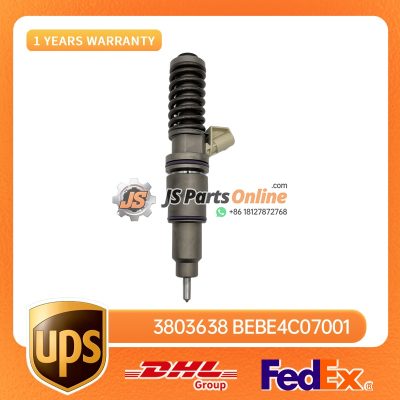
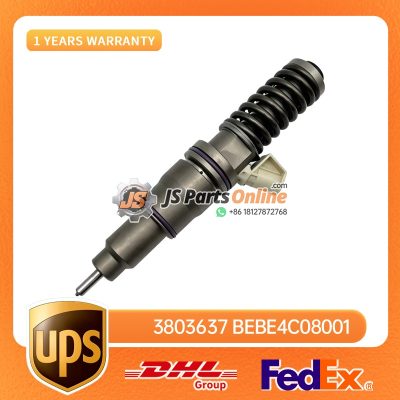
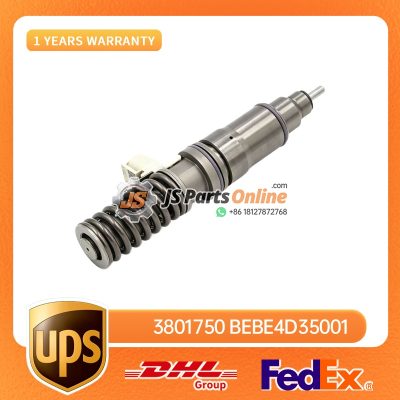
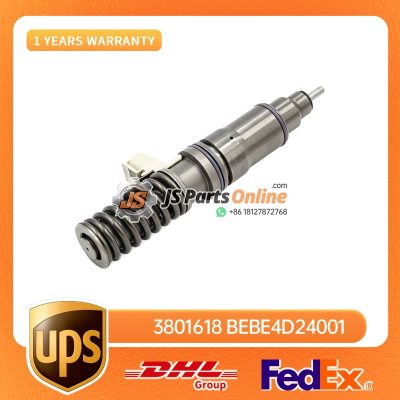
At JS Parts Online, every unit we supply is tested and matched to OEM delivery specifications before shipment:

Conclusion

Balance rates and cylinder contribution tests turn the ECM into a free, always-on injector test instrument — but only for technicians who understand what the numbers represent. Capture the data warm, unloaded and loaded; judge cylinders against their peers, not just published limits; and never forget that a positive balance rate says “this cylinder is weak,” not “this injector is bad.” Confirm with return flow and compression evidence before spending money.

Master that discipline and you will find failing injectors weeks before they strand a truck, replace only the components that are genuinely worn, and back every repair decision with data. That is exactly how modern diesel diagnostics is supposed to work — and when the diagnosis does call for replacement injectors, JS Parts Online supplies units with the documented, bench-verified delivery your balance rates will prove correct on the very first start.