Diesel Injector Solenoid vs Piezoelectric Actuators: Complete Technical Comparison
Introduction
The actuator inside a diesel injector is what turns the ECM’s microsecond-level electrical command into a mechanical nozzle opening event. It is the single most performance-critical component inside modern electronic diesel injection, and it comes in two fundamentally different technologies: solenoid (electromagnetic) and piezoelectric (piezo crystal stack). The choice between them shapes fuel system architecture, injection precision, service cost, and diagnostic approach.
This guide explains how each actuator type works at the component level, how their performance characteristics affect engine behavior, which manufacturers and platforms use which technology, and — critically for technicians and buyers — the practical differences in failure modes, diagnostic methods, and replacement economics.
How Solenoid Actuators Work
A solenoid injector actuator is an electromagnet: a coil of copper wire wound around a ferromagnetic core. When the ECM completes the circuit, current flows through the coil, creating a magnetic field that pulls a spring-loaded armature or control valve against hydraulic pressure. The current must build to a pull-in threshold (typically 15–25 amps) to open the valve, then drop to a lower hold current (typically 9–14 amps) to keep it open, and finally drop to zero to close.
The ECM manages this with a carefully shaped current waveform rather than a simple on/off signal, because:
- Pull-in response determines the precision of injection timing. Faster current rise = faster valve opening = more precise start of injection. Solenoid inductance limits how fast current can build; this is why solenoids are inherently slower than piezo stacks.
- Hold current management prevents coil overheating. Driving full pull-in current continuously would burn the coil in minutes. Modern ECMs use PWM (pulse-width modulation) to maintain hold current at the minimum level that keeps the valve open.
- Closing response determines end-of-injection sharpness. When current drops, the magnetic field does not collapse instantly (inductance again); any delay here causes a dribbling nozzle tip. Many solenoid driver circuits include a fast-decay circuit (forcing high reverse voltage through the coil) to accelerate collapse and snap the valve closed cleanly.
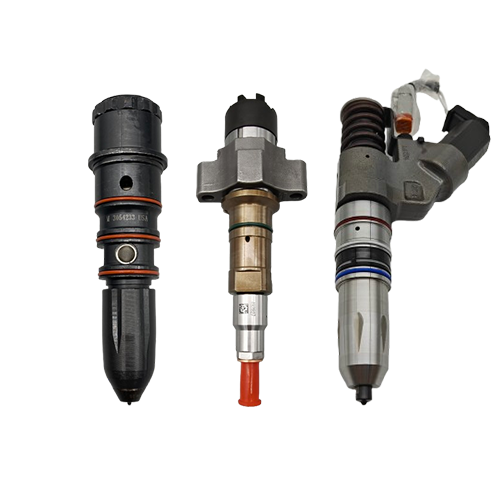
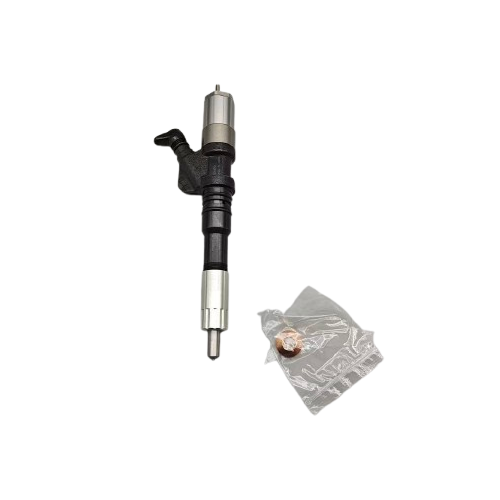
Solenoid injectors dominate the heavy-duty diesel world: Caterpillar HEUI and EUI injectors, Cummins ISX injectors, Detroit Diesel Series 60 EUIs, Bosch solenoid common rail injectors on most medium- and heavy-duty platforms, and GM Duramax units all use solenoid actuation.
How Piezoelectric Actuators Work
A piezo actuator is a stack of hundreds of thin piezo-ceramic crystal wafers, each approximately 40–80 microns thick. When voltage is applied, each wafer expands by a tiny amount. Stacked together, the cumulative expansion can be 30–80 microns — small in absolute terms, but enough to open a precision control valve in a common rail injector when applied through a hydraulic amplifier (motion amplifier / stroke multiplier, often a piston or lever arrangement inside the injector body).
Key differences from solenoid actuation:
- Speed: a piezo stack responds in microseconds, not milliseconds. Typical solenoid opening time: 250–400 µs. Typical piezo stack response: 50–120 µs. This enables multiple injection events per cycle (pilot, main, post, retarded post) with fast separation between them — the technical enabler of Tier 4 Final / Euro VI combustion strategies.
- Force generation: piezo stacks produce very high force (thousands of newtons) with negligible current draw during the hold phase. Solenoids draw continuous current to hold the valve open; a piezo, being capacitive, maintains the field with near-zero holding current once charged.
- Drive voltage requirement: piezo stacks operate at 100–200 volts, far above the 12/24V vehicle system. This requires a dedicated piezo driver module (or integrated circuitry in the ECM) with a DC-DC boost converter. The high voltage plus the capacitive nature of the load makes piezo driver circuit repair a specialist skill — probing with a standard multimeter won’t do it.
- Thermal stability: piezo crystals are sensitive to temperature; expansion coefficients shift with heat. This necessitates active compensation in the ECM or a temperature-independent reference element, and it means piezo injectors carry calibration data (similar to IQA/IMA codes for solenoid types) that must be programmed into the ECM on installation.
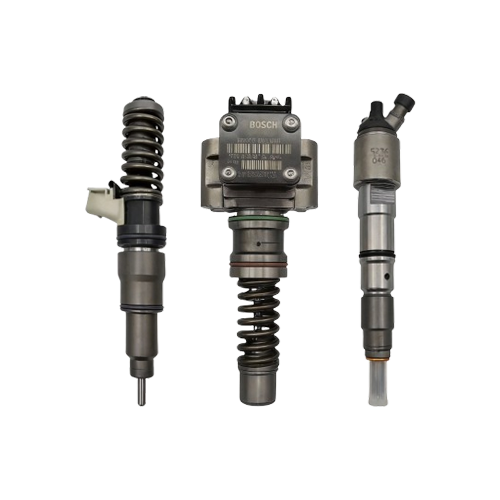
Piezo injection was pioneered by Siemens VDO (now part of Continental/Vitesco) and Bosch, and is used primarily on light- and medium-duty automotive and SUV common rail diesels (Volkswagen TDI, BMW, Mercedes CDI, Ford EcoBlue), with some heavy-duty adoption (certain Denso and Delphi systems). In the heavy-duty Caterpillar and commercial truck space, solenoid actuation remains dominant due to lower system cost, simpler voltage architecture, and proven field durability.
Head-to-Head Comparison
| Characteristic | Solenoid | Piezoelectric |
|---|---|---|
| Opening speed | 250–400 µs | 50–120 µs (3–5x faster) |
| Multiple injections per cycle | 2–3 practical | 5–7+ possible |
| Driver voltage | 12/24V vehicle system (with high-side drive) | 100–200V (needs dedicated boost converter) |
| Hold power draw | Continuous (10–14A hold current, PWM managed) | Near-zero after charge |
| Serviceability | Fully serviceable with standard tools; coils testable with ohmmeter | Requires piezo drive knowledge; multimeter-resistant diagnostics |
| Cost (injector + system) | Lower | Higher (actuator cost, driver circuitry, calibration) |
| Durability / robustness | Proven in millions of heavy-duty engines; tolerant of heat and vibration | Excellent in clean automotive environments; more sensitive to thermal cycling |
| Primary applications | Heavy-duty diesel (CAT, Cummins, Detroit, Duramax, Bosch common rail trucks) | Light/medium-duty automotive diesel (VW, BMW, Mercedes, Ford EcoBlue) |
Failure Modes and Diagnostics
Solenoid Injector Failures
- Coil open-circuit: zero solenoid resistance (infinite ohms). Instant misfire, ECM sets injector circuit DTC (P020x family). Diagnose with ohmmeter: a typical Bosch solenoid measures 0.2–1.5Ω. Infinite = dead coil.
- Coil short-to-ground: near-zero resistance to injector body. ECM detects as low-side short, may shut down entire bank or rail to protect driver circuit. Test with ohmmeter from terminal to injector body.
- Mechanical wear (seat leakage, nozzle wear): coil ohms test okay, but injector over-fuels or under-fuels. Balance rate test plus return-flow measurement is the standard differential diagnosis.
- Intermittent coil failure: ohms read normal cold but open hot. Thermal soak testing or wiggle test while monitoring resistance catches these.
Piezoelectric Injector Failures
- Crystal stack delamination: internal micro-cracks in the piezo stack degrade displacement. The ECM compensates with longer pulse width up to a limit, then sets a drift DTC. Cannot be detected with a multimeter; requires piezo-specific diagnostic tooling that measures capacitance and operational waveform.
- Insulation breakdown: the high-voltage drive environment makes piezo insulation critical. Leakage current through degraded insulation causes erratic actuation. Specialised insulation resistance testers (megohmmeter, 500V test voltage applied under controlled conditions) are the standard tool.
- Driver module failure: the piezo driver (separate module or integrated ECM circuit) is a common failure point, sometimes misdiagnosed as “all injectors bad.” A failed driver that shorts can cascade-destroy the connected piezo stacks. When multiple piezo injectors fail simultaneously, suspect the driver module first.
- IQA/calibration code mismatch: installing a piezo injector without coding its calibration data to the ECM produces persistent rough running, knock, and correction-limit DTCs, because the ECM is commanding the wrong voltage/duration for that specific injector’s piezo response curve.
Which Technology Matters for Your Engine
The solenoid/piezo distinction is not a consumer choice — the injector type is designed into the engine by the OEM and cannot be swapped. What the distinction does determine is:
- Diagnostic equipment requirements: a solenoid injector can be partially diagnosed with a multimeter and scan tool. A piezo system genuinely requires an oscilloscope, or an OEM-specific diagnostic interface, to see the high-voltage drive waveform.
- Replacement parts sourcing: piezo reman requires specialised calibration equipment that fewer reman facilities own. Always verify that a piezo injector remanufacturer can supply calibration data specific to that injector’s serial number and has a piezo-grade test bench (not just a pop tester).
- Failure cascading: a failed solenoid coil generally affects one cylinder. A failed piezo driver module can affect an entire bank. Budget and diagnostic approach must account for the difference.
- Practical field reality: for Caterpillar, Cummins, and most heavy-duty applications, solenoid actuation is what sits in the engine. Understanding solenoid current profiles and failure modes is directly applicable daily. Piezo knowledge is essential for European and Asian light-diesel platforms and increasingly for modern light-truck common rail systems.
At JS Parts Online, we supply individually bench-tested injectors across both technologies, with test documentation included:
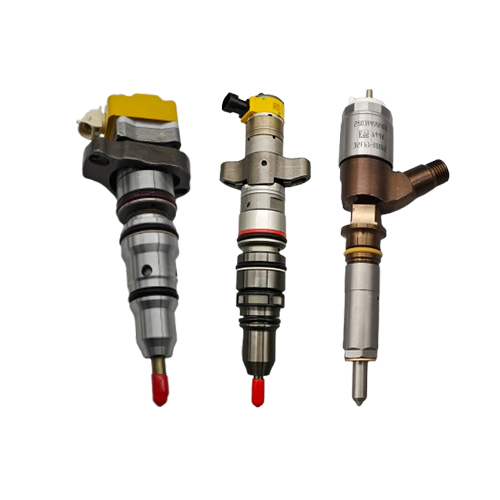
- Caterpillar Fuel Injectors — HEUI and EUI solenoid-actuated units, solenoid current and flow tested
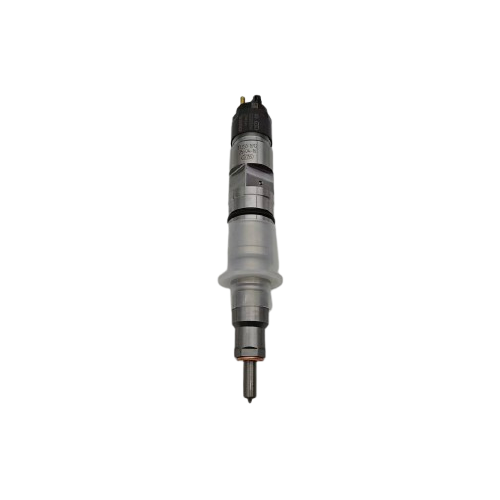
- Bosch Common Rail Injectors — solenoid and piezo types, supplied with full calibration codes
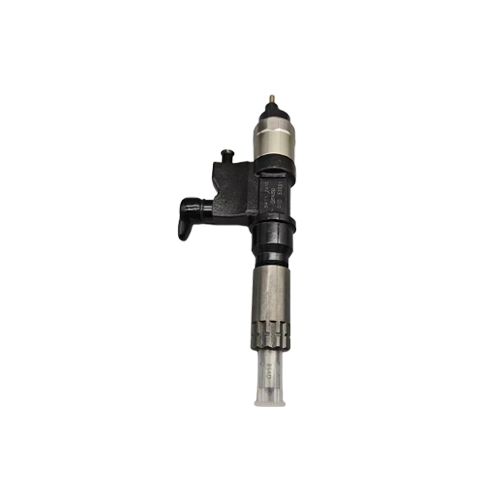
- Denso Diesel Injectors — precision solenoid and piezo units for Japanese platforms
- Fuel Injection Pump Plungers — mechanical metering for traditional pump-line-nozzle systems
Conclusion
The solenoid versus piezo distinction is not academic. It determines what test equipment you need, how faults present, whether a “bad injector” DTC might actually be a driver module, and what standard of remanufacturing is required for the replacement to work correctly. For the heavy-duty diesel world, the solenoid is the dominant technology: proven, durable, and diagnosable with tools most shops own. For the automotive and light-truck common rail world, piezo actuation delivers the combustion precision that modern emissions standards demand, at the cost of system complexity.
Either way, replacing a failed injector with a properly tested, calibration-coded unit is what separates a repair that lasts from a repair that creates new problems. That standard — individual bench testing with documentation — is what JS Parts Online supplies across every injector type.