Bosch CP3 vs CP4 High-Pressure Pump: Failure Analysis & Injector Damage Prevention

Bosch CP3 vs CP4 High-Pressure Pump: Failure Analysis & Injector Damage Prevention

The Pump That Feeds Your Injectors

Bosch CP3 and CP4 high-pressure fuel pumps are the heart of common rail diesel injection systems powering millions of engines worldwide — from Cummins Ram trucks and Ford Power Strokes to BMW, Mercedes, VW TDI, and heavy-duty commercial engines. When these pumps fail, they don’t just stop working. They fail catastrophically, sending a cloud of metallic debris through the entire high-pressure fuel system, destroying injectors, rail components, and fuel lines in seconds.

Understanding the differences between CP3 and CP4 — their designs, failure modes, early warning signs, and what a failure means for your injectors — is essential knowledge for every diesel technician and fleet owner.

CP3 vs CP4: Design Differences

Feature Bosch CP3 Bosch CP4
Design type 3-piston radial pump 2-piston axial/radial pump
Piston count 3 (120° apart) 2 (in some variants)
Lubrication Fuel-lubricated Fuel-lubricated (critical weak point)
Pressure capacity Up to 1,800 bar Up to 2,700 bar (higher efficiency at high pressure)
Peak efficiency ~85% mechanical ~92% mechanical (fewer moving parts)
Reputation Bulletproof workhorse; 300,000+ mile service life common Controversial; known for catastrophic failures on certain applications
Typical applications Cummins 5.9L/6.7L ISB (2003–2018); earlier Duramax LLY/LBZ Ford 6.7L Power Stroke (2011+); GM Duramax LML/L5P; Ram 6.7L Cummins (2019+); BMW, Mercedes, VW TDI
Serviceability Fully rebuildable — individual components replaceable Limited rebuildability — most failures require complete pump replacement

How the CP4 Fails — and Why It Destroys Injectors

The Roller-Lifter Catastrophe

The CP4’s most infamous failure mode centers on the roller lifter mechanism that translates camshaft rotation into piston reciprocation. Unlike the CP3, which uses a robust sliding-follower design with generous lubrication channels, the CP4’s roller is lubricated by a thin film of fuel flowing through a tiny orifice. When fuel lubricity is marginal — a common problem with modern ultra-low sulfur diesel (ULSD) — the roller can skid instead of roll, causing:

  1. Micro-welding between roller and cam lobe surface
  2. Metal transfer that grows with each rotation cycle
  3. Eventually, the roller seizes completely and disintegrates
  4. The resulting metal fragments circulate through the pump at 20,000+ PSI, destroying the piston bores, check valves, and pump housing within seconds

The Debris Cloud

When the CP4 pump internals disintegrate, the high-pressure circuit becomes a metal injection system. The debris cloud — typically consisting of hardened steel fragments 5–500 microns in size — is pushed through:

  • High-pressure lines: Contaminated with metal particles; must be replaced entirely
  • Fuel rail: Acts as a debris accumulator; must be replaced or ultrasonically cleaned
  • Rail pressure sensor and pressure relief valve: Often contaminated beyond cleaning
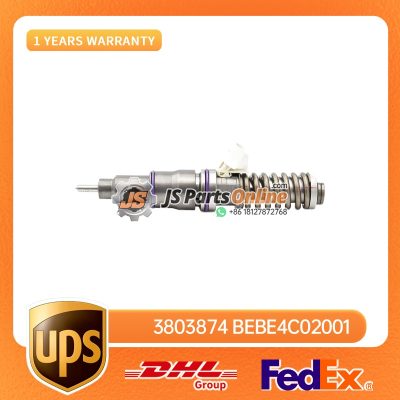
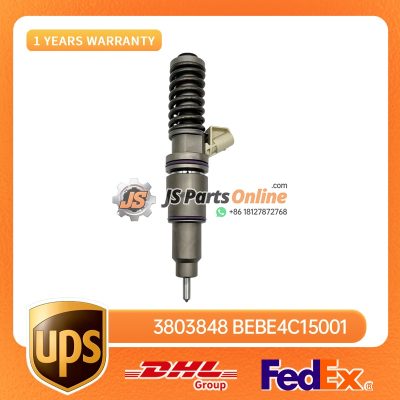
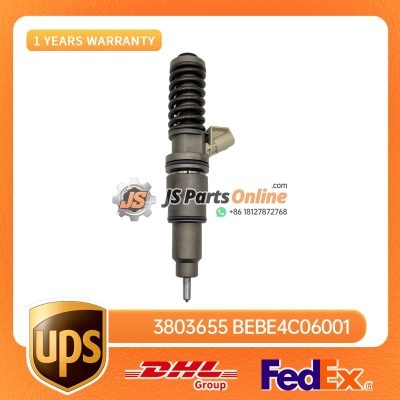
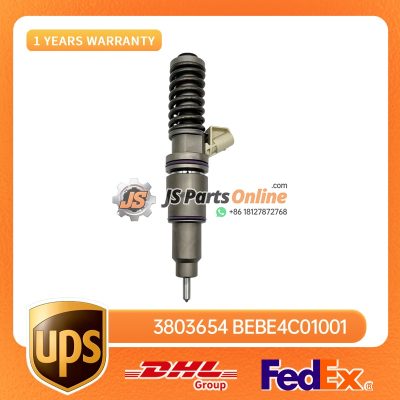
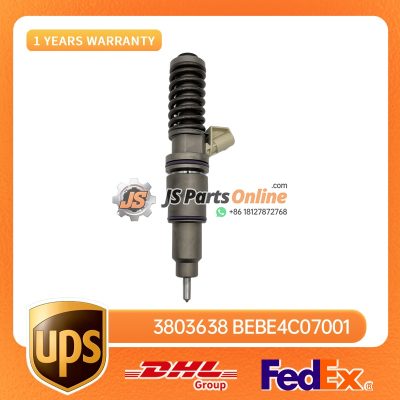
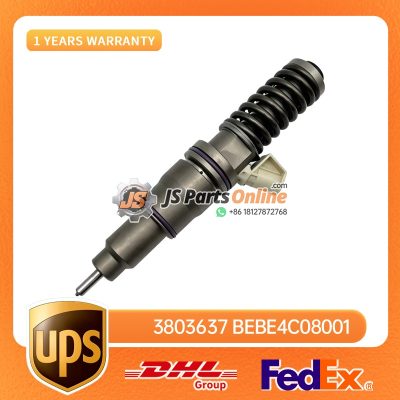
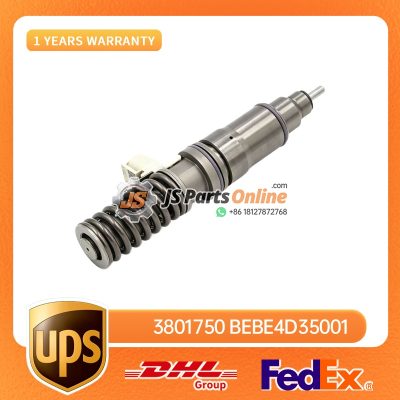
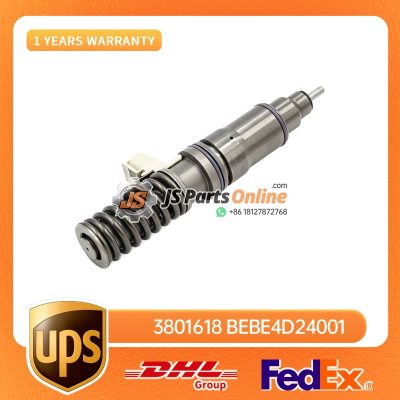
  • Injectors (most critically): Each injector receives debris-contaminated fuel at full rail pressure. Particles score the injector’s internal control valve seats, needle guide bores, and nozzle sac — damage that is almost always terminal

Injector Damage Timeline

The timeline from CP4 failure to injector destruction is measured in seconds, not hours:

  • 0 seconds: Roller disintegrates; first metal particles enter high-pressure circuit
  • 2–5 seconds: Particles reach injectors; control valve function degrades — engine begins running rough
  • 10–30 seconds: Multiple injectors contaminated; erratic injection; possible engine stall
  • After shutdown: Metal particles settle in injector internal passages and nozzle sac volume — re-starting the engine forces debris through nozzle holes, eroding spray pattern permanently

CP3: The More Forgiving Design

The CP3’s 3-piston radial design inherently provides better lubrication distribution and lower internal stress per piston. While CP3 pumps can and do fail — typically from water contamination, severe fuel starvation, or extreme mileage — the failure mode is usually gradual rather than catastrophic:

  • Progressive loss of rail pressure under load (P0087 gradually appearing more frequently)
  • Extended crank time before starting
  • Gradual performance degradation over thousands of miles
  • When a CP3 does fail internally, the 3-piston design often confines debris to a single piston/bore pair, limiting total debris generation compared to the CP4’s more violent failure

Early Warning Signs of Impending Pump Failure

Symptom CP3 or CP4? Urgency
Metal flakes visible in fuel filter housing during replacement Both (especially CP4) CRITICAL — stop driving immediately; inspect pump
P0087 (low rail pressure) code appearing at highway speeds, clearing after restart Both High — pump output is degrading; schedule inspection within days
Whining or metallic grinding noise from pump area, especially at idle Predominantly CP4 CRITICAL — roller failure in progress; imminent catastrophic failure
Fuel in engine oil (rising oil level) Both High — front seal leaking; pump replacement required
Fine metallic “glitter” in fuel sample drained from water separator Both High — internal wear generating debris; entire fuel system at risk
Rough idle with no injector codes, improves slightly at higher RPM CP4 Moderate–High — may indicate failing pressure regulator or early pump wear

When a Pump Fails: Full Fuel System Remediation

After a CP4 catastrophic failure (or any high-pressure pump disintegration), the minimum acceptable repair scope is comprehensive — and expensive:

  1. Replace the high-pressure pump — CP4 with updated revision or CP3 conversion kit where available
  2. Replace ALL injectors — cleaning is not sufficient; internal scoring cannot be reliably detected without disassembly and microscopic inspection
  3. Replace all high-pressure fuel lines — from pump to rail and rail to each injector
  4. Replace or ultrasonically deep-clean the fuel rail — including the pressure relief valve and rail pressure sensor
  5. Flush the entire low-pressure fuel supply circuit — tank to filter housing, including the lift pump if it’s remotely mounted
  6. Replace the fuel filter housing if it contains metallic debris (common on CP4 failures where return fuel carries particles back to the filter)

Cost benchmark: A CP4 failure on a Ford 6.7L Power Stroke typically runs $8,000–$12,000 for a complete OEM-standard fuel system rebuild at a dealer or specialty shop. The injectors alone account for $3,000–$5,000 of that total. The same failure on a Ram 6.7L Cummins with the CP4.2 pump is similarly priced.

Prevention: Protecting Your Pump and Injectors

Fuel Quality is Your First Line of Defense

  • Use high-quality diesel from high-turnover stations — fuel that sits in storage tanks accumulates water and degrades in lubricity
  • Add a quality fuel lubricity additive at every fill-up on CP4-equipped engines. The Bosch specification requires HFRR wear scar ≤460 microns; studies show many North American ULSD samples test at 500–600+ microns without additives
  • Replace fuel filters at or before the recommended interval — restricted fuel flow starves the pump of both fuel and cooling

CP3 Conversion: A Permanent Solution

For CP4-equipped engines (particularly Ford 6.7L Power Stroke and Ram 6.7L Cummins 2019+), aftermarket CP3 conversion kits have become increasingly popular. These kits replace the CP4 with a CP3 pump adapted to the engine’s mounting and plumbing. While expensive ($1,500–$3,000 in parts), a CP3 conversion eliminates the catastrophic failure risk entirely and is considerably cheaper than a single CP4 failure repair.

Routine Fuel System Inspection

  • During every fuel filter change, cut open the old filter element and inspect the pleats for metallic particles with a strong flashlight and magnet
  • Drain a small fuel sample from the water separator into a clear glass jar — hold it up to sunlight and look for metallic “glitter” swirling in the fuel
  • If you find metal: stop driving, test a fuel sample at a lab, and budget for pump replacement before it fails catastrophically

Which Pump Does Your Engine Have?

Application Pump Risk Level
Cummins 5.9L/6.7L 2003–2018 (Ram 2500/3500) CP3 Low — proven design; failures rare below 300,000 miles
Cummins 6.7L 2019+ (Ram) CP4.2 Elevated — CP3 conversion strongly recommended for long-term ownership
Ford 6.7L Power Stroke 2011+ CP4.2 Elevated — use lubricity additives; CP3 disaster prevention kit available
GM Duramax LML (2011–2016) CP4.2 Elevated — same CP4 concerns; lift pump upgrades help but don’t eliminate risk
GM Duramax L5P (2017+) Denso HP4 (not Bosch) Low–Moderate — different design philosophy, fewer catastrophic failures reported
BMW M57/N57 (3.0L diesel) CP4.1 Moderate — European fuel (EN 590, 51+ cetane, higher lubricity) reduces risk vs. North America
VW/Audi 2.0L TDI (CBEA/CJAA) CP4.1 Moderate–High — well-documented failure history; HPFP warranty extension programs exist

Bottom line: If your engine has a CP4 pump, fuel lubricity is not a maintenance suggestion — it’s an insurance policy. A $10 bottle of additive per tank is a fraction of the cost of replacing a full set of injectors.

Disclaimer: This article provides general technical information. Always follow manufacturer service procedures and consult qualified diesel technicians for diagnosis and repair.