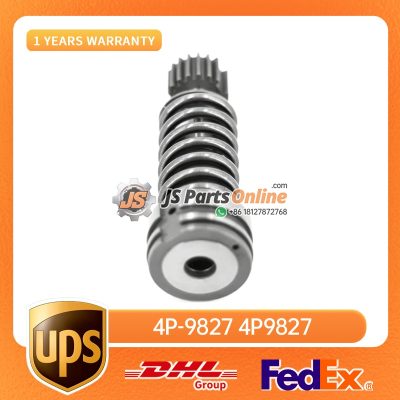
Caterpillar HEUI vs MEUI vs Common Rail: Evolution of Diesel Injector Systems & Complete Performance Comparison

Caterpillar HEUI vs MEUI vs Common Rail: Evolution of Diesel Injector Systems & Complete Performance Comparison

Three Generations of Diesel Injection at Caterpillar

Caterpillar’s diesel fuel injection technology has evolved through three distinct architectures over the past 30 years: HEUI (Hydraulic Electronic Unit Injector), MEUI (Mechanical Electronic Unit Injector), and now Common Rail with electronic unit injectors. Each generation represented a fundamental shift in how fuel is pressurized, metered, and delivered — with profound implications for power density, fuel efficiency, emissions compliance, and serviceability.

For fleet operators maintaining mixed-generation CAT equipment and for technicians diagnosing fuel system problems across engine families, understanding the architectural differences between these systems is not academic — it’s the foundation of accurate diagnosis. A symptom that indicates one thing on a HEUI C12 suggests something entirely different on a common rail C7.1.

Generation 1: HEUI (Hydraulic Electronic Unit Injector) — 1993–2010

Architecture

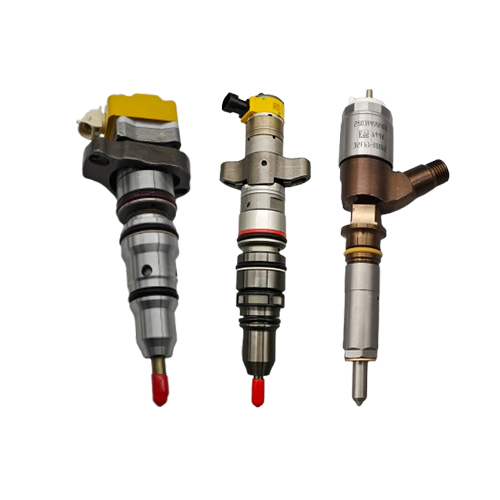
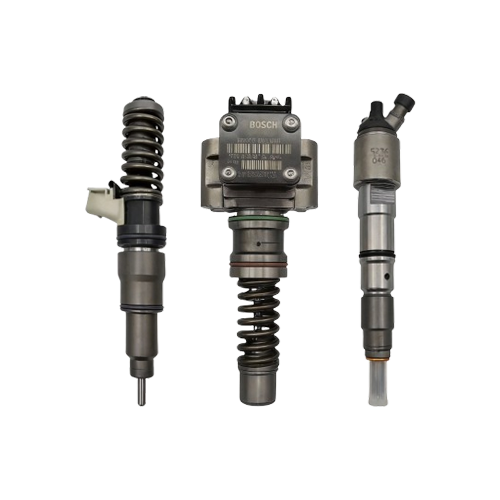
HEUI revolutionized diesel injection by separating the pressurization of fuel from the mechanical actuation of the injector. Instead of a camshaft-driven plunger inside each injector, HEUI used high-pressure engine oil (actuation oil) to drive an intensifier piston inside the injector that multiplied the oil pressure to produce injection pressure.

Core principle: A high-pressure oil pump (HEUI pump) delivers engine oil at up to 3,000 PSI (later models up to 3,600 PSI) to a manifold in the cylinder head. An electronically controlled solenoid valve (IAPCV — Injection Actuation Pressure Control Valve) on the pump regulates this pressure. Inside each injector, a poppet valve controls when the high-pressure oil enters and acts on the intensifier piston, which has a surface area ratio of approximately 7:1 relative to the fuel plunger — converting 3,000 PSI oil into ~21,000 PSI fuel injection pressure.

Engine Applications

Engine Family Models Years Key Characteristics
3126/B/C 3126, 3126B, 3126E 1994–2003 First-gen HEUI; 7.2L I6; mechanical HEUI pump driven by gear train
C7, C9 C7, C9 2003–2009 Second-gen HEUI; improved injector design with faster response; common cylinder head with ACERT later
C11, C13 C11, C13 2004–2007 HEUI on 11L and 13L platforms; bridge between mid-range and heavy-duty
3406E, C15, C16 3406E, C15 (Bridge), C16 1993–2003 Heavy-duty HEUI; 14.6L and 15.8L; foundation of CAT’s electronic truck engine dominance

Advantages

  • Injection pressure independent of engine speed: HEUI can produce full injection pressure at cranking speeds (~200 RPM), dramatically improving cold start capability compared to mechanical unit injectors
  • Flexible injection rate shaping: The rate of oil pressure rise into the intensifier controls the rate of fuel pressure rise — producing a “boot-shaped” injection profile that reduces NOx compared to the sharp pressure spike of mechanical systems
  • No cam-driven timing constraint: Injection timing is purely electronic, with no mechanical advance mechanism required

Disadvantages and Common Failure Points

  • HEUI pump failure: The high-pressure oil pump is a precision component with tight clearances. Contaminated oil, extended oil change intervals, or running low on oil causes rapid wear. A failing pump produces low actuation pressure → low injection pressure → white smoke, low power, hard starting
  • Injector O-ring failure (internal): Injector O-rings separate the oil and fuel circuits inside the injector. When they fail, oil enters the fuel (black fuel filters) or fuel enters the oil (rising oil level, diesel smell in crankcase)
  • IAPCV (Injection Actuation Pressure Control Valve) sticking: The valve on the HEUI pump that controls output pressure is prone to sticking from oil varnish buildup. Symptoms: erratic actuation pressure, surging idle, intermittent low power
  • Oil aeration: Aerated engine oil (from overfilling, high-speed cornering, or oil pan design) is compressible — it destroys injection pressure because the intensifier can’t build pressure against compressible oil. This was a notorious problem on early HEUI 3126 truck engines

Key Diagnostic Parameter: Injection Actuation Pressure (IAP)

On any HEUI engine, the first check when diagnosing a fuel system complaint is IAP — actual vs. desired. At hot idle, IAP should typically be 4.5–6 MPa (650–870 PSI) depending on the engine. At full load, IAP should reach 20–24 MPa. If actual IAP consistently lags behind desired by more than 1.5 MPa, suspect a failing HEUI pump, internal oil leak, or restricted oil supply to the pump.

Generation 2: MEUI (Mechanical Electronic Unit Injector) — 2004–2017

Architecture

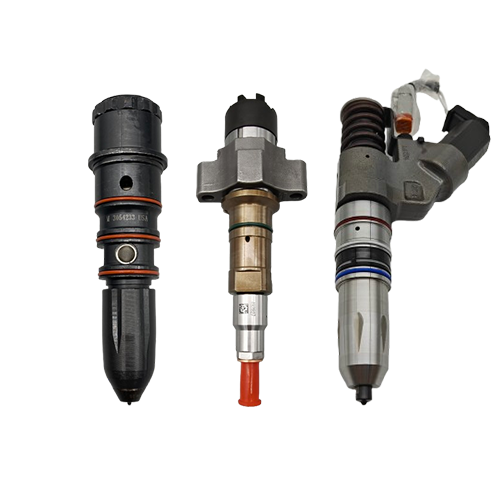
MEUI abandoned the oil-driven intensifier concept entirely, returning to the mechanical unit injector principle — a camshaft-driven plunger inside each injector — but with full electronic control of injection timing and quantity via a high-speed solenoid valve. This eliminated the HEUI pump and all the oil-related failure modes, while keeping the benefits of electronic control.

Core principle: A dedicated injector cam lobe on the engine camshaft drives a roller follower and pushrod that pushes the injector’s internal plunger, generating injection pressure mechanically. An electronically controlled solenoid spill valve determines when fuel pressurization begins (start of injection) and when it ends (end of injection). The solenoid must operate at speeds up to 8,000 RPM equivalent and survive in the valve cover environment.

Engine Applications

Engine Family Models Years Key Characteristics
C11, C13 ACERT C11, C13 2007–2016 MEUI replaced HEUI on these platforms with ACERT emissions compliance; same block architecture as HEUI versions
C15 ACERT, C18 C15, C18 2003–2017 Heavy-duty MEUI; C15 was CAT’s flagship truck engine through Tier 3/4 Interim. C18 for industrial/marine
3508/3512/3516 3500 Series 2000s–Present Large-bore MEUI; multi-cylinder platforms for mining, power generation, marine propulsion

Advantages

  • Eliminated the HEUI pump: No high-pressure oil circuit means no oil contamination of fuel, no oil aeration issues, no IAPCV failures, and one fewer high-cost precision component to fail
  • Higher injection pressure capability: MEUI can produce up to 2,200 bar (32,000 PSI) peak injection pressure vs. HEUI’s typical ~1,450 bar (21,000 PSI), enabling finer fuel atomization and more complete combustion
  • Multi-injection capable: The fast-response solenoid enables pilot injection for noise reduction and multiple injection events — HEUI cannot do this effectively due to the oil circuit’s inherent hydraulic delay
  • Lower heat rejection: The HEUI oil pump generated significant parasitic load and oil heating. Removing it reduced total engine heat rejection by approximately 5–8%

Disadvantages and Common Failure Points

  • Injector train (cam lobe → roller follower → pushrod → injector rocker arm): The mechanical linkage that drives the injector plunger requires precise adjustment. Incorrect injector height (lash) adjustment is the #1 cause of MEUI performance complaints after injector replacement — too loose and injection pressure is low; too tight and the injector bottoms out mechanically
  • Injector solenoid failure: The solenoid operates at extreme temperatures and frequencies. Solenoid coil failure produces a single-cylinder misfire with an injector circuit code
  • Rocker shaft and roller follower wear: The high injection forces place heavy loads on the rocker shaft and roller followers. Worn components change the effective injector timing and pressure profile

Key Diagnostic Parameter: Injector Lash / Injector Height Setting

MEUI injector height is set using a dial indicator during installation. The specification varies by engine model but is typically in the range of 66.0–78.0 mm depending on the injector and engine. If the height is off by more than 0.1 mm from specification, injection timing and pressure will be affected. This is the first measurement to verify when diagnosing an MEUI power complaint.

Generation 3: Common Rail with Electronic Injectors — 2007–Present

Architecture

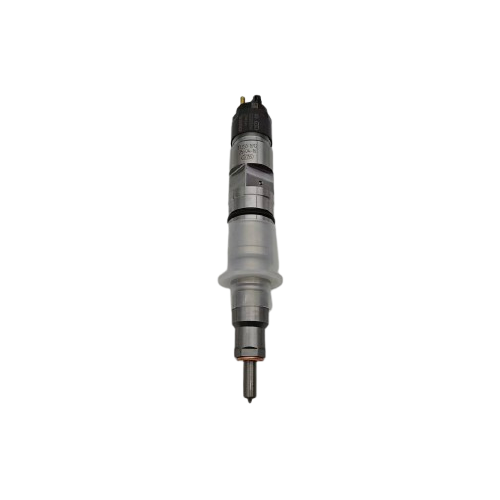
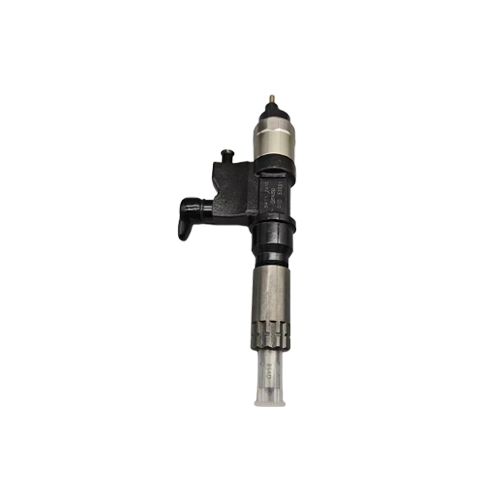
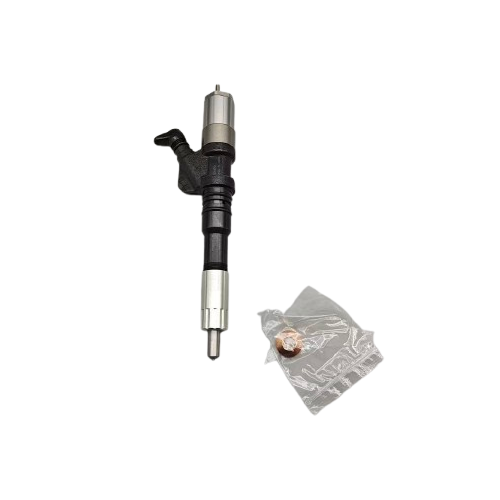
CAT’s common rail system (used on C4.4, C6.6, C7.1, C9.3, and newer platforms) completely separates the pressurization and injection functions. A single high-pressure pump (commonly a Bosch CP3 or CP4 derivative) pressurizes the entire rail, and each injector is a pure solenoid or piezo valve that opens to admit rail-pressure fuel into the cylinder. There is no cam-driven plunger; the injector is purely a metering valve.

Engine Applications

Engine Family Models Years Key Characteristics
C4.4 ACERT C4.4 2007–Present 4.4L I4; compact equipment; Bosch common rail system
C6.6 ACERT C6.6 2007–Present 6.6L I6; mid-range excavators, generators, agricultural
C7.1 ACERT C7.1 2011–Present 7.0L I6; replaces C7 HEUI; Tier 4 Final / Stage V capable
C9.3 ACERT C9.3 2011–Present 9.3L I6; replaces C9 HEUI; broad application range

Advantages

  • Highest injection pressure: Up to 2,500 bar (36,000 PSI) — the highest of the three architectures, enabling finer atomization and meeting the most stringent emissions standards
  • True multi-pulse capability: Common rail injectors can execute 5–7 injection events per cycle (pilot × 2, main, post × 2–3), enabling precise combustion noise control and DPF regeneration management
  • Simplified cylinder head: No injector rocker arms, pushrods, or roller followers — the injector is simply inserted into the bore and held down. This reduces cylinder head complexity, weight, and cost
  • Lower cost per injector: A common rail injector is simpler (no internal plunger or intensifier) and costs significantly less than a comparable HEUI or MEUI injector

Disadvantages and Common Failure Points

  • Fuel contamination sensitivity: Common rail injectors operate with clearances measured in microns. Any hard particle above 3–5 microns can score the control valve. A single tank of contaminated fuel can destroy an entire set of common rail injectors
  • High-pressure pump debris migration: When a CP4 pump fails, it generates metallic debris that travels through the rail and into every injector, typically requiring replacement of the complete fuel system (pump + rail + all injectors + all pipes + tank cleaning) — a $10,000–$25,000 repair
  • Injector return flow sensitivity: Common rail injector control depends on precise return flow rates. If a single injector’s return flow increases (internal wear), it drops the rail’s maximum achievable pressure, reducing power across all cylinders

Head-to-Head Comparison

Parameter HEUI MEUI Common Rail
Max injection pressure 1,450 bar (21 kPSI) 2,200 bar (32 kPSI) 2,500 bar (36 kPSI)
Pressure source Oil-driven intensifier Cam-driven plunger High-pressure pump + rail
Multi-pulse capability No (one injection per cycle) Yes (limited — 1 pilot + main) Yes (up to 7 events)
Cold start injection pressure at cranking Full pressure available (oil pump driven) Low pressure (cam-dependent; needs engine speed) Full pressure available (electric pump prime)
Oil system dependency Critical (HEUI pump) None (no engine oil used for injection) None (only fuel system oil-lubricated)
Injector cost (typical OEM) $800 – $1,200 $600 – $900 $350 – $700
Fuel contamination sensitivity Moderate Moderate Extreme (micron-level clearances)
Catastrophic failure cascade risk Low Low High (pump failure → total system replacement)
Emissions tier max Tier 2 / Stage II Tier 3 / Stage IIIA Tier 4 Final / Stage V

Practical Implications for Fleet Buyers and Technicians

  • HEUI engines (3126, C7, C9, early C13/C15): The HEUI pump is the single most critical component on the engine. Invest in oil analysis (check for fuel dilution and wear metals) and do not extend oil change intervals. A failed HEUI pump is a $3,000+ repair
  • MEUI engines (late C13, C15, C18): Injector height/lash adjustment after injector replacement is not optional — it directly determines injection pressure and timing. A $50 dial indicator and 30 minutes of careful setup prevents thousands in misdiagnosis
  • Common rail engines (C4.4, C6.6, C7.1, C9.3): Fuel quality is everything. A 2-micron secondary fuel filter (e.g., CAT Advanced High Efficiency) is cheap insurance against the $15,000+ consequence of fueling with contaminated diesel

Identifying Which System You Have

Quick visual identification:

  • HEUI: Look for a high-pressure oil pump (separate from the fuel system, gear-driven, with an electrical connector for the IAPCV) on the front or side of the engine. Injector wiring runs to a pass-through connector in the valve cover. No common rail.
  • MEUI: No HEUI pump. Look for injector rocker arms visible through the valve cover (if removed) or adjustment screws on the rocker housing. Injector wiring through valve cover pass-through. No common rail.
  • Common rail: Look for the common rail itself — a thick-walled steel tube running along the cylinder head with individual high-pressure pipes branching to each injector. It’s the most visually obvious distinguishing feature.

Disclaimer: Engine applications and specifications are approximate. Always verify your specific engine serial number against CAT SIS (Service Information System) documentation.