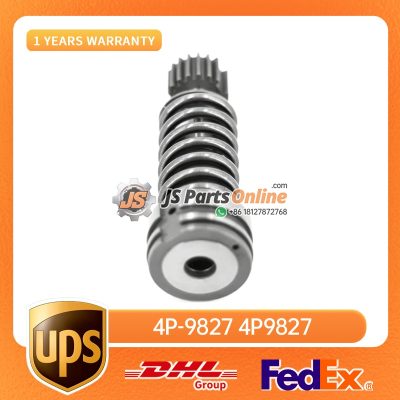
Common Rail Pressure Relief Valve (PRV) Diagnosis: Differentiating PRV Failure from Injector Return Flow

Common Rail Pressure Relief Valve (PRV) Diagnosis: Differentiating PRV Failure from Injector Return Flow

The Pressure Relief Valve: A $50 Component That Can Mimic $5,000 in Injector Problems

When a common rail diesel engine shows low rail pressure, extended crank time, or pressure control fault codes (P0087, P0088, P0093, P2293), the natural diagnostic reflex is to suspect the high-pressure pump or the injectors. But there’s a small mechanical component on the end of the common rail — the pressure relief valve (PRV), also called a pressure limiting valve (PLV) — that, when it fails, produces symptoms nearly identical to multiple failed injectors, and at a tiny fraction of the diagnostic cost.

This article explains the function of the common rail PRV, failure modes that cause low rail pressure and hard starting, how to differentiate PRV failure from injector return flow issues, and the step-by-step diagnostic procedure that saves thousands in unnecessary injector replacement.

What the PRV Does

The pressure relief valve is a spring-loaded poppet or ball valve mounted at one end of the common rail (or integrated into the rail end plug on some designs). Its sole function is to protect the common rail and the high-pressure system from over-pressurization:

  • Normal operation: The PRV is closed. The spring force (typically calibrated to open at 200–300 bar above maximum system pressure) keeps the valve seated against the rail pressure. All fuel flows through the injectors as intended
  • Over-pressure event: If rail pressure exceeds the PRV’s cracking pressure (typically 2,000–2,500 bar, varying by engine), the valve opens and vents fuel from the rail into the return line. This limits peak rail pressure and prevents damage to the pump, rail, and injectors
  • Important: On many common rail systems, the PRV is a one-time device — once it opens, it may not reseat perfectly, and it must be replaced

PRV Failure Modes

Mode 1: Partial Opening / Leaking (Most Common)

The PRV doesn’t fail wide open. It develops a slow leak at pressures below its rated cracking pressure — often at cranking and idle pressures of 200–500 bar. This is by far the most misdiagnosed failure mode because it produces symptoms that mimic injector return flow problems.

Why it happens: Over time, the PRV poppet and seat accumulate microscopic erosion from high-pressure fuel flow. A small particle trapped between the poppet and seat can prevent complete closure. The spring may also lose tension due to metal fatigue after millions of pressure cycles, reducing the effective closing force.

Symptoms:

  • Hard starting / extended crank time (rail can’t reach the minimum starting pressure of 250–350 bar during cranking)
  • Fuel pressure control codes: P0087 (rail pressure too low), P2293 (fuel pressure regulator performance)
  • Engine starts but immediately stalls (rail pressure spikes during cranking, then drops below maintainable level as the PRV leak exceeds the pump’s delivery capacity)
  • Excessive fuel return flow from the rail (not from the injectors — diagnostically critical differentiation)

Mode 2: Stuck Closed (Less Common but Dangerous)

The PRV seizes in the closed position due to corrosion, debris, or mechanical binding. The valve cannot open even when rail pressure exceeds the safe limit.

Symptoms:

  • P0088 (rail pressure too high) — the pressure control system cannot reduce pressure because the PRV is stuck closed, limiting the pump’s suction control valve or metering unit’s ability to reduce delivery
  • Risk of rail rupture or injector damage if the pressure control system fails simultaneously — the PRV is the last-resort safety device

Mode 3: Complete Rupture / Full Open

The PRV fails catastrophically — the spring breaks, the poppet jams open, or the seat is washed out. The rail cannot hold any meaningful pressure.

Symptoms:

  • No-start condition — rail pressure never exceeds 50–100 bar during cranking (insufficient for injector operation)
  • Excessive flow from the PRV return line (visible fuel stream during cranking)
  • If the engine was running when the failure occurred: immediate stall, no restart

The Critical Diagnostic Challenge: PRV vs. Injector Return Flow

Both a leaking PRV and leaking injectors send excessive fuel to the return line. Both reduce rail pressure. Both cause hard starting and pressure fault codes. But the repair cost difference is enormous — a PRV replacement is typically a $50–200 part and 30 minutes of labor; replacing a set of six injectors can exceed $5,000.

Key Differentiating Test: Return Flow Measurement

Measurement Point PRV Leaking Injectors Leaking
Total return flow (all cylinders + PRV combined) Elevated — 500–2,000+ ml/min at idle Elevated — 500–2,000+ ml/min at idle
Return flow from individual injectors Normal — each injector within specification (typically 30–80 ml/min each) One or more injectors significantly above specification
Return flow from PRV return line (measured at PRV outlet) High — majority of total return flow comes from PRV line Normal — PRV return flow near zero (the PRV should be closed at idle)
Rail pressure behavior during cranking Pressure rises slowly, plateaus at 150–250 bar (can’t reach starting threshold) Pressure may reach starting threshold but then decays rapidly between injection events

Step-by-Step PRV Diagnostic Procedure

Step 1: Scan Tool Assessment

  • Read all active and pending DTCs. P0087 + P2293 in combination is the classic PRV failure pattern
  • Monitor rail pressure during cranking: does it reach the minimum starting pressure (typically 250–350 bar) for the engine? If not, you have a pressure delivery or leakage problem
  • Monitor fuel pressure regulator/metering unit duty cycle — if it’s at 100% and rail pressure is still low, high-pressure leakage is present somewhere

Step 2: PRV Return Line Isolation Test

  1. Locate the PRV on the common rail (typically at one end, with a dedicated return line or hose)
  2. Disconnect the PRV return line and route it into a graduated container
  3. Safety: Cap or plug the open return line to the fuel tank to prevent dirt ingress and fuel spillage
  4. Crank the engine for 10 seconds (disable the injectors electrically or use the scan tool’s “compression test” mode to prevent starting)
  5. If fuel flows from the PRV return during cranking at low pressure (below 1,500 bar), the PRV is leaking and must be replaced
  6. Under normal conditions, the PRV should be completely closed during cranking — zero flow from the PRV return line

Step 3: Injector Return Flow Measurement

  1. Disconnect the return lines from each injector and route into individual graduated containers (or use a commercial injector return flow test kit)
  2. Crank the engine for 10 seconds
  3. Measure fuel volume from each injector. Specification varies by injector type, but typically 20–80 ml per injector is normal; over 150 ml indicates excessive internal leakage
  4. Compare the sum of individual injector return flows to the total return flow measured in Step 2 (PRV + injectors combined)

Step 4: The “Rail Plug Test” (Temporary Diagnostic Only — Not a Repair)

For engines where PRV return flow measurement is difficult due to packaging:

  1. Remove the PRV from the rail
  2. Install a solid plug (blanking plug) in place of the PRV — use the correct thread and sealing specification; a standard bolt will not seal and can damage the rail threads
  3. Crank the engine and observe rail pressure via scan tool
  4. If rail pressure now reaches normal levels: The PRV was leaking — replace it
  5. If rail pressure is still low: The problem is elsewhere — injectors, high-pressure pump, or a cracked rail
  6. ⚠️ Immediately remove the blanking plug and install a new PRV. Never run the engine without a functional PRV — the rail has no over-pressure protection

Engine-Specific PRV Locations and Specifications

Engine / System PRV Location Cracking Pressure Notes
Bosch CP3 / CRI2 (common on Cummins ISB, early Duramax) End of common rail, return hose to tank ~2,000 bar Replaceable as a separate component; Bosch part numbers vary by application
Bosch CP4 / CRI3 (later Duramax, PowerStroke 6.7L) Integrated into rail end plug; smaller form factor ~2,200 bar May require rail replacement if PRV is not separately serviceable (varies by OEM design)
Denso common rail (Cummins ISX, some Hino/J-series) Rail end, combined with rail pressure sensor on some models ~2,000–2,200 bar PRV and rail pressure sensor may share a common electrical connector — confusing diagnostic picture
Delphi common rail (various European applications) External to rail, connected via high-pressure line ~1,800–2,000 bar Larger, separate component — easier to test but harder to source aftermarket

Prevention and Maintenance

  • Replace the PRV as preventive maintenance at major injector service intervals (every 250,000–400,000 km or when replacing a full set of injectors). The PRV is a wear item — its spring fatigues and seat erodes over time
  • Always replace the PRV after any over-pressure event that caused it to open (e.g., a failed fuel pressure regulator or suction control valve). Once opened, the PRV may not reseat perfectly
  • Fuel quality matters: Water and particulate contamination accelerate PRV seat erosion. The PRV seat sees the same fuel as the injectors — contaminated fuel damages the PRV just as it damages injector internals
  • After injector replacement, verify PRV function: A set of new, tight injectors delivers less internal return flow, which increases rail pressure. A marginally functional PRV that was sealing adequately with old, leaky injectors may now open at normal operating pressure with tight new injectors

Disclaimer: Common rail pressure relief valve testing involves working on a high-pressure fuel system. Rail pressures during cranking can reach 500+ bar even at starter motor speed. Always depressurize the rail before disconnecting any high-pressure components (use the scan tool “fuel system depressurization” function or wait 10+ minutes after key-off). Never loosen high-pressure connections while the engine is running or cranking.