Diesel Fuel Injector Nozzle Wear: Causes, Symptoms, and When to Replace

Diesel Fuel Injector Nozzle Wear: Causes, Symptoms, and When to Replace

Diesel fuel injector nozzles live in one of the most punishing environments inside any engine. Exposed to combustion temperatures exceeding 1,000 degrees F, injection pressures up to 36,000 psi, and abrasive particles as small as 2 microns, injector nozzles wear continuously from the moment they are installed. Understanding how this wear progresses, recognizing the warning signs before catastrophic failure, and knowing when replacement is due are essential skills for any diesel engine operator, fleet manager, or maintenance technician.

1. How Injector Nozzles Wear: The Four Mechanisms

Injector nozzle wear is not a single process but a combination of four distinct mechanisms that often occur simultaneously. Each mechanism attacks a different part of the nozzle and produces different symptoms, but the end result is always the same: degraded spray pattern, incomplete combustion, and progressive engine damage.

Table 1: Four Nozzle Wear Mechanisms
Wear Mechanism What Happens Affected Area Primary Cause Progression Rate
Abrasive Wear Hard particles suspended in fuel erode nozzle surfaces Spray hole inlets, needle guide, seat area Contaminated fuel (dirt, rust, sand) Rapid, can destroy nozzle in hours with severe contamination
Cavitation Erosion Vapor bubble collapse creates microscopic pressure waves that erode metal Spray hole exits, sac volume walls High fuel velocity, sharp pressure gradients, poor hole geometry Gradual, accelerates with injection pressure increases
Coking / Carbon Deposits Fuel residue bakes onto hot nozzle tip surfaces Nozzle tip exterior, spray hole exits High combustion temperatures, fuel quality, short trips Variable, worse with poor-quality fuel and light-load operation
Adhesive / Sliding Wear Metal-to-metal contact between needle and seat during each injection event Needle seat, needle guide bore Fuel lubricity, injection pressure, closing velocity Very gradual, typically the slowest mechanism

In practice, cavitation erosion and abrasive wear are the dominant mechanisms on modern high-pressure common rail injectors, while coking is more prevalent on HEUI and mechanical injector nozzles that operate at lower peak temperatures. A nozzle showing a combination of enlarged spray holes from erosion and black carbon deposits on the tip has experienced both cavitation and coking simultaneously, often from extended operation with poor fuel filtration.

2. Cavitation Erosion: The Hidden Destroyer

Cavitation erosion is poorly understood outside of engineering circles but is responsible for more nozzle replacements than any other single mechanism. When fuel flows through the spray holes at extreme velocities, localized low-pressure zones form on the inner edge of the hole. These zones cause the fuel to flash into microscopic vapor bubbles. Milliseconds later, when the bubbles collapse as they hit higher-pressure regions, they create pinpoint pressure spikes exceeding 100,000 psi. Over millions of injection events, these micro-implosions literally tear away nozzle material, enlarging and distorting the spray holes.

Table 2: Cavitation Erosion Progression
Stage Hole Geometry Change Spray Pattern Effect Engine Symptom
Stage 1: Initial (0-50K miles) Sharp hole edges slightly rounded, microscopic surface roughness Negligible, within OEM tolerance None detectable by operator
Stage 2: Moderate (50-100K miles) Hole diameter increases 2-5 percent, inlet edge rounding visible under microscope Spray cone angle widens slightly, droplet size increases Fuel economy down 1-2 percent, may not trigger DTC
Stage 3: Advanced (100-200K miles) Hole diameter 5-15 percent larger, visible surface erosion, asymmetry between holes Uneven fuel distribution, streaming from most-eroded hole Black smoke under load, cylinder imbalance, DPF regen frequency up
Stage 4: Critical (200K+ miles) Holes severely enlarged and irregular, sac volume compromised Catastrophic spray pattern, after-drip, fuel stream impacts cylinder wall Piston crown damage, cylinder wash, oil dilution, potential engine failure

The most insidious aspect of cavitation erosion is that it is self-accelerating. Once a spray hole begins to erode, the roughened surface creates more turbulence and more cavitation, which accelerates further erosion. A nozzle at Stage 2 may take 50,000 miles to reach Stage 3, but can go from Stage 3 to Stage 4 in less than 10,000 miles. This is why early detection matters enormously.

3. Abrasive Wear from Fuel Contamination

Diesel fuel inevitably contains some level of particulate contamination, which is why every diesel engine has fuel filters. But when filters are neglected, bypassed, or overwhelmed by poor fuel quality, abrasive particles reach the injector nozzle. Particles as small as 3-5 microns, well below the threshold of visibility, can cause significant abrasive wear to the precision-ground needle guide bore and seat surfaces.

Table 3: Particle Size and Nozzle Damage
Particle Size Clearance Typically Affected Damage Mechanism Result
Below 2 microns Passes through most systems without damage Minimal, within filter efficiency No measurable effect on nozzle life
2 to 5 microns Needle-to-guide clearance (2-4 microns typical) Three-body abrasion in guide bore Gradual increase in back-leakage, sluggish needle movement
5 to 10 microns Needle seat area, spray hole inlets Seat erosion, hole inlet rounding Leaking injector, after-drip, poor spray pattern
Above 10 microns Direct spray hole blockage or enlargement Single-hole blockage or severe asymmetric erosion Immediate cylinder imbalance, potential piston damage

The most critical defense against abrasive wear is a properly maintained multi-stage fuel filtration system. OEM-quality fuel filters rated at 2-4 micron absolute efficiency, changed at the manufacturer-specified interval, are the cheapest insurance against premature injector nozzle replacement. Adding a secondary fuel filter or fuel-water separator on older engines without factory two-stage filtration is one of the most cost-effective upgrades for extending injector life.

4. Nozzle Coking: Carbon Deposition on the Tip

Nozzle coking occurs when fuel residue, particularly from the sac volume after injection, bakes onto the hot nozzle tip and spray hole exits. Over time, this carbon buildup distorts the spray pattern, reduces effective hole diameter, and can completely block individual holes. Coking is most severe on engines that operate at light load for extended periods (where nozzle tip temperatures are not high enough to burn off deposits) or that use poor-quality fuel with high aromatic content.

Table 4: Coking Severity by Operating Condition
Operating Condition Coking Tendency Why Prevention
Heavy load, high speed (highway trucking, mining) Low to moderate High nozzle tip temperature burns off deposits Regular full-load operation naturally cleans nozzles
Light load, urban delivery cycles High Low tip temperature allows deposits to accumulate without burning off Periodic Italian tune-up (full-load run), fuel additives
Extended idle (construction, refrigeration units) Very high Cool nozzle tip, incomplete combustion, high sac volume residue High-idle kit, PIB-based fuel detergents, reduced idle time
Marine, constant-speed generator Moderate Steady temperature but constant accumulation without cleaning cycle Fuel additives, periodic load bank testing at full power
Cold climate, frequent short trips Severe Engine rarely reaches operating temperature, cold fuel leaves more residue Engine block heater, shorter oil change intervals, fuel additives

Fuel additives containing polyisobutylene (PIB) or polyether amine (PEA) detergents effectively prevent and remove mild nozzle coking. For heavy coking that has already occurred, professional ultrasonic cleaning is the only non-destructive method. Do NOT attempt to clean injector nozzles with wire brushes, scrapers, or abrasives, as you will permanently damage the precision spray hole geometry and guarantee the need for replacement.

5. Early Warning Symptoms of Nozzle Wear

Table 5: Nozzle Wear Symptom Progression
Symptom When It Appears Wear Stage What to Do
Gradual fuel economy decline (1-3 percent) Often the first sign, 50-100K miles Stage 2 Perform injector balance rate check; if single cylinder offset, investigate that injector
Increased DPF regeneration frequency When spray degradation increases particulate output Stage 2-3 Monitor regen interval trend; if increasing by more than 30 percent, inspect injectors
Light black smoke under acceleration When airflow can no longer compensate for poor spray Stage 3 Urgent, perform cylinder cutout and leak-down test; plan injector replacement
Rough idle, especially when cold When idle fuel delivery becomes inconsistent Stage 3 Check injector return flow at idle; single injector above 50 mL per minute is failing
Visible black smoke under all loads Severe spray degradation across multiple nozzles Stage 4 Stop operation immediately; inspect and replace all affected injectors
Oil dilution above 5 percent Fuel washing past rings from incomplete combustion Stage 4 Critical, engine damage occurring; full injector set replacement and oil change required
Cylinder misfire DTC When single cylinder falls outside ECM tolerance Stage 3-4 Immediate diagnosis; do not clear code and continue operating

6. Diagnosing Nozzle Wear Without Disassembly

You do not need to remove injectors to assess nozzle condition. Several non-invasive diagnostic methods provide reliable information about nozzle health:

  • Injector balance rates (common rail): Read via scan tool. A single injector with balance rates consistently above plus or minus 3.0 mm per stroke across multiple operating conditions strongly suggests nozzle wear rather than cylinder mechanical issues. Balance rates that change with engine temperature point to nozzle thermal effects from worn seat geometry.
  • Injector return flow measurement: Measure the volume of fuel returning from each injector over a fixed test period (typically 2 minutes at idle). A single injector returning significantly more fuel than others indicates internal leakage past worn needle guides or seats. On common rail systems, one injector returning above 50 mL per minute while others return 10-15 mL per minute is a failing injector.
  • Cylinder cutout test: Disable injectors one at a time while monitoring RPM drop. Consistent minor drop across all cylinders suggests uniform wear. A single cylinder with dramatically different behavior points to that specific injector. A cylinder with zero RPM drop when cut means that injector was contributing essentially nothing, likely from a completely failed nozzle or blocked spray holes.
  • Exhaust port temperature: Using an infrared thermometer or thermal camera, measure exhaust manifold temperature at each cylinder port. A consistently cold cylinder (more than 50 degrees F below average) indicates incomplete combustion, often from nozzle spray degradation in that cylinder.
  • Used oil analysis: Rising fuel dilution over successive oil samples, especially when not accompanied by visible smoke, suggests injector nozzle after-drip that is washing cylinder walls without producing visible exhaust smoke. This is one of the earliest detectable signs of nozzle seat wear.
  • Fuel filter inspection: Cut open used fuel filters and inspect the media. Black soot-like material on the clean side of the filter often indicates combustion gas blow-back through the injector, a sign of severe nozzle seat or copper washer failure.

7. When to Replace: The Decision Matrix

Table 6: Injector Nozzle Replacement Decision Matrix
Condition Replace Single Injector? Replace Full Set? Rationale
Single nozzle with confirmed spray hole erosion, all others healthy Yes, if under 100K miles on set No, if remainder test within specification Single nozzle failure at low mileage is likely manufacturing defect, not system-wide wear
Single nozzle failure at 150K+ miles on original set Not recommended Yes, replace all injectors as matched set At this mileage, remaining injectors are near end of service life; replacing one now means chasing failures one by one
Multiple nozzles showing moderate balance rate deviation (plus or minus 2.0 to 3.0) No Yes, schedule complete replacement Uniform wear pattern indicates system-wide age, not individual defects; replace before balance rates exceed ECM limits
Fuel contamination event (water, dirt, DEF in fuel) No Yes, all injectors plus complete fuel system cleaning Contamination affects all injectors simultaneously; replacing only obviously failed ones guarantees repeat failures
Single clogged spray hole from coking, others clear Try professional cleaning first No, unless cleaning fails or other nozzles show damage Localized coking is often a cleanable deposit, not permanent damage

8. Extending Nozzle Life: Preventive Measures That Work

Table 7: Nozzle Life Extension Practices
Practice Impact on Nozzle Life Estimated Extension Implementation Cost
Fuel filter change every 15,000 miles (not “when clogged”) Highest impact: eliminates abrasive wear 50-100 percent longer nozzle life Filter cost plus labor, approximately 50 to 100 dollars per change
Add secondary 2-micron fuel filter Very high: captures particles primary filter may miss 30-50 percent longer nozzle life 200-500 dollar kit installation, plus annual filter cost
Use fuel additives with PIB or PEA detergents High: prevents and removes nozzle coking 20-40 percent longer life on engines with coking tendency 5-15 dollars per tank, approximately 500-1,500 dollars per year
Avoid extended idle and light-load operation Moderate: reduces coking rate 15-25 percent longer life in affected applications Operational change, may not be practical for all applications
Annual injector balance rate monitoring Indirect: catches wear early before secondary damage Avoids engine damage, does not extend nozzle life directly 30-minute diagnostic scan, approximately 50-100 dollars
Drain water separator weekly Moderate: prevents water-induced cavitation and corrosion 10-20 percent longer life in humid or marine environments 2-minute manual task, zero parts cost

9. The Cost of Waiting Too Long

Operating an engine with worn injector nozzles does not just reduce performance. It causes secondary damage that multiplies repair costs exponentially. A worn nozzle that streams fuel onto the cylinder wall washes away the oil film, accelerating piston ring, cylinder liner, and piston skirt wear. An eroded nozzle that creates uneven combustion generates hot spots that can melt piston crowns and crack cylinder heads. And an injector that after-drips continuously dilutes engine oil, potentially causing bearing damage throughout the engine.

The cost of replacing a complete set of injectors before secondary damage occurs is approximately 2,000 to 4,000 dollars for a typical inline six-cylinder diesel engine. The cost of an in-frame overhaul caused by cylinder washing and oil dilution from ignored nozzle wear is 15,000 to 25,000 dollars. The math is clear: early injector replacement is one of the cheapest insurance policies in diesel engine ownership.

Conclusion

Injector nozzle wear is inevitable, but catastrophic consequences are not. Understanding the four wear mechanisms, monitoring for early symptoms, and replacing injectors before Stage 3 wear develops are the keys to maximizing engine life while minimizing total cost of ownership. The best-run fleets track injector balance rates and fuel economy trends and replace injectors on a condition-based schedule, not a failure-based one, avoiding both premature replacement and expensive secondary damage.

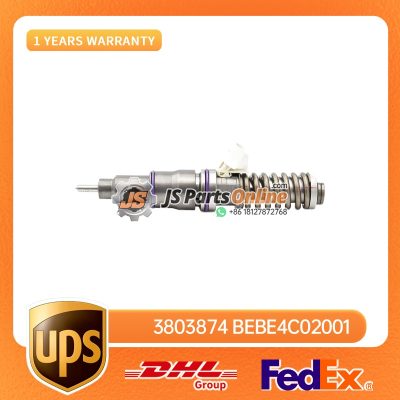
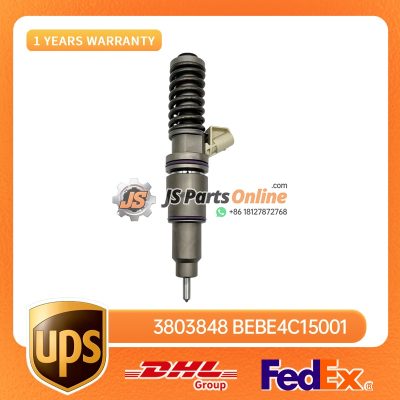
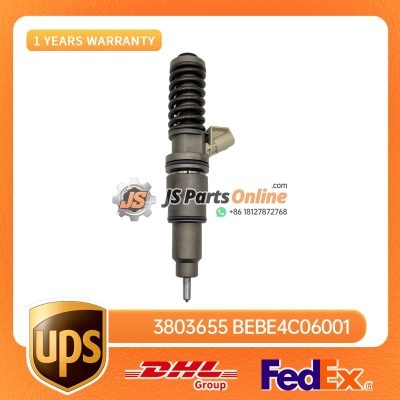
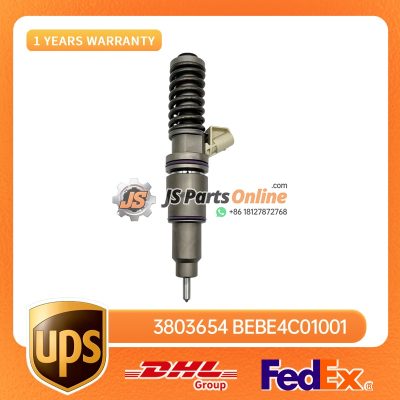
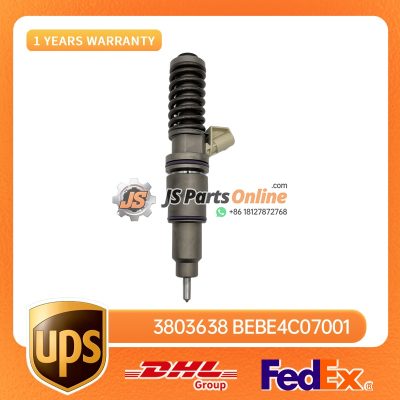
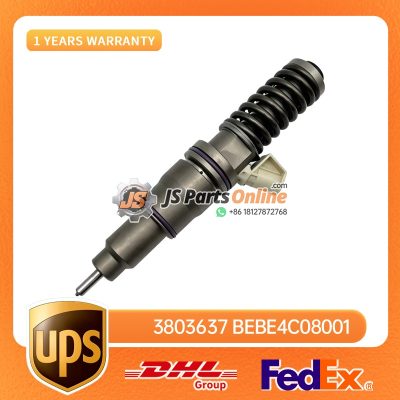
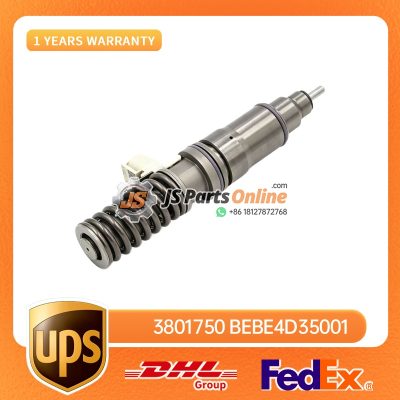
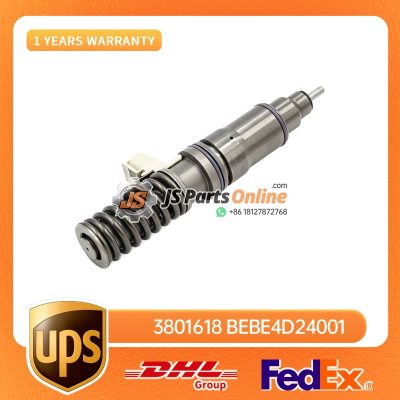
For OEM-quality replacement diesel fuel injectors and nozzles for Caterpillar, Cummins, Detroit Diesel, and Volvo engines, browse our complete injector catalog. All injectors are spray-pattern tested, flow-matched where applicable, and backed by full warranty coverage. For technical questions about nozzle wear diagnosis or injector selection, contact our support team.