Common Rail vs Mechanical Diesel Injectors: Complete Technical Comparison

Common Rail vs Mechanical Diesel Injectors: Complete Technical Comparison

The diesel injection landscape has undergone a seismic shift over the past three decades. Mechanical injectors—once the undisputed standard—have been largely replaced by electronically controlled common rail systems in modern engines. But mechanical injection still powers millions of engines worldwide, from agricultural equipment to marine diesels and legacy trucks.

Understanding the differences between these two technologies is essential whether you are diagnosing a fault, planning an engine rebuild, or purchasing replacement diesel injectors. This guide breaks down every critical dimension: operating principles, performance, reliability, cost, and application fit.

Operating Principles: How Each System Works

Mechanical Diesel Injection

In a mechanical injection system, fuel pressure generation and injection timing are coupled to engine rotation. An injection pump (inline, rotary, or unit pump) is driven by the engine’s camshaft or gear train. As the engine turns, the pump’s plunger compresses fuel to high pressure (typically 200-350 bar on direct injection, up to 1,000 bar on unit injector systems). When pressure overcomes the injector nozzle’s spring preload, the needle lifts and fuel sprays into the cylinder.

Key characteristics:

  • Injection pressure is RPM-dependent: lower at idle, highest at rated speed
  • Timing is mechanically fixed (or adjusted via governor/advance mechanism)
  • Single injection event per cycle (one spray per combustion stroke)
  • No electronic control unless retrofitted with an EDC governor

Common Rail Diesel Injection

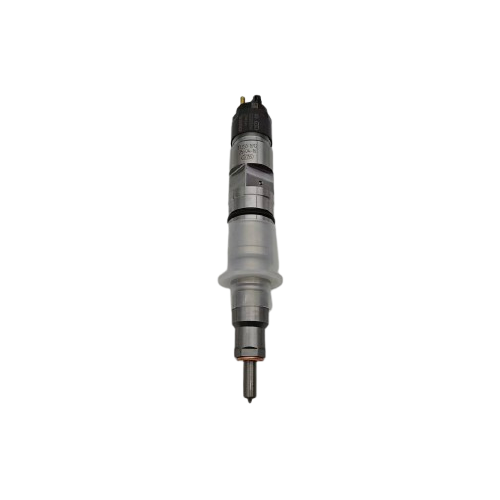
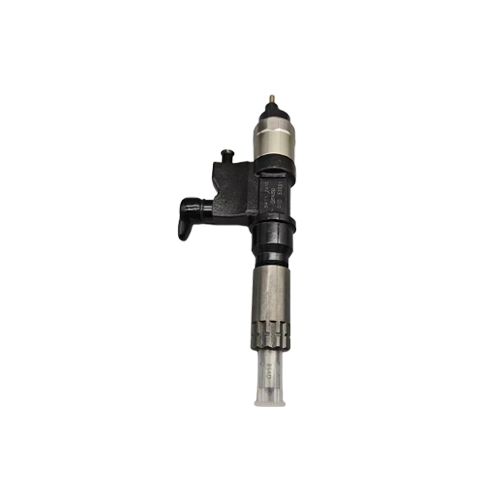
A common rail system separates pressure generation from injection timing. A high-pressure pump (driven by the engine) continuously charges a shared accumulator rail to a constant pressure—typically 1,600 to 2,500 bar on modern systems. Electronically controlled solenoid or piezo-actuated injectors then open on command from the ECU, releasing precisely metered fuel at any point in the engine cycle.

Key characteristics:

  • Injection pressure is independent of engine RPM (full pressure available at idle)
  • Multiple injection events per cycle (pilot, main, post, and sometimes after-injection)
  • Fully electronic control with microsecond precision
  • Closed-loop feedback from rail pressure sensor, crankshaft position sensor, and lambda/O2 sensors
Operating Principle Comparison at a Glance
Parameter Mechanical Injection Common Rail Injection
Pressure generation Coupled to engine RPM via cam-driven pump Independent; high-pressure pump feeds accumulator rail
Injection timing control Mechanical (governor, advance mechanism) Electronic (ECU with crank/cam position feedback)
Injection events per cycle 1 (single shot) 3 – 8 (multi-pulse strategy)
Maximum pressure (modern) 400 – 1,000 bar (unit injector) 1,600 – 2,500+ bar
Pressure at idle Low (100 – 150 bar) Full system pressure (300 – 500 bar rail)
Fuel metering precision Mechanical tolerances (±5-10%) Electronic closed-loop (±1-2%)

Sub-Types of Mechanical Injection Systems

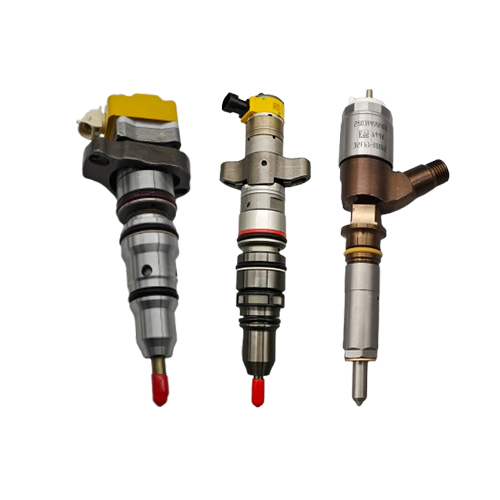
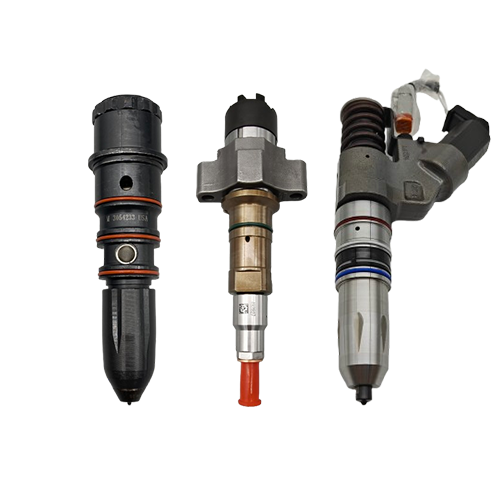
Not all mechanical injection is the same. Understanding the sub-types helps in diagnosis and parts selection, especially when sourcing Caterpillar mechanical injectors:

Mechanical Injection System Sub-Types
System Type Typical Pressure (bar) Common Applications Injector Type
Inline pump + nozzle/holder 200 – 350 Older truck engines, marine, industrial Hole-type nozzle with spring-loaded holder
Rotary (distributor) pump 250 – 450 Light trucks, agricultural (pre-2000) Pintle or hole-type nozzle
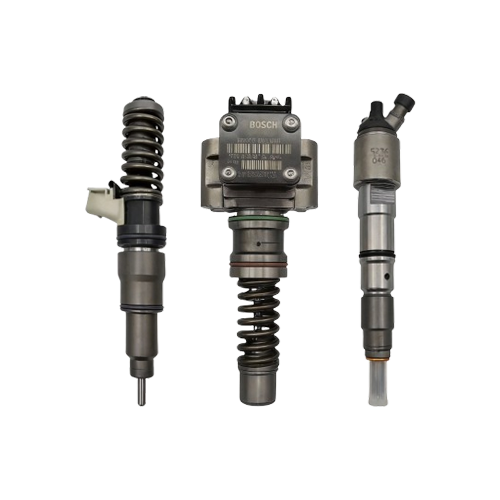
Unit pump (UPS) 800 – 1,200 Heavy-duty trucks (Euro 3), DDC Series 60 Unit injector with integrated pump plunger
Unit injector (UIS) 1,600 – 2,050 Volkswagen TDI PD, DDC, older Volvo/Mack Cam-actuated integrated pump-injector
HEUI (hydraulic electronic) 1,500 – 1,750 Caterpillar C7, C9, 3126, Ford/Navistar 7.3L/6.0L Oil-pressure-amplified electronic injector

Efficiency and Emissions: Why Common Rail Won

The single biggest advantage of common rail injection is the ability to shape the combustion event through multiple injection pulses. This enables:

How Multi-Pulse Injection Improves Combustion
Injection Pulse Timing Purpose Benefit
Pilot injection 1 20 – 40° BTDC Pre-condition combustion chamber Reduces ignition delay; cuts NOx by 20-30%
Pilot injection 2 10 – 15° BTDC Initiate combustion smoothly Reduces combustion noise by 3-5 dB
Main injection TDC to 15° ATDC Primary power stroke Delivers 80-90% of total fuel mass
Post injection 1 20 – 40° ATDC Raise exhaust temperature Assists DPF regeneration; +100-150°C exhaust temp
Post injection 2 160 – 200° ATDC Generate hydrocarbons for LNT Enables NOx trap regeneration without external dosing

A mechanical injector, by contrast, delivers all its fuel in a single burst. This creates a sharp pressure rise and high peak combustion temperatures—exactly the conditions that produce NOx and combustion noise. Without multi-pulse capability, mechanical engines cannot meet Euro 4/5/6 or Tier 4 Final emissions standards without aftertreatment.

Reliability and Maintenance: Where Mechanical Still Wins

For all their performance advantages, common rail systems are more complex and more sensitive to fuel quality. Here is where mechanical injection maintains a compelling case:

Reliability and Maintenance Comparison
Aspect Mechanical Injection Common Rail Injection
Fuel quality sensitivity Low; tolerates poor diesel, some water High; requires ultra-low sulfur diesel, no water, <5 micron filtration
Component count Low; pump + injectors + lines High; HP pump, rail, pressure sensor, pressure regulator, ECU, wiring, injectors
Service life (injectors) 3,000 – 8,000 hours (rebuildable) 2,000 – 5,000 hours (often non-rebuildable)
Field serviceability Yes; basic tools, no electronics Limited; diagnostic scan tool required; injector coding needed
Water damage resilience Drain tank, bleed system, restart Water destroys HP pump and injectors immediately
Average repair cost $200 – $600 per injector rebuild $400 – $1,200 per injector replacement
Critical failure mode Gradual degradation (power loss, smoke) Sudden failure (stuck open injector, hydrolock risk)

Application Guide: Which System for Which Engine?

Recommended Injection System by Application
Application Recommended System Reasoning
Modern on-road trucks (Euro 5/6) Common rail Emissions compliance mandatory; fuel economy critical
Old trucks in developing regions Mechanical (inline pump) Fuel quality poor; no electronics support infrastructure
Marine diesel (commercial) Mechanical (inline pump) 24/7 reliability; serviceable at sea; heavy fuel oil use
Agricultural tractors (post-2015) Common rail Emissions regulations (Tier 4); precision farming needs
Agricultural tractors (pre-2010) Mechanical (rotary pump) Simplicity; farmer-serviceable; cheap fuel tolerance
Construction equipment HEUI or common rail HEUI for CAT C7/C9; common rail for newer machines
Stationary generators Mechanical preferred Constant RPM eliminates common rail advantage; reliability priority
Pickup trucks (post-2008) Common rail Power density; emissions; NVH refinement

Performance Tuning: Common Rail’s Hidden Advantage

For performance enthusiasts, common rail systems offer a dimension that mechanical injection cannot match: software-based tuning. With a mechanical pump, increasing fuel delivery requires physical modifications: larger plungers, modified governor springs, advance curve adjustments. Each change is a hardware modification that cannot be reversed without swapping parts.

A common rail ECU, by contrast, can be remapped to increase rail pressure, extend injection duration, and adjust timing—all in software. A Stage 1 tune on a common rail Cummins 6.7L or Duramax L5P can add 80-120 horsepower without opening the hood. This tunability also allows compensation for wear: as an injector ages, its flow characteristics change, and the ECU can adjust pulse width to maintain cylinder balance.

Cost of Ownership: 5-Year Analysis

5-Year Ownership Cost Comparison (6-Cylinder Heavy-Duty Engine, 150,000 km/year)
Cost Category Mechanical Injection Common Rail Injection
Injector replacement interval 400,000 – 600,000 km 250,000 – 400,000 km
Injector cost per set (6 pcs) $1,500 – $2,400 (rebuilt) $2,400 – $4,800 (new/reman)
Injection pump rebuild (5 years) $2,000 – $4,000 (one rebuild) $1,200 – $2,500 (HP pump replacement)
Fuel filtration cost (5 years) $300 – $600 $600 – $1,200 (more frequent changes)
Fuel savings (5 years at 8% better efficiency) Baseline $-8,000 – $-12,000 (savings)
Downtime cost (injector failures) $2,000 – $4,000 (gradual, planned) $4,000 – $8,000 (sudden, unplanned)
Total 5-year cost (estimated) $5,800 – $11,000 $200 – $4,500

The fuel efficiency advantage of common rail—typically 5-10% better than mechanical injection—often offsets the higher parts and maintenance costs over a 5-year ownership period, especially for high-mileage operators. For low-utilization applications (under 30,000 km/year), mechanical injection remains the lower total-cost option.

Our Product Coverage

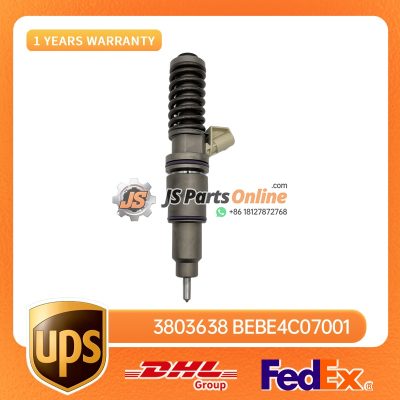
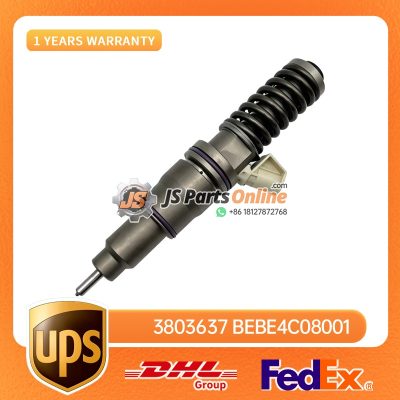
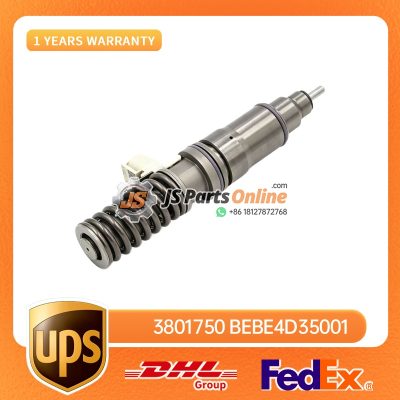
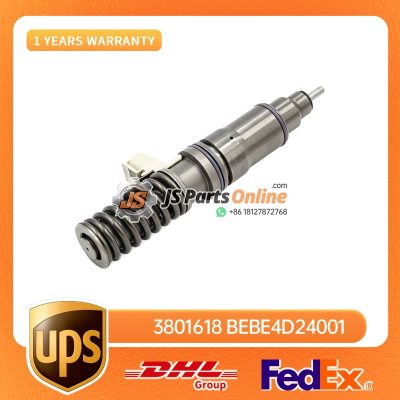
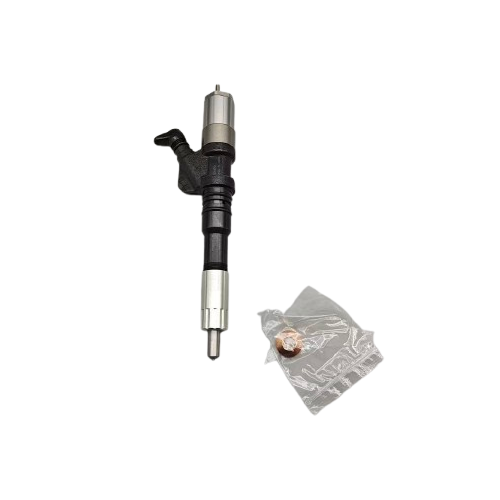
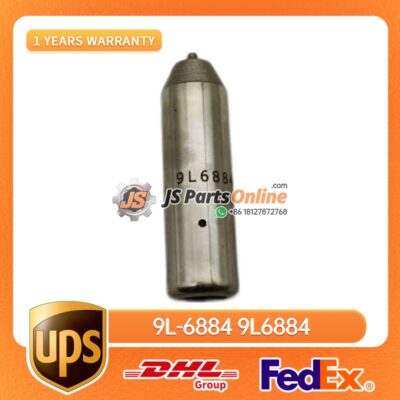
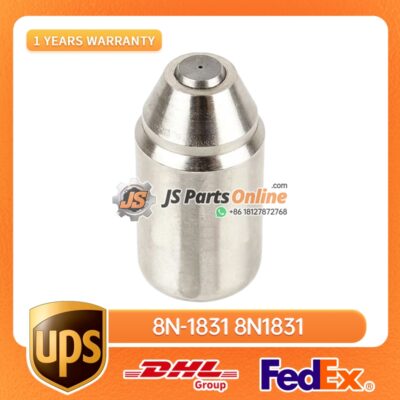
At JS Parts Online, we stock injectors for both mechanical and common rail systems across all major manufacturers:

Need help identifying which injector system your engine uses? Contact our technical support team with your engine serial number for expert assistance.