Diesel Fuel Injector Nozzle Types, Spray Patterns & Selection Guide
Introduction
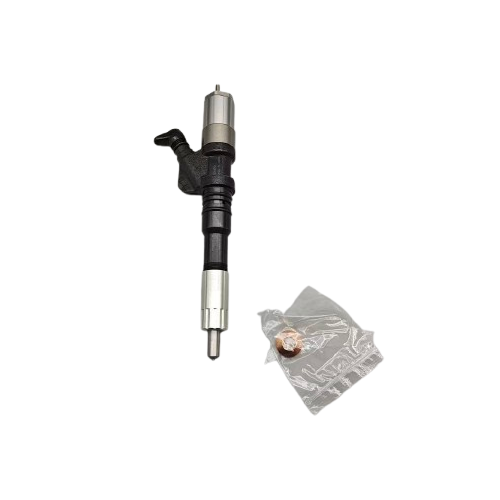
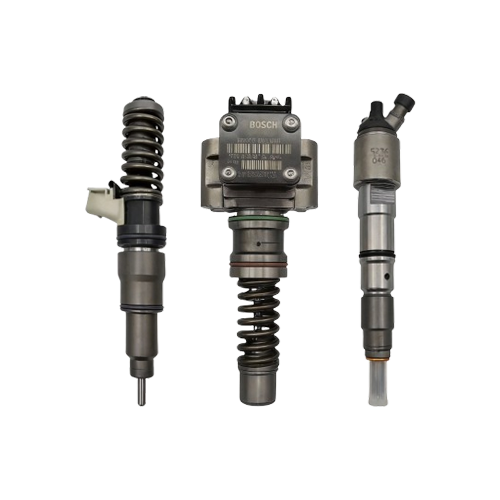
If the solenoid valve is the brain of a diesel injector, the nozzle is its voice. Everything the injection system does — the precisely timed pulses from the ECU, the immense pressure generated by the high-pressure pump, the microsecond-level solenoid actuation — it all gets expressed through a few tiny holes at the tip of a component smaller than your thumb. Choose the wrong nozzle, and even the most sophisticated common rail system can’t deliver clean combustion.
In this guide, we’ll break down every aspect of diesel injector nozzles: the naming conventions that decode a nozzle’s DNA, the critical differences between sac and VCO designs, how hole count and spray angle affect combustion, and the practical considerations for selecting the right replacement nozzle for your engine.
Diesel Injector Nozzle Naming Convention: Decoding the Part Number
Bosch, Denso, and Delphi all use similar alphanumeric coding systems for their nozzles. Once you understand the code, a part number like DLLA 150 P 1420 tells you almost everything you need to know about the nozzle:
| Code Section | Example | Meaning |
|---|---|---|
| First letter(s) | D | Nozzle type: D = hole-type nozzle (Düse = nozzle in German) |
| Second letter | L | Mounting type: L = long stem, S = short stem, N = needle-type |
| Third letter | L | Nozzle design: L = standard, S = with seat throttle, P = flat seat |
| Fourth letter (if present) | A | Cooling: A = uncooled (standard), K = cooled nozzle |
| Spray angle number | 150 | Spray cone angle in degrees (150° in this example) |
| Design type letter | P | Nozzle design generation: P = pintle-type hole geometry, S = special |
| Flow/size number | 1420 | Flow specification; higher number = larger hole area = more fuel flow |
Common Nozzle Series
| Series | Full Name | Applications | Hole Count | Spray Angle Range |
|---|---|---|---|---|
| DLLA | Düse, Lang, Loch, Ungekühlt (Nozzle, Long, Hole, Uncooled) | Caterpillar 3116, 3126, C7, C9; Cummins ISB, ISC | 5-8 holes | 140°-160° |
| DSLA | Düse, Kurz, Loch, Ungekühlt (Nozzle, Short, Hole, Uncooled) | Volkswagen TDI, BMW M57, Mercedes OM642, light-duty common rail | 6-8 holes | 150°-165° |
| DLLP | Düse, Lang, Loch, Flachsitz (Nozzle, Long, Hole, Flat seat) | Caterpillar C13, C15, 3406E; heavy-duty unit injectors | 6-10 holes | 145°-155° |
| P-type | Pintle-type (SAC design) | Caterpillar HEUI, older mechanical injection systems | 4-6 holes | 140°-160° |
Sac vs VCO: The Two Fundamental Nozzle Designs
There are two fundamentally different nozzle tip geometries, and the choice between them has a significant impact on emissions, performance, and durability:
SAC (Sac Hole) Nozzle Design
In a SAC nozzle, the holes are drilled into a small spherical cavity — the “sac” — at the tip of the nozzle. The needle seats above this cavity, meaning when the needle closes, a small volume of fuel remains trapped in the sac between the needle seat and the hole entries.
Advantages:
- Better hole-to-hole flow distribution — the sac acts as a plenum, equalizing pressure across all holes
- More forgiving of manufacturing tolerances
- Generally longer service life under contaminated fuel conditions
- Lower hydraulic flow losses through the nozzle
Disadvantages:
- Sac volume fuel evaporates after injection and contributes to hydrocarbon (HC) emissions
- Higher particulate matter (PM) emissions compared to VCO designs
- Cannot meet Euro 6 / EPA 2010+ emissions standards without downstream aftertreatment
VCO (Valve Covers Orifice) Nozzle Design
In a VCO nozzle, the needle tip directly covers the hole entries — there is no sac volume. When the needle closes, it physically blocks the holes at their entry point, leaving essentially zero unswept fuel volume.
Advantages:
- Near-zero sac volume = dramatically lower HC emissions at nozzle closure
- Meets modern emissions standards (Euro 5/6, EPA 2010, Tier 4 Final)
- Cleaner needle closure with less post-injection dribble
Disadvantages:
- More sensitive to manufacturing tolerances — needle-to-hole alignment is critical
- More susceptible to hole blockage from fuel contaminants
- Slightly higher hydraulic losses through the nozzle
- Generally shorter service life in poor fuel quality environments
| Feature | SAC Nozzle | VCO Nozzle |
|---|---|---|
| Unswept fuel volume | 0.3-0.8 mm³ (sac volume) | <0.05 mm³ (essentially zero) |
| HC emissions | Higher | Significantly lower |
| Flow balance (hole-to-hole) | Excellent | Good (requires precision manufacturing) |
| Contamination tolerance | Good | Poor — requires high-quality filtration |
| Typical applications | Pre-2007 engines, HEUI systems | Post-2007 common rail engines |
| Nozzle replacement interval | 150,000-250,000 miles | 100,000-200,000 miles |
Hole Count and Spray Angle: The Geometry of Combustion
How Many Holes Does a Diesel Nozzle Need?
Modern diesel injector nozzles typically have 5 to 10 holes, with 6-8 being most common. The optimal hole count depends on the combustion bowl design, engine speed, and emissions requirements:
- 5-6 holes: Older mechanical injection engines (pre-2000), larger hole diameters, simpler piston bowl geometry
- 6-8 holes: Modern common rail engines (2000-2015), moderate hole diameters (130-180 μm), re-entrant combustion bowls
- 8-10 holes: Latest-generation engines (2015+), very small hole diameters (100-130 μm), sophisticated stepped-lip bowls
More holes enable better air utilization — the fuel is distributed more evenly throughout the combustion chamber, improving air-fuel mixing. However, each additional hole means smaller hole diameters for the same total flow area, which makes the nozzle more sensitive to fuel contamination and increases manufacturing cost exponentially.
Spray Angle: Matching the Piston Bowl
The spray angle must be precisely matched to the piston bowl geometry. A typical diesel combustion bowl is a re-entrant toroidal shape, and the spray plumes must enter the bowl at the correct angle to maximize air utilization without impinging on the cylinder walls or bowl lip:
| Spray Angle | Typical Piston Bowl Type | Example Engines |
|---|---|---|
| 140°-145° | Shallow, open bowl (older DI designs) | Caterpillar 3406 mechanical, early Cummins N14 |
| 145°-155° | Standard re-entrant bowl | Caterpillar C13/C15, Cummins ISX, Detroit DD15 |
| 155°-160° | Deep re-entrant bowl | Caterpillar C7/C9 ACERT, Cummins ISB/ISC |
| 160°-165° | Stepped-lip bowl (latest combustion systems) | Mercedes OM471, Volvo D13TC, MAN D38 |
Nozzle Materials and Manufacturing
Diesel injector nozzles operate in one of the most hostile environments in an engine: 2,000+ bar internal pressure, 200-300°C tip temperatures, corrosive combustion gases, and abrasive soot particles. The materials and manufacturing processes reflect this extreme duty:
- Nozzle body material: 18CrNi8 case-hardening steel — carburized to achieve a hard, wear-resistant surface (60-62 HRC) with a tough, ductile core
- Needle material: HWS (high-speed steel) or 100Cr6 bearing steel — hardened and precision-ground to 1-2 μm roundness
- Hole drilling: EDM (Electrical Discharge Machining) — holes as small as 80 μm diameter are burned through the nozzle tip using a precisely controlled electrical spark. Mechanical drilling cannot achieve the required hole sizes or accuracy
- Hydro-erosive grinding (HE): After EDM drilling, an abrasive slurry is pumped through the holes at high pressure to radius the hole edges and achieve precise flow matching. This process, called HE grinding, is what gives modern nozzles their consistent flow characteristics
- Needle-to-body matching: Each needle is individually lapped to its body — they are a matched pair and cannot be interchanged
How to Select the Right Replacement Nozzle
Step 1: Verify the Original Part Number
Always start with the original nozzle part number. This is typically laser-etched on the nozzle body or the injector identification plate. Cross-reference this number using the Bosch, Denso, or Delphi online catalog or a trusted cross-reference database.
Step 2: Confirm the Nozzle Series
The nozzle series (DLLA, DSLA, DLLP, etc.) is critical — it defines the mounting dimensions, needle lift, and overall geometry. A DLLA nozzle cannot be substituted for a DSLA nozzle, even if the flow rating is the same.
Step 3: Match the Spray Angle
The spray angle must match the engine’s combustion system. Installing a 150° nozzle where a 155° nozzle is specified will direct fuel spray onto the wrong area of the piston bowl, causing incomplete combustion, increased smoke, and potential piston damage.
Step 4: Select the Correct Flow Rating
The flow number (the last 3-4 digits in Bosch nomenclature) determines how much fuel the nozzle can deliver. A higher number = larger total hole area = more fuel flow. Flow rating must match the engine’s rated power. A nozzle with insufficient flow limits power output; a nozzle with excessive flow causes over-fueling, black smoke, and potential engine damage.
Step 5: Choose SAC or VCO Based on Emissions Requirements
For pre-2007 engines, either SAC or VCO nozzles can be used. For 2007+ engines originally equipped with VCO nozzles, stick with VCO — the emissions system (DPF, DOC, SCR) was calibrated for VCO-level hydrocarbon emissions at nozzle closure.
Related Products
At JS Parts Online, we supply a comprehensive range of diesel injector nozzles for heavy-duty and industrial applications:
- Diesel Injector Nozzles — OEM-spec DLLA, DSLA, and P-type nozzles for CAT, Cummins, Detroit Diesel, and Volvo engines
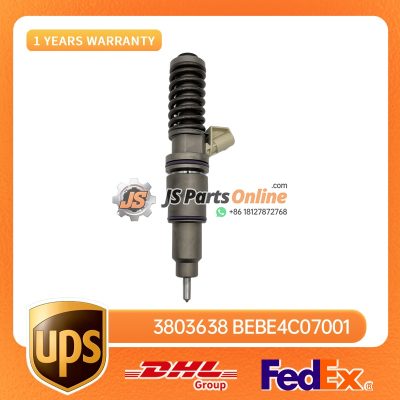
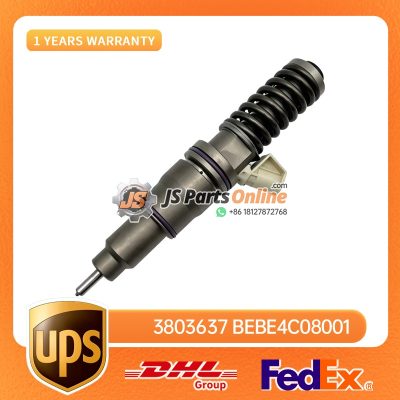
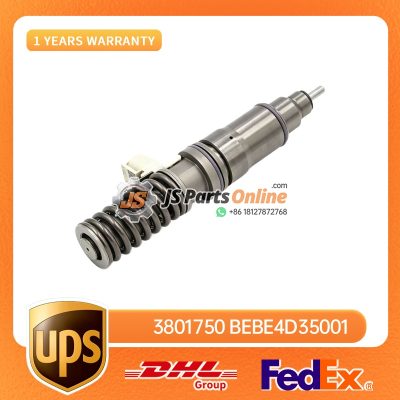
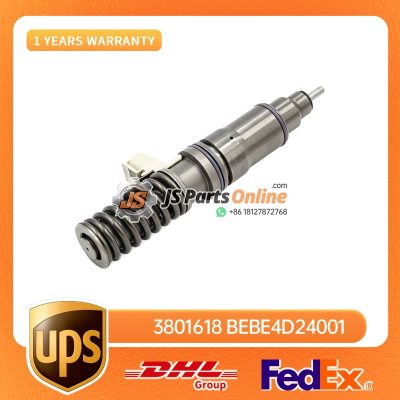
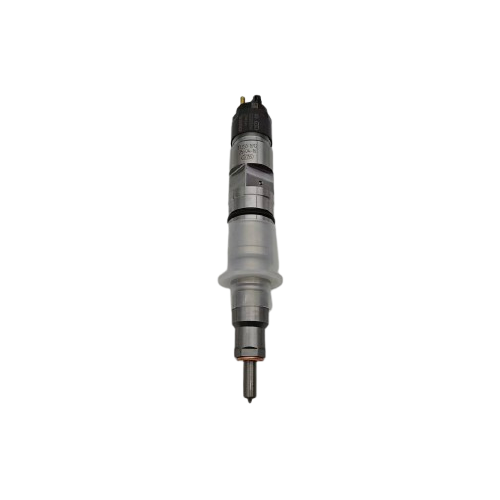
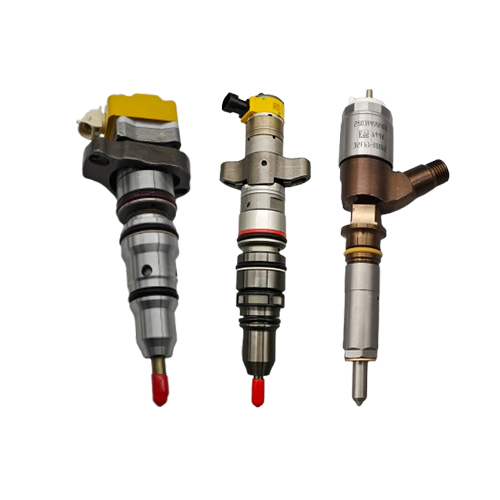
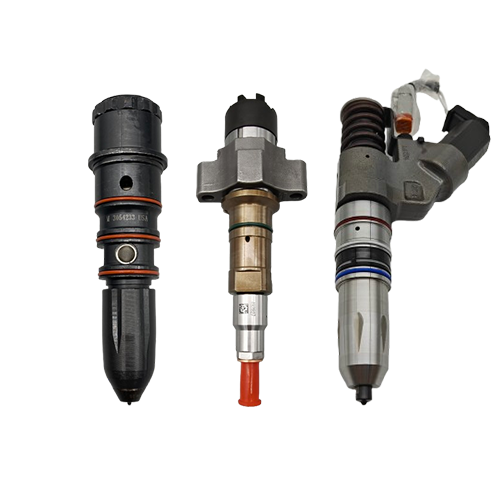
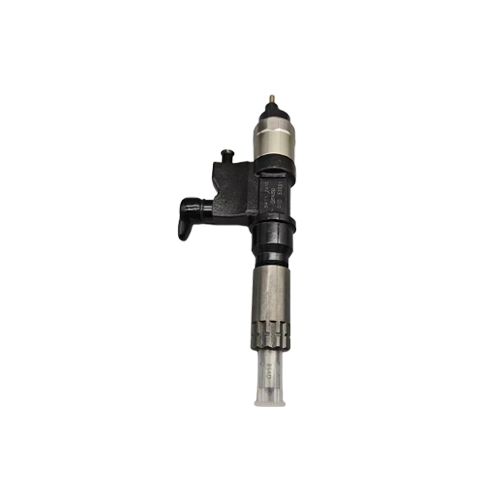
- Complete Diesel Fuel Injectors — Pre-assembled and tested injectors with matched nozzles for plug-and-play installation
- Fuel Injection Pump Plungers — Precision-matched plunger and barrel assemblies for CAT fuel injection pumps
Conclusion
The diesel injector nozzle is a component where every detail matters: the sac volume affects emissions, the hole count affects combustion quality, the spray angle must match the piston bowl, and the flow rating must match the engine’s power output. Understanding these parameters transforms nozzle selection from guesswork into an engineering decision. Whether you’re rebuilding a set of CAT C15 injectors or replacing nozzles in a modern common rail engine, the right nozzle — correctly specified — is the difference between a clean-running engine and one that leaves a trail of black smoke.