
The Future of Fuel Injection Technology: Trends Shaping Next-Gen Injectors
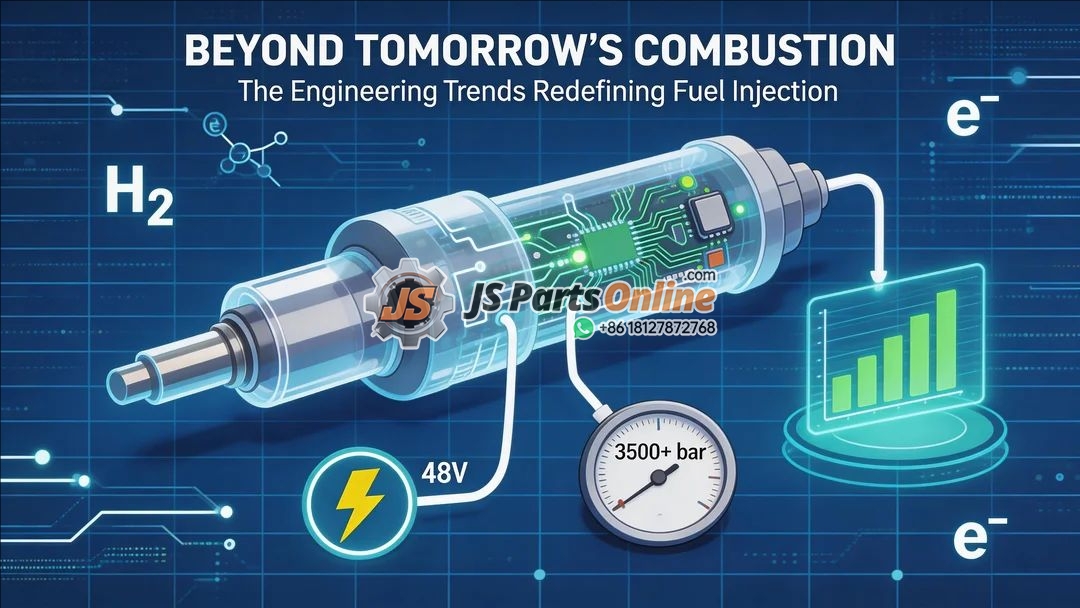
The quest for greater efficiency, lower emissions, and more power is a relentless force in automotive engineering. At the heart of this evolution lies a component undergoing a silent revolution: the fuel injector. Far from being a mature technology, fuel injection is advancing rapidly, driven by material science, electronics, and system integration. This article looks beyond today’s common-rail and GDI systems to explore the key technological trends that are defining the next generation of fuel injectors. Understanding these directions is crucial for technicians, enthusiasts, and fleet managers to anticipate maintenance needs, performance capabilities, and the future landscape of engine repair and upgrades.
The Unrelenting March Higher: Pressure is Performance
The correlation between injection pressure and engine performance is fundamental. Higher pressure enables finer fuel atomization, which leads to more complete combustion, reduced soot formation, and improved thermal efficiency.
- Current State: Modern diesel common-rail systems operate at 2,500 – 3,000 bar (36,000 – 43,500 PSI). Gasoline Direct Injection (GDI) systems are in the 350 – 500 bar (5,000 – 7,250 PSI) range.
- The Trend: Pressures are climbing. Next-generation diesel systems are targeting 3,500+ bar, while advanced GDI is moving towards 700 – 1,000 bar. This demands injectors with incredibly robust bodies, advanced materials for needles and nozzles, and even more precise manufacturing to prevent leaks and withstand stress. The injectors of tomorrow will be marvels of high-pressure engineering, building on the principles of today’s high-performance units found in our catalog.
The Rise of 48-Volt Architectures and Advanced Actuators
The standard 12V electrical system is becoming a bottleneck for high-speed, high-precision actuators. The move to 48V mild-hybrid systems unlocks new possibilities for fuel injectors.
- Faster Solenoids: Higher voltage allows for stronger magnetic fields, enabling solenoid valves to open and close significantly faster. This permits more injection events per cycle (up to 8-10) for even finer control over noise, emissions, and combustion.
- Piezoelectric Injectors: Already used in some premium diesel applications, piezo-injectors use ceramic crystals that change shape minutely when voltage is applied. Their response time is up to four times faster than the best solenoid injectors. As costs decrease, this technology may filter down to more mainstream applications, offering unrealized potential for precision. This represents the cutting edge beyond current Bosch and Denso technologies.
Closed-Loop, Real-Time Combustion Control
The future is not just about delivering fuel, but about instantly verifying and adjusting the combustion result.
- Cylinder Pressure Sensors: These sensors, integrated into the glow plug or cylinder head, provide real-time data on the pressure rise during combustion. The Engine Control Unit (ECU) can use this data to adjust the injection timing and quantity for each individual cylinderon every single stroketo compensate for injector aging, fuel quality variations, or cylinder-to-cylinder differences.
- The Role of the Injector: In this closed-loop system, the injector becomes an active, modulating component. Its performance consistency over its entire lifespan becomes even more critical, as the ECU relies on predictable response. This underscores the importance of the flow-matching and testing we emphasize for today’s high-quality replacement injectors.
Integration with Electrification and Alternative Fuels
The fuel injector’s role is evolving within hybridized and alternative-fuel powertrains.
- Range Extenders and Hybrid ICEs: In these applications, the internal combustion engine often operates within a narrow, highly efficient speed/load band. Injectors for these engines are optimized for this specific “sweet spot,” requiring exceptional durability and stability over countless start-stop cycles, a topic we explored in our article on hybrid vehicle injectors.
- Hydrogen ICEs: The hydrogen internal combustion engine is gaining R&D traction. It requires injectors capable of handling gaseous hydrogen at high pressures. These injectors face unique challenges with material compatibility (hydrogen embrittlement) and sealing, representing a new frontier in injection technology.
- E-Fuels and Synthetic Fuels: As drop-in sustainable fuels develop, injectors must handle potentially different lubricity and combustion characteristics. Robust design and premium materials will be key to compatibility.
Advanced Manufacturing and Condition Monitoring
- Additive Manufacturing (3D Printing): This allows for the creation of complex internal fuel passages and cooling geometries that are impossible with traditional machining. It could lead to lighter, more efficient injector bodies with optimized flow.
- Integrated Health Monitoring: Future injectors may include micro-sensors to monitor their own health—reporting on parameters like internal leakage, coil temperature, or needle lift directly to the vehicle’s diagnostic system. This would enable predictive maintenance, alerting owners to degradation before it causes performance loss or failure, aligning with the proactive philosophy of our maintenance guide.
Implications for Maintenance, Repair, and the Aftermarket
These trends have direct consequences for the service bay and parts market:
- Extreme Precision Demands Extreme Cleanliness: As tolerances shrink, the margin for error during installation approaches zero. The practices outlined in our guide on avoiding installation mistakes will become even more critical. A single speck of dirt can destroy a multi-thousand-bar injector.
- Specialized Tools and Training: Diagnosing and coding these advanced systems will require increasingly sophisticated diagnostic tools and technician training. The coding and calibration process will be more integrated and complex.
- The Value of Premium Parts: The cost of failure in these high-strung systems will be high. Using inferior, non-specification replacement parts will be a far greater risk. The market for OEM-specification, precision-engineered components will grow, as the penalty for poor quality shifts from rough idle to catastrophic failure.
- The Rise of Specialist Services: Ultrasonic cleaning and dynamic testing will transition from a premium service to a standard maintenance procedure for keeping high-value, high-precision injectors within specification for their extended lifespan.
Conclusion: Precision as the Pathway to Sustainability
The future of the fuel injector is one of ever-increasing pressure, speed, precision, and intelligence. It is becoming a fully integrated cyber-physical component, central to achieving the seemingly conflicting goals of high performance and ultra-low emissions. For those in the business of maintaining and repairing engines, staying informed on these trends is essential. The foundational principles of cleanliness, quality parts, and precise installation will not change; they will simply become more important than ever.
Stay Ahead of the Curve with Tomorrow’s Parts, Today.
At JSPartsonline, we are committed to providing components that meet the evolving standards of engine technology. We track these advancements to ensure our catalog includes the high-specification parts that modern and future engines demand.
Explore our selection of advanced fuel system components today. View our range of high-performance and OEM-specification injectorsor contact our technical teamto discuss the right solution for advanced applications.






JSPartsonline:
Focus on injectors for 12 years,We sell high-quality fuel injectors at competitive prices.
Copyright 2025 © YUN·X . All right reserved.
