
How to Find the Exact Fuel Injector Part Number for Your Engine
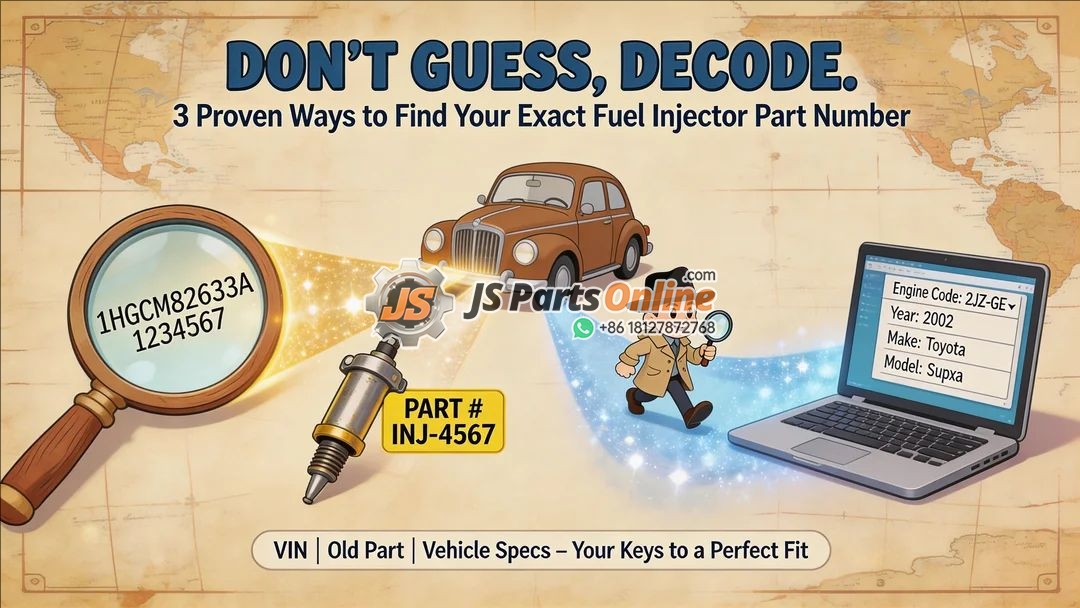
Ordering the wrong fuel injector is a costly mistake. It leads to returns, wasted time, and the risk of engine damage. The key to a perfect, hassle-free repair is identifying the exact part number for your specific application. You can’t rely on year, make, and model alone—engine options, production dates, and regional calibrations matter. This guide provides a professional, three-tiered method for pinpointing the correct fuel injector part number with certainty. Whether you have the old part in hand, just the vehicle, or are planning ahead, we’ll show you how to decode the data and use professional tools to ensure the injector you buy delivers the performance and reliability your engine demands.
Why “Close Enough” Isn’t Good Enough for Fuel Injectors
Fuel injectors are calibrated components. A part that “looks the same” or “fits many models” can have critical differences:
- Flow Rate Variance: Even a 2% difference can cause rough idle and poor performance.
- Electrical Specs: Impedance (resistance) must match your ECU. A mismatch can cause poor operation or damage the ECU driver.
- Spray Pattern & Angle: Designed for a specific combustion chamber shape.
- Connector Type & Physical Dimensions: Must match the harness and seat properly.
Using an incorrect part number risks the symptoms outlined in our guide on fuel injector diagnostic problems, turning a simple repair into a complex issue.
Method 1: The Gold Standard – Using Your Vehicle’s VIN
The Vehicle Identification Number is a 17-character code unique to your car. It’s the most accurate way to identify parts, as it encodes the exact build specifications.
How to Use It:
- Locate Your VIN: Found on the driver’s side dashboard (visible through the windshield), driver’s side door jamb sticker, or your vehicle’s registration/insurance documents.
- Use a VIN Decoder Tool: Reputable parts suppliers, including JSPartsonline, feature a VIN lookup tool on their website. Enter the full VIN.
- Get Exact Results: The tool will filter the entire catalog to show onlythe parts that match your vehicle’s specific engine code, transmission, and calibration. This eliminates all guesswork.
Pro Tip: Always use the VIN if possible. It accounts for mid-year production changes and special editions that generic selectors might miss.
Method 2: The Direct Evidence – Reading the Old Part Number
If you have the old, removed injector in hand, it contains the definitive information you need.
Where to Look & How to Decode:
- OEM Part Number: The cleanest number to use. It may be stamped or laser-etched on the injector body. It will look something like
0 280 158 063(Bosch),23609-XXX(Denso), or a manufacturer-specific code. This is the number the vehicle manufacturer used. - Manufacturer (OEM) Number: Many injectors are made by companies like Bosch, Delphi, Denso, or Siemens. They have their own part number on the component (e.g., the Bosch number above). This is often the most useful number for cross-referencing to high-quality aftermarket options.
- Engineering/Service Number: May be a shorter code used for internal identification.
What to Do:
- Clean the Injector: Gently clean the area to make the markings clear.
- Take Clear Photos: Snap photos of all sides of the injector and any labels.
- Search with the Number: Enter the clearest OEM or manufacturer number you find into the search bar of a parts website. Our comprehensive fuel injector catalog is built to accept these core numbers for precise matching.
Method 3: The Systematic Lookup – Using Vehicle Specifications
If you don’t have the VIN or old part, you can still narrow it down accurately with detailed vehicle information.
Required Information:
- Year, Make, Model: The basics.
- Engine Size and Code (CRITICAL): e.g., “2.0L TDI” is not enough. You need the engine code like “CBEA” or “CKRA”. Find this on the engine cover, vehicle emission label, or via a VIN decoder.
- Production Date: Often on the driver’s side door jamb sticker. Helps identify mid-year changes.
- Transmission Type: Sometimes affects calibration.
- Country Specification: Emissions standards can vary, affecting injector calibration.
Using an Advanced Vehicle Selector:
Navigate through the selector on a parts site, filling in allthe information requested. The more specific you are, the more accurate the results. This method is reliable but carries a small risk if the selector database has a rare error or if your vehicle has undocumented modifications.
The Power of Cross-Reference: Connecting the Dots
Once you have a part number—from the VIN, the old part, or the vehicle selector—the next step is cross-referencing.
- What it is: Finding all the other part numbers (OEM, competitor, aftermarket) that are verified to be direct replacements for your original number.
- Why it matters: It gives you options. You can find the exact Genuine OEM part, a premium aftermarket equivalent from the same manufacturer (like Bosch), or a quality aftermarket alternative. It’s the process behind our comparison of OEM vs. aftermarket fuel injectors.
- How to do it: Professional parts catalogs and supplier websites do this automatically. When you enter a part number, they should show you the exact match and any compatible alternatives.
Red Flags & How to Verify Your Choice
Before you buy, do these quick sanity checks:
- Compare Photos: Does the injector in the listing photo match your old one? Check the connector shape, overall body style, and number of nozzle holes (if visible).
- Verify Technical Specs: For performance or critical applications, check that flow rate (cc/min or lb/hr) and impedance (ohms) are listed and match your requirements.
- Check “What This Fits” Lists: The product page should list specific vehicles/engines. Ensure yours is included.
- Confirm Seal Kit Inclusion: A quality injector should include all necessary new seals. If not, factor in purchasing the correct fuel injector seal kit separately.
What to Do If You’re Still Unsure
If the information is conflicting or you can’t find a clear match, stop guessing.
- Contact the Supplier: A reputable specialist like JSPartsonline will have technical support. Provide them with your VIN, photos of the old injector, and any numbers you found.
- Consult a Professional Mechanic: They have access to paid professional databases (like Alldata, Identifix) that can provide definitive parts information.
- Use Online Forums (Cautiously): Vehicle-specific forums can be helpful, but always verify information from multiple sources. A forum user’s recommendation is not a guarantee.
Conclusion: A Small Investment in Research, A Guarantee in Performance
Taking 10 extra minutes to accurately find your part number is the most valuable step in the repair process. It transforms your purchase from a hopeful gamble into a confident investment. By leveraging your VIN, inspecting the old part, and using precise vehicle data, you harness the same information professionals use to ensure a first-time, perfect-fit repair.
Let Us Help You Find the Exact Match.
Finding the right part shouldn’t be a puzzle. JSPartsonline provides the tools and expertise to make it simple. Use our VIN decoder, search with your OEM number, or navigate our advanced vehicle selector.
Get the right part, the first time. Use our part finder tools on the JSPartsonline catalog, or contact our expert support teamwith your VIN or old part details for a verified match. Your engine’s performance depends on precision—start with the right number.
Related products




Related Posts
-
1

-
2

-
3

-
4

-
5

-
6

JSPartsonline:
Focus on injectors for 12 years,We sell high-quality fuel injectors at competitive prices.
Copyright 2025 © YUN·X . All right reserved.
