
Refurbished vs. Remanufactured Fuel Injectors: A Guide to Rebuilt Components
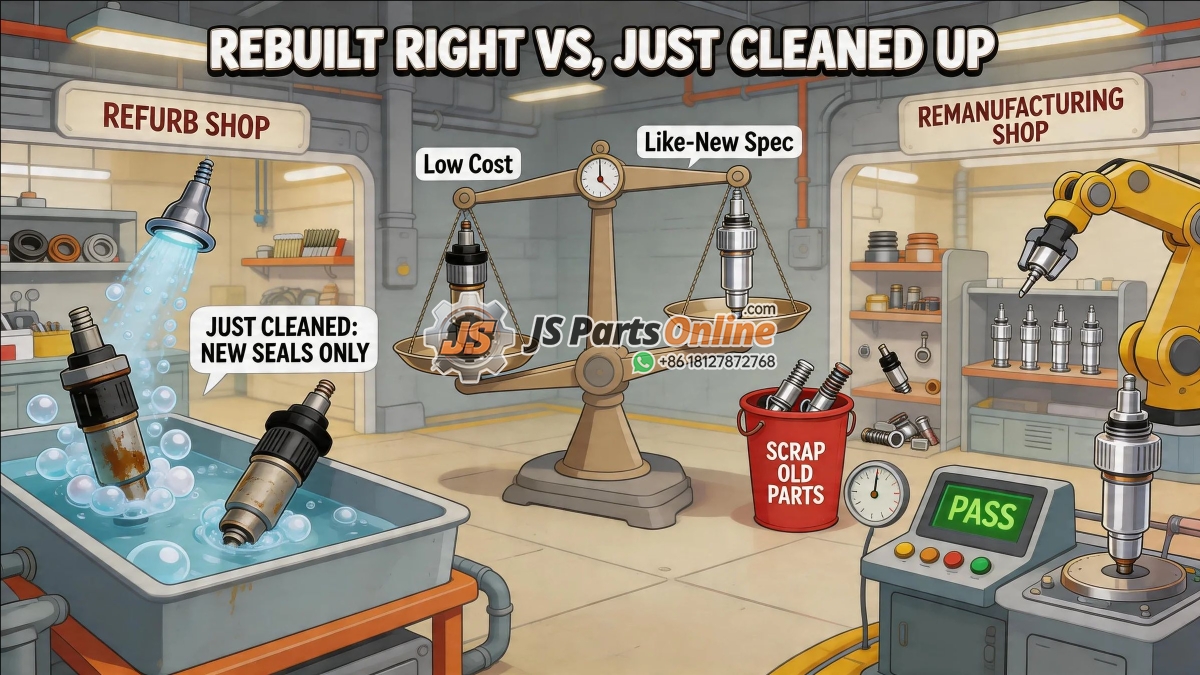
Facing a costly fuel injector replacement often leads vehicle owners to explore more affordable options: refurbished or remanufactured injectors. The terms are frequently used interchangeably, but in the professional automotive world, they can signify vastly different levels of quality, testing, and reliability. Choosing the wrong type can mean the difference between a smart savings and a costly, premature failure. This guide clarifies the distinct processes behind refurbished and remanufactured fuel injectors. We’ll break down what each term truly means, outline their respective benefits and risks, and provide a clear framework to help you decide if a rebuilt injector is the right—and reliable—choice for your repair, and how to source one with confidence.
Defining the Terms: From Simple Cleaning to Full Rebuild
The core difference lies in the depth of the overhaul process.
- Refurbished (or “Serviced”) Fuel Injectors:
- The Process: This typically involves cleaning and testing a used injector. The unit is disassembled, put through an ultrasonic cleaning process, fitted with new external seals and O-rings, and then tested for basic flow and spray pattern. The original internal wear components (needle, seat, solenoid) are usually retained if they pass inspection.
- The Goal: To remove performance-limiting deposits (carbon, varnish) and replace perishable seals, restoring the injector to a functional state. It addresses clogging, not necessarily wear.
- Analogy: A thorough deep-clean and tune-up.
- Remanufactured (or “Rebuilt”) Fuel Injectors:
- The Process: This is a comprehensive rebuild to original specifications. The injector is completely disassembled. All wearable and critical components—including the precision needle valve, seat, nozzle, solenoid, and springs—are replaced with new parts. The body is cleaned, inspected for cracks, and reassembled with a full set of new seals. The finished unit undergoes rigorous testing, often matching the standards for new injectors, and receives a new serial number or warranty.
- The Goal: To produce a component that performs to original OEM specifications, effectively giving the injector a “zero-hour” life for all critical internal parts.
- Analogy: A complete engine rebuild with all new pistons, rings, and bearings.
The Pros and Cons: Making an Informed Choice
| Factor | Refurbished/Serviced Injectors | Remanufactured Injectors |
|---|---|---|
| Cost | Lowest. Significant savings over new. | Higher than refurbished, lower than new. Excellent value. |
| Process Depth | Primarily cleaning & seal replacement. | Complete internal rebuild with new wear components. |
| Performance Expectation | Restores flow compromised by deposits. May not address internal wear. | Should perform to original OEM specifications. |
| Best For | Injectors suffering from clogging/deposits but with low mechanical wear. Preventive maintenance on known-good cores. | Injectors with confirmed wear, high-mileage applications, or when seeking new-injector reliability at a lower cost. |
| Risk Factor | Higher. Internal wear is not addressed. The solenoid or worn needle/seat could fail soon after installation. | Lower (if from a reputable rebuilder). Functions like a new injector with a fresh warranty. |
| Warranty | Often shorter (e.g., 90 days to 1 year). | Should mirror or approach new injector warranties (e.g., 1-2 years). |
When Does Choosing a Rebuilt Injector Make Sense?
- Budget-Conscious Repair on a Lower-Value Vehicle: When the cost of new OEM injectors approaches or exceeds the vehicle’s value, a quality remanufactured set can be a financially smart solution to keep it running reliably.
- High-Cost OEM Injectors: For some luxury European or heavy-duty diesel applications where a single new injector can cost $500+, a professionally remanufactured unit can offer substantial savings.
- You Have a Known-Good Core: If you are removing a set of injectors that are mechanically sound but carbon-clogged (e.g., during an intake cleaning), sending them out for professional refurbishing can be a very effective maintenance procedure, as detailed in our ultrasonic cleaning guide.
Critical Red Flags and How to Vet a Rebuilder
The market is mixed. Protecting your investment requires diligence.
- Avoid “Cleaned and Tested” with No Details: This is often a euphemism for a simple external clean. Demand specifics on the process.
- Demand a Test Report: A reputable supplier should provide a printout or digital report showing the post-buildtest results: flow rate, spray pattern image, and leak-down data. No report often means no meaningful test.
- Ask About Replacement Parts: “What internal components are replaced with new parts?” Legitimate remanufacturers will proudly list them (needle, seat, nozzle, solenoid, seals).
- Check the Warranty: A strong warranty (e.g., 2 years/unlimited mileage) is the rebuilder’s vote of confidence in their work. A very short warranty is a major red flag.
- Core Charge & Return Policy: Understand the core charge and the condition your old injector must be in for a refund. A core that is cracked or has a broken solenoid may not be accepted.
- Specialization Matters: A rebuilder that focuses on fuel systems or specific brands (e.g., Bosch, Delphi) is generally preferable to a general-purpose auto parts rebuilder.
The “Used Injector” Trap: Why It’s Almost Always a Bad Idea
Separate from refurbished/remanufactured is the market for plain used injectors. These are typically pulled from a wrecking yard vehicle with unknown mileage and history, sold “as-is.”
- The Risk: You are inheriting someone else’s unknown wear, contamination, and potential imminent failure. You have no test data and typically no meaningful warranty.
- The Verdict: The minimal upfront savings are almost never worth the high probability of a rapid comeback repair and additional cost. This gamble is highlighted in our discussion of total cost of ownership.
Installation and Coding: The Final Steps to Success
Even the best remanufactured injector can fail if installed incorrectly.
- Always Use New Seals: Treat a rebuilt injector like a new one. Never reuse old seals. Follow our professional installation guidelines meticulously.
- Coding is Often Required: Most remanufactured injectors for modern engines will have a new calibration code that must be programmed into your vehicle’s ECU. Confirm this with the supplier and be prepared for this step, as outlined in our coding and calibration guide.
Conclusion: Value Lies in Proven Quality, Not Just Low Price
A rebuild can be an excellent path to value, but only if the process is comprehensive and transparent. The key is to bypass vague marketing terms and look for evidence of engineering rigor: replaced internal parts, detailed test reports, and a solid warranty. A properly remanufactured injector from a specialist can deliver performance and longevity rivaling a new unit. A poorly refurbished one is simply a used part with a cleaning and a prayer.
Choose Rebuilt Confidence, Not Just a Rebuilt Price Tag.
At JSPartsonline, we partner with trusted specialists in fuel system remanufacturing. We focus on offering remanufactured options that undergo full rebuilds with new internal components and comprehensive testing, providing a reliable, cost-effective alternative for demanding applications.
Explore our selection of high-integrity rebuilt fuel system components, or contact our team to discuss if a remanufactured solution is the right choice for your vehicle and budget.
Related products

Related Posts
-
1

-
2

-
3

-
4

-
5

-
6



JSPartsonline:
Focus on injectors for 12 years,We sell high-quality fuel injectors at competitive prices.
Copyright 2025 © YUN·X . All right reserved.
