
Diesel Fuel Injection System — Components, Types, and Complete Maintenance Guide
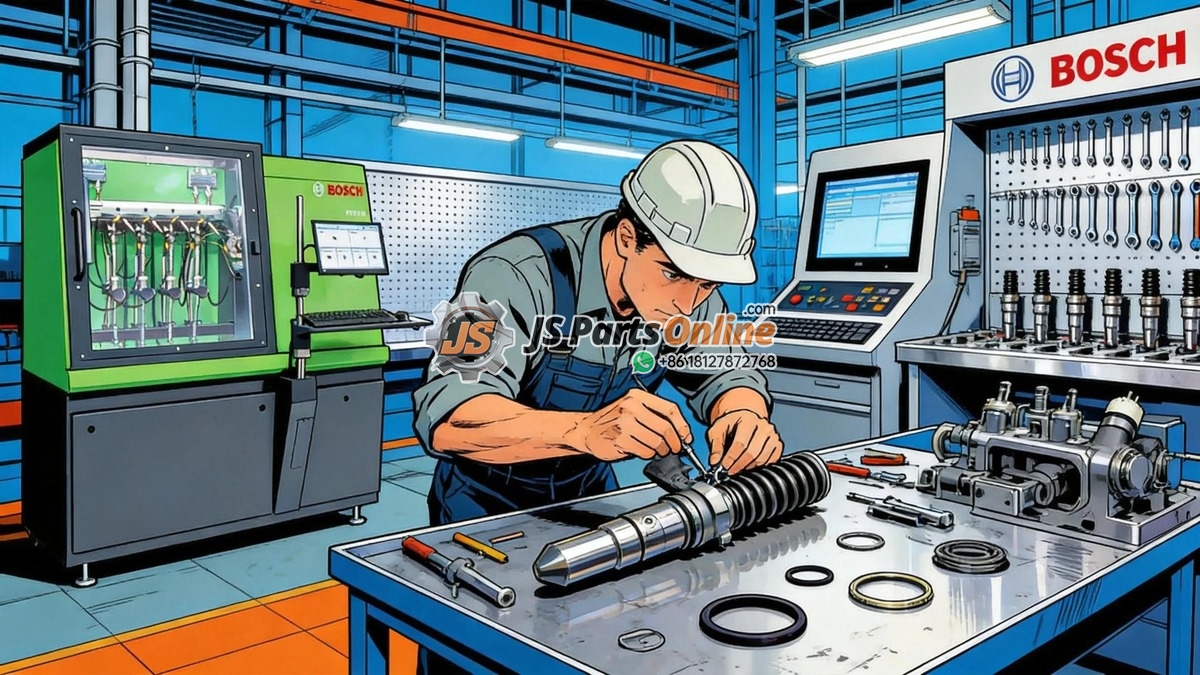
The diesel fuel injection system is the heart of every diesel engine. It’s responsible for delivering precisely metered fuel at extremely high pressure into each cylinder at exactly the right moment. When the injection system is healthy, you get maximum power, optimal fuel economy, and clean emissions. When it’s not — you get smoke, misfires, lost power, and expensive repairs. Understanding how the diesel fuel injection system works, what each component does, and how to maintain it is essential knowledge for anyone who owns, operates, or repairs diesel equipment. Whether you’re maintaining a CAT C15, a Bosch-equipped Cummins, or a Denso-powered heavy-duty truck, this guide covers everything you need to know about the fuel injection system.
What Is a Diesel Fuel Injection System?
The diesel fuel injection system is a precision-engineered network of components that work together to deliver fuel from the tank to the combustion chamber. Unlike gasoline engines where fuel and air mix before entering the cylinder (port injection), diesel engines inject fuel directly into the cylinder after the air has been compressed and heated to approximately 900°F (480°C). This requires injection pressures far beyond what any gasoline system can produce — modern common rail systems operate at 20,000 to 37,000 PSI, and some next-generation systems exceed 50,000 PSI.
A diesel fuel injection system must accomplish four critical tasks with extraordinary precision:
- Metering — Deliver exactly the right amount of fuel for the current engine load and speed
- Timing — Inject fuel at precisely the right moment in the compression stroke
- Pressurization — Generate sufficient pressure to atomize fuel into microscopic droplets
- Atomization — Break fuel into particles small enough to ignite instantly in the compressed air
Three Major Types of Diesel Fuel Injection Systems
1. Common Rail Direct Injection (CRDI)
The most widely used system in modern diesel engines. A high-pressure pump pressurizes fuel in a shared “rail” — a thick-walled metal tube that supplies all injectors. The injectors are electronically controlled, allowing multiple injection events per cycle (pilot, main, post-injection) for quieter, cleaner combustion.
Applications: Most passenger diesel vehicles, modern light-duty and medium-duty trucks, many heavy-duty applications built after 2005
- Typical rail pressure: 1,600–2,500 bar (23,000–36,000 PSI)
- Injectors: Solenoid or piezo-electric actuated
- Best for: Emissions compliance, fuel economy, noise reduction
2. HEUI (Hydraulically actuated Electronically controlled Unit Injector)
Developed by CAT and Navistar, HEUI uses engine oil pressure (hydraulically boosted) to pressurize and inject fuel. A high-pressure oil pump generates oil pressure that drives an intensifier piston inside each injector, which multiplies the pressure by a ratio of approximately 7:1 to create injection pressure.
Applications: CAT C7, C9, C15, C18; Navistar T444E, DT466, VT365; Ford 6.0L Power Stroke
- Typical injection pressure: Variable — up to 2,100 bar (30,000 PSI) at high RPM
- Injectors: Oil-actuated with electronic solenoid control
- Best for: High durability, simple design, flexible pressure control
3. Mechanical (Pump-Line-Nozzle / Unit Injection)
The traditional diesel injection system. An injection pump (in-line or rotary) pressurizes and distributes fuel to each cylinder through individual high-pressure lines. Timing and fuel delivery are controlled by the pump’s internal cam and governor — no electronics involved.
Applications: Older diesel engines (pre-2000), agricultural equipment, industrial engines, many marine applications
- Typical injection pressure: 200–800 bar (3,000–11,600 PSI)
- Injectors: Mechanically opened (spring-loaded pop pressure)
- Best for: Simplicity, field repairability, no electronic dependency
| Feature | Common Rail | HEUI | Mechanical |
|---|---|---|---|
| Pressure Range | 1,600–2,500 bar | 500–2,100 bar | 200–800 bar |
| ECU Control | Full | Full | None |
| Multiple Injection Events | Yes (up to 8 per cycle) | Yes (pilot + main) | No |
| Emissions Performance | Excellent | Good | Poor |
| Field Repairability | Low | Medium | High |
| Component Cost | High | Medium-High | Low-Medium |
| Common Applications | Modern on-highway trucks, passenger diesel | CAT, Ford Power Stroke, Navistar | Older equipment, agricultural, marine |
Key Components of the Diesel Fuel Injection System
Fuel Injection Pump
The injection pump is the pressure-generating component. In common rail systems, it’s a high-pressure pump that feeds the rail. In mechanical systems, it both pressurizes and distributes fuel. Key pump types include:
- High-pressure common rail pump (CP1, CP3, CP4) — Bosch CP3 and CP4 are the most common. The CP3 is known for reliability; the CP4 has a reputation for failing catastrophically on low-sulfur fuel.
- Rotary distributor pump (VE, VP44) — Single plunger distributes fuel to each cylinder. Common in older light-duty diesels.
- In-line plunger pump — Individual plungers for each cylinder. Found on heavy-duty mechanical engines (CAT 3406, Cummins PT, Detroit Diesel).
- HEUI high-pressure oil pump — Generates the oil pressure that powers HEUI injectors. Oil pressure is modulated by the ICP (Injection Control Pressure) sensor and IPR (Injection Pressure Regulator) valve.
Fuel Injectors
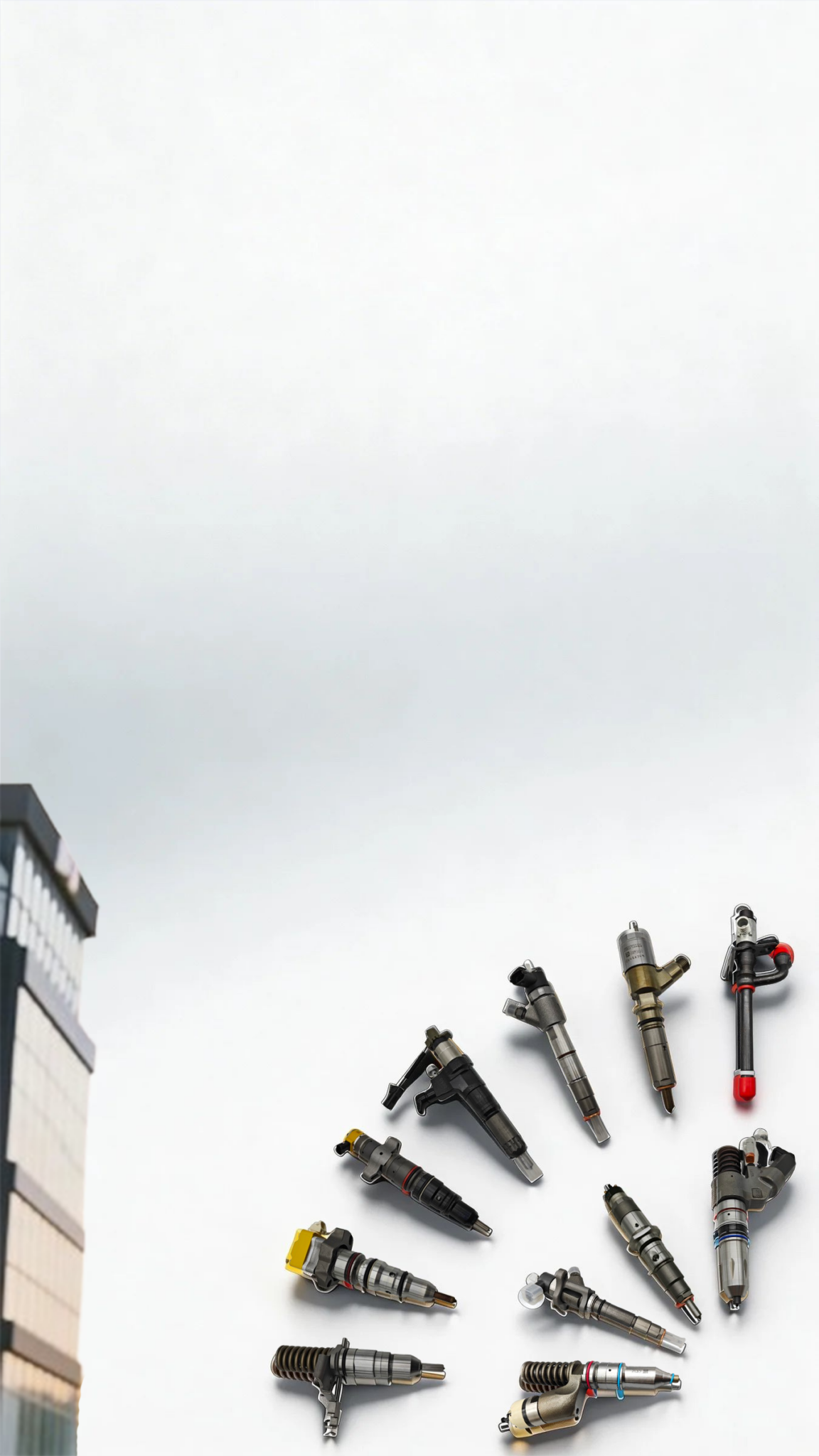
The injector is the final delivery component — it receives pressurized fuel and delivers it into the combustion chamber in a precisely shaped spray pattern. For detailed coverage of injector types and operation, see our guides on diesel fuel injector replacement and injector testing methods. JSPartsonline stocks a full range of CAT fuel injectors, Bosch injectors, and Denso injectors for all applications.
Fuel Rail (Common Rail Systems)
The fuel rail — also called the accumulator or manifold — stores pressurized fuel and distributes it to all injectors. It serves two critical functions:
- Pressure dampening — Smooths out pressure pulses from the high-pressure pump, ensuring consistent injection pressure
- Volume storage — Maintains enough fuel volume so that injector opening doesn’t cause a pressure drop that affects other injectors
The rail is equipped with a rail pressure sensor (RPS) that provides feedback to the ECU for closed-loop pressure control, and a pressure relief valve (PRV) that protects the system from over-pressure conditions.
Fuel Pressure Regulator
In common rail systems, the fuel pressure regulator — often called the metering unit or pressure control valve — controls how much fuel the high-pressure pump delivers to the rail. It’s commanded by the ECU based on engine demand. A failing pressure regulator causes low rail pressure, hard starting, reduced power, and fault codes like P0087 (Fuel Rail Pressure Too Low) or P0088 (Fuel Rail Pressure Too High).
Fuel Filters and Water Separators
Clean fuel is absolutely critical for modern diesel injection systems. The clearances inside a common rail injector are measured in microns — a single grain of sand can destroy an injector. The fuel filtration system typically includes:
- Primary filter / water separator — Removes bulk contaminants and separates water from diesel fuel. Should be drained regularly and replaced per the maintenance schedule.
- Secondary filter — A finer filter (typically 2–5 micron) that protects the high-pressure pump and injectors from microscopic contaminants
- Fuel heater — Prevents wax formation in cold weather, often integrated into the filter head
Critical rule: Never use filters rated below the manufacturer’s specified micron rating. A filter that’s “too good” (finer than spec) can restrict fuel flow and starve the injection pump, causing cavitation damage and premature pump failure.
Fuel Lines and Fittings
From the tank to the injectors, every fuel line plays a critical role:
- Suction lines (tank to lift pump) — Low pressure, but must be absolutely air-tight. A microscopic air leak on the suction side causes hard starting and poor performance.
- Lift pump supply lines — Transfers fuel from the lift pump to the high-pressure pump
- High-pressure lines (pump to rail, rail to injectors) — Thick-walled steel lines rated for extreme pressure. Any bend or kink restricts flow and alters injection timing
- Return lines — Carries excess fuel and injector leak-off back to the tank. Older rubber return lines are a common source of air intrusion
Diesel Fuel Injection System Maintenance Schedule
| Maintenance Task | Interval | Notes |
|---|---|---|
| Drain water separator | Every oil change | More often in humid climates or if the water-in-fuel light illuminates |
| Replace primary fuel filter | 10,000–15,000 miles | Or per OEM schedule — critical for injector life |
| Replace secondary fuel filter | 15,000–25,000 miles | Always replace both filters together |
| Fuel additive treatment | Every fill-up | Lubricity additive mandatory for ULSD fuel; cetane booster optional |
| Inspect fuel lines and clamps | Annual | Check rubber return lines for cracks and hardening |
| Injector leak-off test | Every 50,000 miles | Early detection saves engines. See our injector testing guide |
| Replace fuel return lines | Every 100,000 miles | Rubber return lines degrade internally before showing external cracks |
| Injection pump timing check | Every 150,000 miles (mechanical) or as needed (electronic) | Electronic systems self-correct; mechanical pumps drift over time |
| Complete injector replacement | 300,000–500,000 miles | Varies by fuel quality, maintenance, and operating conditions |
Signs of Fuel Injection System Problems
Your injection system communicates its problems through a set of recognizable symptoms:
- Hard starting — Especially when warm. Air intrusion, low rail pressure, or failing injectors.
- White smoke at startup — Unburned fuel from cold injectors with poor atomization or incorrect timing.
- Black smoke under load — Over-fueling from a leaking injector or incorrect pump calibration.
- Rough idle — Cylinder-to-cylinder imbalance from uneven injector flow.
- Loss of power — Inadequate fuel delivery from pump wear, restricted filters, or failing injectors.
- Increased fuel consumption — Worn injectors that dribble fuel instead of atomizing it properly.
- Fuel in the oil — Rising oil level and diesel smell on the dipstick from a leaking injector.
If you’re experiencing any of these symptoms, start with our diesel injector diagnosis guide to identify the root cause.
Fuel Quality: The Most Overlooked Factor
No amount of maintenance will save your injection system from poor-quality fuel. Modern ULSD (Ultra-Low Sulfur Diesel) has significantly reduced lubricity compared to older diesel formulations, leading to increased wear in fuel pumps and injectors that were designed for higher-lubricity fuel.
Recommended fuel practices:
- Use a lubricity additive — Every tank, without exception. The lubricity of ULSD varies by region and season. A good additive like Opti-Lube, Stanadyne, or Diesel Kleen restores lubricity to levels that protect injection components.
- Buy from high-volume stations — Fuel that sits in underground tanks accumulates water and microbial growth. High-volume stations rotate their fuel faster.
- Know your fuel’s cetane rating — Higher cetane (50+) provides better cold-start performance, quieter combustion, and reduced white smoke.
- Be aware of biodiesel blends — B5 and B20 can be beneficial for lubricity, but higher blends (B100) can degrade rubber fuel system components in older engines not designed for biodiesel.
Common Injection System Upgrades
For performance enthusiasts and fleet operators looking to improve fuel system performance:
- High-flow injectors — For increased power output in performance applications. See our CAT performance injectors.
- Upgraded fuel pumps — Higher-volume pumps for engines with increased fuel demand from performance tuning.
- FASS or AirDog fuel systems — Aftermarket lift pump and filtration systems that deliver clean, aerated fuel at consistent pressure. Popular on Cummins and Duramax applications.
- Fuel pressure monitoring — A fuel pressure gauge installed between the lift pump and high-pressure pump gives early warning of filter restrictions and pump wear.
Conclusion
The diesel fuel injection system is a marvel of precision engineering. From the lift pump that draws fuel from the tank to the injector nozzle that delivers it into the cylinder at 30,000+ PSI, every component must work in perfect harmony to achieve the power, efficiency, and emissions performance that modern diesel engines deliver. Understanding how each part works — and how to maintain it — is the key to maximizing the service life of your injection system and avoiding the expensive repairs that come from neglect.
The most important takeaway? Fuel quality and filtration are everything. Clean fuel with proper lubricity, changed filters at the right intervals, and periodic injector testing will keep your injection system running well past 500,000 miles.
When it’s time to replace components, JSPartsonline.com is your trusted source for OEM-quality injection system parts. We stock CAT fuel injectors, Bosch injectors, Denso injectors, and complete injection system components for all major diesel engine platforms. Every part is guaranteed to meet OEM specifications and ships the same day from our US warehouse.
Maintain your injection system, and it will maintain your engine.
Related products



Related Posts
-
1

-
2

-
3

-
4

-
5

-
6

JSPartsonline:
Focus on injectors for 12 years,We sell high-quality fuel injectors at competitive prices.
Copyright 2025 © YUN·X . All right reserved.
