
Fuel Injector Spray Pattern Science: The Key to Efficient Combustion
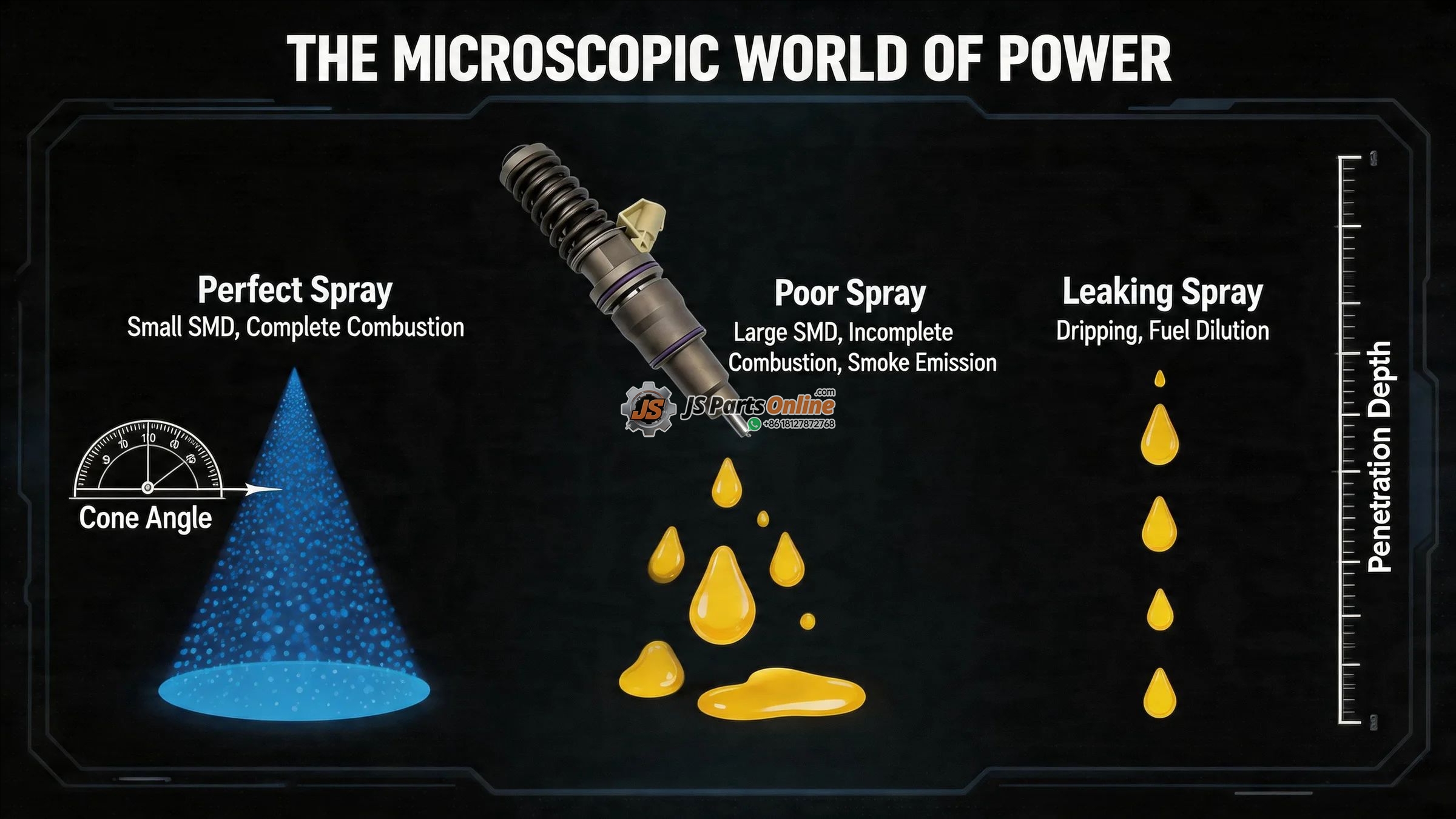
The transformation of liquid fuel into usable engine power hinges on a single, critical event that occurs in milliseconds: fuel atomization. This process is governed by the design and condition of the fuel injector’s spray pattern. It’s not merely about spraying fuel; it’s about creating a specific, engineered mist that optimizes the air-fuel mixture for complete combustion. This technical guide moves beyond basic function to explore the precise science of spray patterns. We will define and explain the key metrics—spray cone angle, droplet size (SMD), and penetration depth—and illustrate how variations in these parameters directly dictate an engine’s power output, thermal efficiency, emissions production, and noise levels. Understanding this science is fundamental to diagnosing combustion issues and appreciating the engineering behind high-performance fuel injection.
Beyond the Mist: Defining the Spray Pattern Parameters
A healthy injector doesn’t just produce a “spray”; it produces a repeatable, structured pattern with specific physical characteristics.
- Spray Cone Angle:
- What it is: The angle formed by the outer boundaries of the fuel spray as it exits the nozzle. It is carefully designed to match the geometry of the combustion chamber (e.g., pent-roof, hemispherical) or intake port.
- Why it matters: The correct angle ensures fuel is distributed evenly within the available air volume, preventing fuel from impinging on (wetting) the cylinder walls or piston crown. Wall wetting leads to oil dilution, increased hydrocarbon (HC) emissions, and incomplete combustion. A pattern that is too narrow creates a rich core and lean periphery; too wide causes wall impingement.
- Droplet Size (Sauter Mean Diameter – SMD):
- What it is: The average diameter of the fuel droplets in the spray. It’s the primary measure of atomization quality. Modern GDI and diesel systems aim for incredibly small SMDs, often in the range of 5-20 microns (for comparison, a human hair is about 70 microns).
- Why it matters: Smaller droplets have a much larger cumulative surface area. This dramatically increases the rate of fuel vaporization and mixing with air. The result is faster, more complete combustion, which translates to more power, less soot, and lower emissions. Poor atomization (large SMD) is a root cause of the performance and efficiency losses detailed in our guide on worn injector impact.
- Penetration Depth:
- What it is: The distance the fuel spray travels into the combustion chamber before the droplets lose momentum.
- Why it matters: Penetration must be balanced with cone angle. Sufficient penetration ensures fuel reaches all areas of the chamber for a homogeneous mixture, especially in larger cylinders. However, excessive penetration leads directly to wall wetting. In diesel engines, penetration is critical for creating a well-mixed charge in the extremely short time available.
The Engine’s Voice: How Spray Pattern Dictates Performance
The spray pattern is the primary interface between the fuel system and the combustion event. Its characteristics directly cause or prevent key engine phenomena:
- Power & Efficiency: Optimal atomization (small SMD) ensures near-complete combustion, extracting the maximum chemical energy from the fuel. This directly increases torque and horsepower while improving fuel economy.
- Emissions Formation:
- Soot (PM): Large droplets from poor atomization do not burn completely, forming carbon particulates. This is the primary link between injector health and DPF loading, as explored in our emissions guide.
- Hydrocarbons (HC) & Carbon Monoxide (CO): Incomplete combustion from poor mixing or wall wetting leaves unburned fuel, raising HC and CO emissions.
- Nitrogen Oxides (NOx): A perfectly homogeneous mixture burns at a controlled temperature. Poor patterns can create localized hot spots that increase NOx formation.
- Combustion Noise & Knock: A fine, evenly distributed mist burns smoothly and quickly. A poor pattern with streamers or large droplets burns erratically and slowly, causing increased combustion noise (diesel clatter) and increasing the risk of damaging knock in gasoline engines.
Visualizing Failure: Common Spray Pattern Defects
On a professional pop tester or flow bench, technicians visually classify pattern failures that correlate to specific engine problems:
- Streaming/Jetting: One or more solid streams of fuel instead of a cone of mist. Cause: Severely clogged or damaged nozzle holes. Engine Symptom: Severe misfire in that cylinder, massive power loss, and white/black smoke.
- Dripping/After-Drip: Fuel continues to drip from the nozzle after the injector should be closed. Cause: Worn needle valve and seat, weak return spring, or debris holding the needle open. Engine Symptom: Rough idle, hard hot starting, fuel smell, and oil dilution.
- Asymmetric/Uneven Cone: The spray cone is lopsided or has weak sectors. Cause: Partial clogging of some nozzle holes, erosion of specific holes, or damage to the nozzle tip. Engine Symptom: Rough idle, slight power loss, and potentially increased emissions from that cylinder.
Diagnosing these patterns is a core skill covered in our comprehensive fuel injector diagnostic methodology.
Engineering the Pattern: Nozzle Design & System Pressure
The spray pattern is a result of intentional design and system conditions:
- Nozzle Hole Geometry: The number, diameter, and drilling angle of the microscopic holes in the nozzle tip are the primary determinants of the pattern. Multi-hole nozzles (e.g., 6-8 holes) are standard for direct injection, creating multiple, smaller plumes for better air entrainment and mixing.
- Fuel Pressure: This is the energizing force. Higher fuel pressure (e.g., 2,000 bar in diesel vs. 100 bar in old port injection) forces fuel through the holes at greater velocity, creating more shear with the air and resulting in a finer droplet size (smaller SMD) and better atomization. The relentless trend towards higher pressure is a key topic in our look at the future of fuel injection.
- Injector Seat & Needle Design: The precision of the needle valve and its seat affects the opening and closing characteristics, influencing the initial and final phase of the spray, which is critical for advanced injection strategies with multiple pilot and post injections.
The Tuner’s Perspective: Spray Pattern in Performance Applications
For performance engine builders and tuners, spray pattern is a critical variable.
- Matched Flow AND Pattern: Ensuring injectors are flow-matched is not enough; their spray patterns should also be visually consistent to ensure even cylinder filling and combustion.
- Selecting for Application: Different combustion chamber designs (e.g., bathtub vs. pent-roof) or forced induction strategies may benefit from injectors with specific cone angles or multi-hole layouts designed for optimal charge cooling or mixture preparation.
- Data is Key: Reputable performance injector manufacturers provide spray imaging and pattern data, which is as important as the flow rate and latency information needed for tuning, as stressed in our guide on injector upgrades and tuning.
Conclusion: The Invisible Architecture of Power
The spray pattern is the invisible architecture upon which all combustion is built. It is the critical, final step that determines whether fuel is efficiently transformed into power or wastefully expelled as heat, noise, and pollution. By understanding the science of cone angle, droplet size, and penetration, technicians and enthusiasts can move beyond diagnosing “bad injectors” to understanding whyan injector is bad and howits failure manifests in the engine’s operation. This knowledge underscores the importance of precision in both component manufacturing and maintenance for achieving optimal engine performance and longevity.
Demand Precision in Every Drop.
The spray pattern is where engineering theory meets practical power. At JSPartsonline, we supply fuel injectors from manufacturers who prioritize the precision engineering of spray patterns, ensuring that the components you install deliver not just fuel, but optimally prepared fuel for maximum efficiency and performance.
To see the difference precision makes, explore our range of high-quality fuel injectorsor consult with our technical teamfor guidance on injector selection for your specific performance or reliability needs.
Related products


Related Posts
-
1

-
2

-
3

-
4

-
5

-
6

JSPartsonline:
Focus on injectors for 12 years,We sell high-quality fuel injectors at competitive prices.
Copyright 2025 © YUN·X . All right reserved.
