
Fuel Injector Upgrades & Engine Tuning: Why You Can’t Have One Without the Other
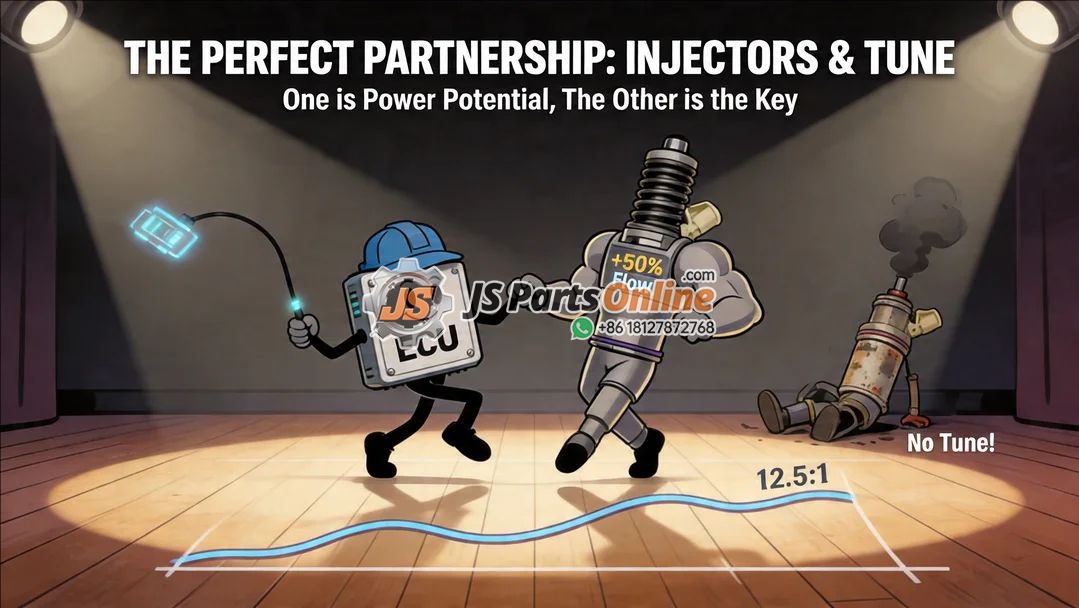
Installing a set of larger, high-performance fuel injectors is a critical step in unlocking your engine’s potential. But simply bolting them in and starting the engine is a recipe for poor performance, drivability nightmares, and even catastrophic engine damage. A fuel injector upgrade is only half of the equation; the other half is professional engine tuning. The Engine Control Unit (ECU) must be precisely recalibrated to “understand” the new injectors. This guide is for enthusiasts and builders, explaining the inseparable relationship between injector upgrades and ECU tuning. We’ll cover the essential data your tuner needs, how the tune optimizes performance and safety, and the step-by-step process to ensure your upgraded fuel system delivers safe, reliable, and massive power gains.
The Critical Misconception: “Plug and Play” Performance
Many believe that if an injector physically fits and has the right connector, it will work. This is dangerously incorrect for any significant flow increase. The ECU’s stock fuel maps are calibrated for the exact flow characteristics of the original injectors. Installing larger ones without updating these maps causes the ECU to deliver fuel based on outdated assumptions, leading to:
- Extremely Rich Air/Fuel Ratio: The ECU sends a pulse width calculated for a 300cc injector, but a 500cc injector flows 66% more fuel in that same time. The engine will flood, stumble, and may not idle or run at all.
- Poor Drivability: Hesitation, stalling, and a rough, sooty idle.
- Failed Emissions & Check Engine Lights: The oxygen sensors will detect the overly rich condition and trigger fault codes.
- Risk of Hydrolock or Washdown: Excess fuel can leak into the cylinder, washing away oil from the cylinder walls or, in a worst-case scenario, locking the engine.
The Three Pillars of a Successful Tune: What Your Tuner Needs to Know
To integrate new injectors, the ECU software must be updated with three key pieces of data:
- New Flow Rate (cc/min or lb/hr):
- What it is: The primary scaling factor. This tells the ECU, “For a given command, this new injector delivers X% more fuel than the old one.”
- Tuner’s Action: The tuner inputs this data to rescale the entire fuel map, ensuring the commanded fuel delivery matches the physical output. Choosing the right size is critical, as outlined in our performance injector selection guide.
- Injector Latency/Dead Time:
- What it is: The tiny delay (in milliseconds) between the ECU sending the electrical signal and the injector actually beginning to flow fuel. It varies with battery voltage. This is the most important data for idle and low-load drivability.
- Why it Matters: Smaller injectors and larger ones can have different latency. If not corrected, the engine will run lean at idle (if latency is under-reported) or rich (if over-reported). Reputable manufacturers provide a latency chart. A tuner “guessing” this value will struggle to achieve a smooth, stable idle.
- Injector Offset/Breakpoint Data (if applicable):
- What it is: Advanced data that defines how the injector’s flow behaves at very short pulse widths (idle) versus longer ones (wide-open throttle). This refines drivability across the entire RPM and load range.
The Golden Rule: Never purchase performance injectors from a manufacturer that cannot provide this data. It is as important as the injectors themselves.
The Tuning Process: From Base Map to Final Refinement
A professional tune is a process, not a single upload. Here’s what to expect:
- Initial Baseline/“Base Map” Load: The tuner creates or loads a starting calibration with your new injector data entered. The goal is to get the engine started and idling safely.
- Idle and Low-Load Calibration: The tuner adjusts fuel trims and timing to achieve a smooth, stable idle and seamless low-speed driving. This is where accurate latency data pays off.
- Part-Throttle and Wide-Open Throttle (WOT) Tuning: Using a dynamometer and/or on-road data logging, the tuner adjusts air/fuel ratios and ignition timing under all conditions. The target is typically a safe, powerful ratio (e.g., ~12.5:1 for gasoline at WOT) and optimal timing without knock.
- Driveability Refinement: The tuner smoothes transitions, improves throttle response, and ensures the engine behaves predictably in all real-world scenarios.
- Final Verification and Safety Checks: The tune is checked for knock, excessive exhaust temperatures, and overall consistency. Rev limiters and safety protocols are set.
Beyond Fuel: How Injector Upgrades Affect the Entire Tune
Larger injectors don’t just change fuel maps; they influence the entire combustion strategy:
- Ignition Timing: With more fuel and a denser air charge (in forced induction), the tuner can often add more ignition advance to make more power, provided knock is controlled.
- Boost Control (Forced Induction): With adequate fueling headroom, the tune can safely increase boost pressure for more power, as the injectors are no longer the limiting factor.
- Transmission Tuning (if applicable): Increased torque may necessitate adjustments to transmission shift points and pressure for durability and performance.
Choosing the Right Partner: Tuner and Parts Synergy
Success depends on synergy between your parts and your tuner.
- Communicate with Your Tuner First: Before buying injectors, consult your chosen tuner. They can recommend the optimal size and brand for your goals and their tuning software/experience.
- Source Quality, Supported Components: Invest in injectors from reputable brands that are known to work well with common tuning platforms. This reduces tuning hurdles. Our selection of performance-matched injector sets is designed with the tuner in mind.
- Factor Tuning into Your Budget: The cost of professional tuning is a necessary and integral part of the injector upgrade cost. Do not attempt to save money here.
The Risks of a Poor Tune or No Tune
Neglecting a proper tune voids the benefits and invites failure:
- Detonation (Engine Knock): Lean conditions from incorrect scaling cause extreme heat, melting pistons and destroying engines.
- Catastrophic Failure: A severe lean condition at high load can cause immediate engine failure.
- Damaged Catalytic Converters or DPFs: Constant rich or lean operation will destroy these expensive emissions components.
- Wasted Investment: The engine will run worse than stock, negating the value of your high-quality injectors and other performance parts.
Conclusion: Tuning is the Key That Unlocks Potential
A fuel injector upgrade provides the capacityfor more power, but professional tuning provides the instructionson how to use that capacity safely and effectively. They are a symbiotic pair. By understanding the critical data required, respecting the tuning process, and partnering with an experienced professional, you transform a box of parts into a transformative performance upgrade. Your engine’s new-found appetite for air is met with precise, controlled fueling, resulting in the reliable, exhilarating power you envisioned.
Ready to Pair Your Upgrade with a Perfect Tune?
Start with injectors designed to perform in a tuned environment. JSPartsonline offers performance fuel injectors from trusted manufacturers, known for providing the consistent data that professional tuners rely on.
Unlock your engine’s true potential. Browse our tuner-friendly performance injectorsor contact our performance specialiststo discuss your build goals and get recommendations tailored for your next tune.
Related products



Related Posts
-
1

-
2

-
3

-
4

-
5

-
6



JSPartsonline:
Focus on injectors for 12 years,We sell high-quality fuel injectors at competitive prices.
Copyright 2025 © YUN·X . All right reserved.
