
The Science Behind the Metal: How Fuel Injector Materials Dictate Performance & Longevity
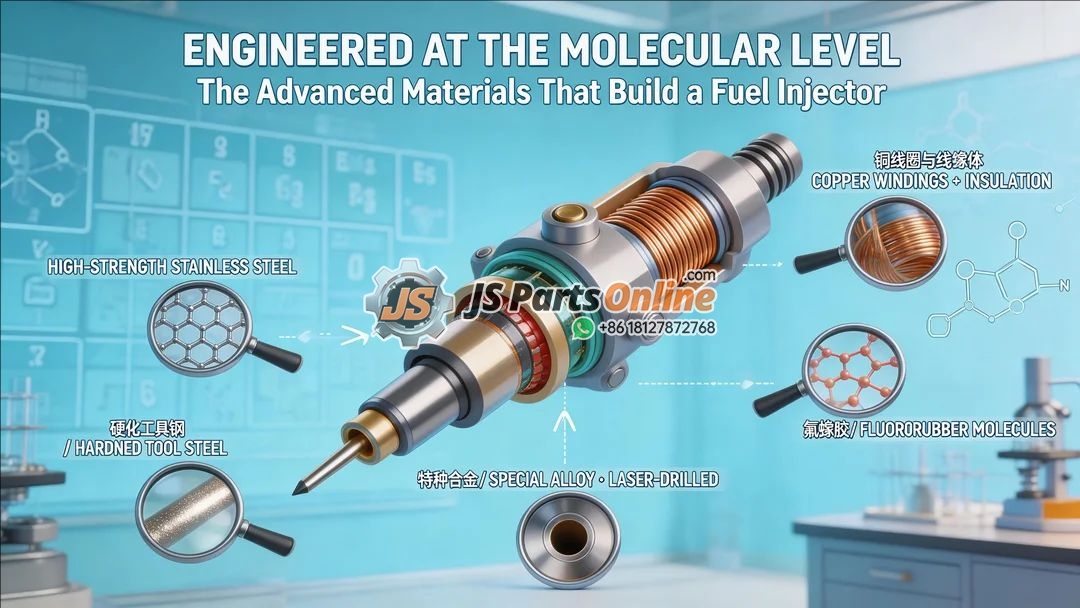
At first glance, a fuel injector is a metal component. But to the engineer, it is a carefully balanced assembly of advanced materials, each chosen to withstand a specific set of extreme conditions: immense pressure, intense heat, corrosive fuels, and high-frequency mechanical stress. The longevity of your engine and the consistency of its power depend on this material science. This article delves beneath the surface to explore the critical materials used in premium fuel injector construction. We’ll explain why the choice of steel, the use of ceramics, and advanced surface treatments are not just manufacturing details—they are the defining factors between an injector that fails prematurely and one that delivers reliable, precise performance for hundreds of thousands of miles.
The Crucible: Operating Environment of a Modern Injector
To appreciate the materials, one must understand the hellish environment inside an injector:
- Extreme Pressure: Common-rail diesel: 30,000+ PSI. GDI gasoline: 3,000+ PSI.
- Intense Heat: Proximity to combustion chambers exposes injectors to temperatures exceeding 250°F (120°C), with tips much hotter.
- Abrasive & Corrosive Fuels: Modern fuels contain contaminants and can be corrosive. Biodiesel blends and ethanol further increase the challenge.
- High-Frequency Fatigue: The injector needle snaps open and closed billions of times, demanding exceptional material fatigue resistance.
Component Breakdown: The Material Makeup of a Premium Injector
1. The Body & High-Pressure Housing: Fortress of Steel
The main injector body is the pressure vessel. It cannot flex or crack.
- Material: High-grade, case-hardened stainless steel alloys (e.g., 440C, 300 series). These provide an optimal blend of:
- High Tensile Strength: To contain immense internal pressure without bursting.
- Corrosion Resistance: To withstand attack from fuel, water, and combustion byproducts.
- Machinability: Allows for the creation of precision internal passages and sealing surfaces.
- Quality Differentiator: Lower-cost injectors may use inferior steel or poor heat treatment, leading to potential for body stress cracks or thread stripping, a catastrophic failure highlighted in our guide on injector installation mistakes.
2. The Needle Valve & Seat: The Precision Pair
This is the heart of the injector—the mating surfaces that start and stop the fuel flow with micron-level precision. Wear here causes leaks and poor spray patterns.
- Material: Hardened tool steels or tungsten carbide. These materials are chosen for:
- Extreme Hardness (Rockwell C 60+): To resist erosion from high-velocity fuel and microscopic contaminants.
- Wear Resistance: To maintain a perfect seal over billions of cycles.
- Dimensional Stability: They must not deform under heat and pressure.
- Quality Differentiator: The precision grinding and lapping of these components to a mirror finish is what separates top-tier OEM manufacturers like Bosch and Denso from generic copies. This precision is crucial for the consistent performance expected from injectors in our OEM vs. Aftermarket comparison.
3. The Nozzle Tip: Ground Zero for Atomization
The nozzle, with its laser-drilled holes, is where fuel transforms from a liquid to a mist. Its condition is paramount.
- Material: High-nickel stainless steels or specialty alloys. Often features additional treatments:
- Fuel-Friendly Coatings: Some premium injectors use specialized physical vapor deposition (PVD) coatings to further resist carbon adhesion and corrosion.
- The Manufacturing Marvel: The holes are drilled with lasers to diameters smaller than a human hair (often 0.1mm or less). The smoothness and roundness of these holes are critical for an optimal spray pattern. Any imperfection here directly causes the performance losses described in our diagnostic guide.
4. The Solenoid Core & Armature: The Electric Heart
This is the electromagnetic actuator that moves the needle.
- Material: Special electrical steels with specific magnetic properties to ensure fast, consistent response.
- Insulation: The copper coil is potted in high-temperature, fuel-resistant epoxy. This insulation must not break down, as failure leads to an electrical short—a definitive “replace” scenario per our replacement decision guide.
5. Seals & Insulators: The Flexible Barriers
- O-Rings & Seals: Made from Fluorocarbon (FKM/Viton®). This material is chosen for its excellent resistance to high temperatures, aggressive fuels, and compression set. Using incorrect seal material leads to rapid failure and leaks.
- Insulator Sleeves: Often made from PTFE (Teflon) or PEEK thermoplastics. These insulate the injector from engine heat, dampen vibration, and ensure proper positioning.
The Role of Advanced Coatings & Surface Treatments
Beyond the base material, surfaces are enhanced:
- Anti-Corrosion Coatings: Zinc-nickel or other platings on external surfaces to fight rust in harsh under-hood environments.
- Low-Friction Coatings: Applied to needle valves to reduce wear and ensure smooth operation, especially during the critical break-in period.
Material Failure vs. Contamination Failure: Knowing the Difference
It’s vital to distinguish wear from clogging.
- Material Failure: Wearof the needle and seat leads to internal leakage (failing leak-down test). Fatigueof the solenoid wire causes an open circuit. Corrosionof the nozzle tip pits the holes. These failures require injector replacement.
- Contamination Failure: Carbonand varnishfrom fuel deposit on surfaces. This is a coating problem, not necessarily a material problem. It can often be reversed with professional ultrasonic cleaning, as detailed in our cleaning guide, restoring the underlying material to function.
Implications for Selection and Long-Term Value
Understanding materials explains the price difference and informs smarter buying:
- You Pay for the Process: The cost of a premium injector includes the metallurgy, the precision machining, the heat treatment, and the final testing. This process ensures the materials perform as intended.
- Long-Term Durability: A wear-resistant needle and seat mean the injector will maintain its flow and sealing characteristics far longer, protecting your engine’s performance and efficiency over the long haul.
- Resistance to Harsh Conditions: Quality materials are essential for vehicles operating in severe conditions—towing, hauling, or using alternative fuels—which is why they’re specified for the demanding applications we serve.
Conclusion: The Unseen Quality That Defines Performance
The performance of a fuel injector is engineered into its very molecules. The choice of a hardened steel over a soft one, a carbide seat over a simple steel one, and a fuel-resistant seal over a generic rubber one, determines whether the component will be a temporary repair or a long-term solution. When selecting a fuel injector, you are not just buying a shape that fits; you are investing in a material science package designed to survive and perform in one of the most hostile environments in your vehicle.
Invest in the Materials That Build Performance.
At JSPartsonline, we prioritize injectors built with the material integrity required for professional-grade results. Our selection focuses on components where the metallurgy and construction match the demands of the application, ensuring you get the durability and precision you pay for.
Choose injectors engineered from the inside out. Explore our range of fuel injectors, built with quality materials for lasting performance, or contact our teamfor advice on the right component for your specific durability needs.
Related products


Related Posts
-
1

-
2

-
3

-
4

-
5

-
6


JSPartsonline:
Focus on injectors for 12 years,We sell high-quality fuel injectors at competitive prices.
Copyright 2025 © YUN·X . All right reserved.
