
Top 5 Fuel Injector Installation Mistakes & How to Avoid Them
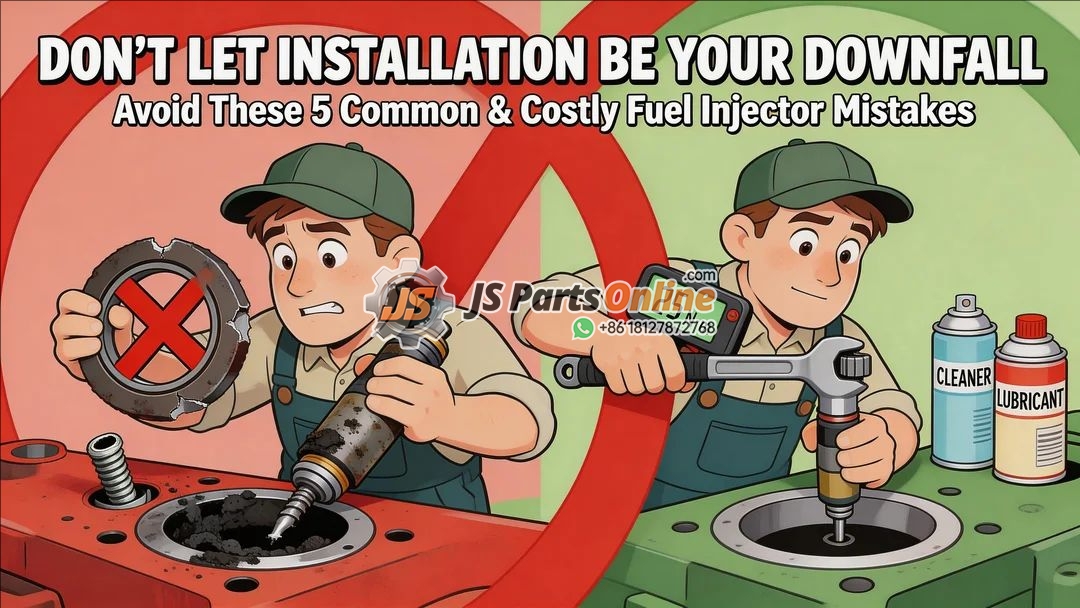
You’ve invested in a high-quality fuel injector, accurately diagnosed the problem, and are ready to restore your engine’s performance. But the journey from box to running engine is fraught with potential pitfalls. A single oversight during installation can render a perfect part useless, cause immediate failure, or lead to a dangerous leak. This guide outlines the five most common—and often costly—mistakes made during fuel injector installation. By understanding these errors and learning the professional techniques to avoid them, you can ensure your repair is reliable, safe, and built to last, protecting both your investment and your engine.
Mistake #1: Reusing Old Seals, O-Rings, and Washers
The Error: After carefully removing the old injector, you notice the seals lookokay. To save time or money, you decide to reuse them.
Why It’s a Problem: Fuel injector seals are designed as single-use components.
- Heat Set: Over hundreds of heat cycles, O-rings and gaskets permanently deform. They will not spring back to create a new, effective seal.
- Micro-cracks: Exposure to fuel and heat creates microscopic cracks invisible to the naked eye. These will leak under high pressure.
- Contamination: Old seals have embedded debris that can score the sealing surfaces of the new injector or fuel rail.
- Copper Washers: These are crush washers. Once compressed, they cannot form a new seal. Reusing them guarantees a combustion gas leak.
The Professional Fix: ALWAYS use the brand-new, correct seals provided with the injector. If they aren’t included, purchase a complete, high-quality fuel injector seal kit separately. This is the cheapest and most critical insurance policy for your installation. Our dedicated guide on fuel injector seals explains their vital role in detail.
Mistake #2: Improper Lubrication (or Using the Wrong Lubricant)
The Error: Installing dry seals, or using an inappropriate lubricant like grease, silicone, or raw fuel.
Why It’s a Problem:
- Dry Installation: Pushing a dry O-ring over a metal edge almost guarantees it will roll, twist, cut, or tear. This creates an immediate leak path.
- Wrong Lubricant: Petroleum-based grease or silicone can swell, degrade, or dissolve certain seal materials (especially Viton®/FKM). Fuel is not a lubricant and offers no protection during installation.
The Professional Fix: Lightly coat the entire circumference of every new O-ring and seal with a thin film of clean engine oil or the specific fuel-compatible lubricant included in some kits. This allows the injector to slide smoothly into place without damaging the seals. A tiny amount is all that’s needed.
Mistake #3: Incorrect or Uneven Torque on Hold-Down Bolts/Clamps
The Error: Tightening the fuel rail bolts or injector hold-down clamps by “feel,” using an impact wrench, or tightening them in the wrong order/sequence.
Why It’s a Problem:
- Under-torquing: Can lead to fuel leaks from the rail or injector seat.
- Over-torquing: This is far more common and dangerous. It can:
- Crack or warp the aluminum intake manifold or fuel rail.
- Distort the injector body, causing it to bind or leak internally.
- Crush and destroy the new seals you just installed.
The Professional Fix: Always use a calibrated torque wrench. Consult the vehicle’s service manual or a reliable database for the exact torque specification (usually in inch-pounds, not foot-pounds). Tighten bolts in a criss-cross or star pattern if applicable, and do so in multiple stages (e.g., 50% torque, then 100%) to ensure even clamping force. This is a cornerstone of a professional installation, as highlighted in our step-by-step installation guide.
Mistake #4: Failing to Clean the Injector Bore and Sealing Surfaces
The Error: Pulling the old injector and immediately installing the new one into the dirty, carbon-crusted bore in the cylinder head or intake manifold.
Why It’s a Problem: Any grit, old seal residue, or carbon deposits left on the sealing surface will prevent the new O-ring or copper washer from sealing properly. Debris can also be pushed into the engine or fuel system during installation.
The Professional Fix: This is a non-negotiable step. Before installation:
- Use a lint-free rag and brake cleaner or carburetor cleaner.
- Thoroughly wipe clean the injector bore and the mating surface on the fuel rail.
- For stubborn carbon in diesel injector cups, a specialized cup cleaning brush may be required.
- Ensure no cleaner or debris falls into the cylinder or intake port.
Mistake #5: Cross-Threading or Misaligning the Injector During Installation
The Error: Forcing the injector into its bore at an angle, or not starting bolts/threads by hand, leading to cross-threading.
Why It’s a Problem:
- Damaged Threads: Cross-threading the hold-down clamp or fuel rail bolt can ruin the threads in the aluminum cylinder head, leading to a costly repair.
- Damaged Injector: Angled installation can bend the injector’s pintle or needle, damage the electrical connector, or shear the new O-ring you just lubricated.
The Professional Fix:
- Always Start by Hand: Carefully guide the injector straight into its bore, using only hand pressure. Do not use tools to force it.
- Feel for Engagement: You should feel the injector seat firmly and evenly. If it binds, remove it and check for debris or misalignment.
- Hand-Start All Bolts: Begin threading every bolt or clamp by hand to ensure they are not cross-threaded before applying any wrench.
The Final Check: Post-Installation Verification
Avoiding these mistakes gets you 95% of the way. The final 5% is verification:
- Pre-Pressurization: Before starting the engine, turn the key to the “ON” position (do not crank) 2-3 times. This activates the fuel pump and pressurizes the system. Visually and physically check every connection point—injector tops, fuel lines, and the base of each injector—for any sign of leakage.
- Start and Monitor: Start the engine and immediately check again for leaks. Listen for any air or vacuum leaks (a hissing sound) which could indicate a lower O-ring isn’t sealed.
- Scan for Codes: Use an OBD2 scanner to clear any old codes and check for new ones that may indicate an electrical issue with the new injector.
Conclusion: Precision Installation is Part of the Product
A fuel injector is a precision instrument. It demands a precision installation. Rushing, skipping steps, or using improper techniques can turn a simple repair into a frustrating and expensive ordeal. By respecting the process—using new seals, proper lubrication, correct torque, meticulous cleanliness, and careful alignment—you ensure that the performance engineered into the injector is fully realized in your vehicle.
Install with Confidence Using the Right Parts & Knowledge.
At JSPartsonline, we believe a successful repair combines quality components with expert knowledge. Our fuel injectors come with the necessary hardware, and our resources provide the know-how.
Equip yourself for success. Browse our selection of fuel injectors and complete seal kits, and use our guides to ensure a flawless installation. For specific technical questions, our support team is here to help.
Related products




Related Posts
-
1

-
2

-
3

-
4

-
5

-
6


JSPartsonline:
Focus on injectors for 12 years,We sell high-quality fuel injectors at competitive prices.
Copyright 2025 © YUN·X . All right reserved.
