
Commercial Fleet Diesel Injector Supplier Selection: Complete Evaluation Framework
Introduction
For a fleet manager running ten trucks or a contractor operating three excavators, buying diesel injectors is not the same decision it is for an individual owner-operator replacing a single unit. The stakes are multiplied: one bad injector can sideline a machine, but choosing the wrong supplier for ongoing fleet needs can degrade availability across an entire operation through repeat failures, inconsistent quality, and logistics that eat into uptime.
This guide provides a structured framework for selecting a diesel injector supplier from a commercial and technical perspective — what to evaluate beyond price, which standards to insist on, and how to build a supplier relationship that reduces total cost of ownership rather than just unit cost per injector.
Why Supplier Selection Is a Different Problem for Fleets
A single-part buyer and a fleet buyer face structurally different risks:
- Single buyer: buys one injector. If it fails prematurely, the engine is down for two days: one to diagnose, one to replace. Cost: the injector price plus labour.
- Fleet buyer: buys dozens of injectors per year. If 10% fail early, the cost is not just 10% × injector price; it is multiple unscheduled breakdowns, scattered failure timing that masks the pattern, and progressive loss of faith in maintenance planning. The cheapest supplier can be the most expensive decision a fleet makes.
The framework below evaluates suppliers across five dimensions, weighted for fleet operations: technical quality assurance, parts consistency, logistics and availability, warranty and support, and total cost transparency.
Dimension 1: Technical Quality Assurance
This is the non-negotiable dimension. A supplier who cannot demonstrate per-unit testing is not a supplier; they are a box-shifter.
Minimum requirements:
- Individual bench testing. Every injector must be tested on a calibrated bench (not batch-tested, not sample-tested) before shipment. The bench test report — showing delivery at multiple pressure/load points, back-leakage, solenoid response, and opening pressure — should ship with the injector or be available by serial number on request.
- Calibration coding. For common rail injectors, the individual IQA/IMA/trim code must be supplied and clearly documented. An injector without its calibration code is a warranty return waiting to happen.
- Component traceability. The supplier should be able to identify which nozzle, control valve, and solenoid went into each injector, from which batch and manufacturer. This is what makes a warranty investigation possible when a pattern of failures emerges.
Questions to ask the supplier:
- “Can you send me the test report for this serial number before you ship?” A supplier who says yes immediately is operating a test bench. One who hesitates is operating a warehouse.
- “What test bench do you use, and when was it last calibrated?” Legitimate remanufacturers know their equipment. Box-shifters don’t.
- “What nozzle manufacturer’s components do you use, and can you provide nozzle batch traceability?”
Dimension 2: Parts Consistency Across Orders
Fleet maintenance planning depends on predictability. The injector you receive in month six should be identical in calibration and performance to the one you received in month one, so that a technician can install it with the same ECM coding procedure and expect the same engine behaviour.
Evaluate:
- Visual consistency: do injectors from different orders look identical (same castings, same connector style, same nozzle nut marking)? Cosmetic variation often signals variation in internal sourcing.
- Flow consistency: if you bench-test a sample of injectors from different orders, are delivery values within a tight band? For a fleet running engines with balance rate monitoring, an injector that flows at the edge of spec will cause a persistent correction value that triggers unnecessary diagnosis.
- Nozzle specification consistency: same spray hole count, same spray angle, same SAC volume. Substituting a different nozzle geometry — even if it “fits” — changes combustion and emission behaviour and may cause DPF regeneration or smoke issues downstream.
Dimension 3: Logistics and Availability
The best injector in the world is useless if it arrives after the machine has been down for a week.
Evaluate:
- Core inventory depth: does the supplier carry finished, tested stock of your specific part numbers, or do they build to order? For fleet-critical part numbers, insist on suppliers with physical stock, not just order-then-build capability.
- Shipping speed and reliability: what is the actual delivered lead time to your location, including customs clearance if cross-border? Test with a trial order before committing to a fleet contract.
- Geographic distribution: for operations spread across regions, a supplier with multi-warehouse stock or a logistics partner that can reach all your sites avoids multiple supplier relationships and the associated administrative overhead.
- Emergency capability: can they ship same-day if a critical machine goes down? What is the process and who do you call? The answer tells you whether you’re dealing with a parts supplier or a support partner.
Dimension 4: Warranty and Post-Sale Support
Warranty terms matter less than warranty process. A generous warranty that takes six weeks to process is worse than a standard warranty that resolves in three days.
Evaluate:
- Warranty period and coverage clarity: is the warranty in months of service or kilometres/hours of operation? Fleet preference should be hours-based: a warranty that reads “12 months or 100,000 km” protects a long-haul truck but offers far less to a construction machine that runs 2,000 hours per year.
- Return and replacement process: what documentation is required for a warranty claim? Do you need to return the failed injector before receiving a replacement (cross-ship), or do they ship a replacement immediately with a core return expectation? For fleet uptime, cross-ship or advance replacement is strongly preferred.
- Technical support: when an injector-related fault appears in the field and the technician needs help interpreting return-flow data or coding a replacement, does the supplier have a technical contact who can answer within hours — not days? Test this by calling their technical line before you ever place an order.
- Failure analysis: does the supplier offer root cause analysis on warranty returns? A supplier who disassembles and reports on every failed warranty unit helps the fleet identify systemic issues (fuel quality, a specific engine position, an installation practice). A supplier who just ships a replacement without analysis leaves the fleet blind.
Dimension 5: Total Cost Transparency
Unit price is the starting point, not the conclusion.
Calculate total cost per injector over a typical replacement cycle:
- Unit cost + shipping (including core return shipping if applicable)
- + Estimated labour (same for any injector, but premature failures add extra labour cycles)
- + Downtime cost per failure (machine hourly rate × expected repair hours × expected failure rate)
- + Administrative burden (processing purchase orders, receiving, warranty claims, tracking core returns)
A fleet that only compares unit prices is comparing the most visible 60% of the cost. The remaining 40% — downtime, repeat labour, administrative friction — is where cheaper suppliers erase their own price advantage.
Fleet managers should additionally evaluate:
- Volume pricing: at what quantity does unit pricing step down, and are there fleet contract terms that lock in pricing for a period?
- Core credit policy: how much credit is issued for returned cores, on what timeline, and with what acceptance criteria? A supplier who routinely rejects cores on technicalities is effectively charging a higher net price than their quote suggests.
- Payment terms: net-30, net-60, or prepay? For fleet cash flow, terms that align with the operation’s billing cycle reduce working capital strain.
Building the Supplier Evaluation Scorecard
Rate each candidate supplier across the five dimensions on a simple 1–5 scale, then weight for your fleet’s specific priorities:
| Dimension | Fleet Weight (example) | Supplier A | Supplier B |
|---|---|---|---|
| Technical QA (per-unit testing) | × 3 | ||
| Parts consistency | × 2 | ||
| Logistics / availability | × 3 | ||
| Warranty / support | × 2 | ||
| Total cost transparency | × 2 | ||
| Weighted total |
Adjust the weights to your reality: a mining fleet with extreme downtime costs weights logistics and QA more heavily. A fleet in a region with excellent local technical talent may accept lower supplier technical support in exchange for better pricing.
The Trial Order Protocol
Never commit a fleet’s full injector spend to an untested supplier. Run a structured trial:
- Order a small batch (3–6 injectors covering your two highest-volume part numbers).
- Bench-test one on arrival (independent test, not the supplier’s own report). Verify delivery, back-leakage, and solenoid performance match the supplied documentation.
- Install the rest in service machines with recorded balance rates before and after, and flag for oil sampling at the next PM.
- Run for a representative interval (at least 500 hours or two PM cycles) and compare balance-rate stability, oil analysis trends, and any fault codes against baseline.
- Evaluate warranty process by deliberately processing a core return or asking a technical question through their support channel during the trial period.
If the trial batch performs identically to your incumbent supplier, and the test-data documentation matches the shipped units, and the technical support answered within your required window — then scale the relationship. If any of those three tests fail, you have your answer before risking the fleet.
When you’re ready to qualify or switch an injector supplier, JS Parts Online welcomes exactly this standard of evaluation:
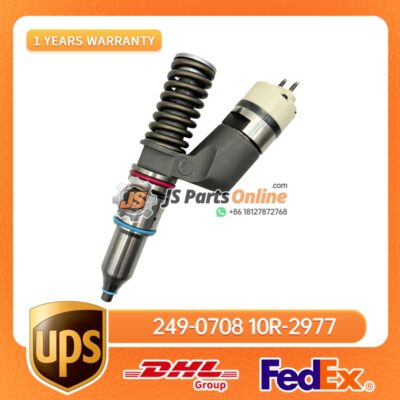
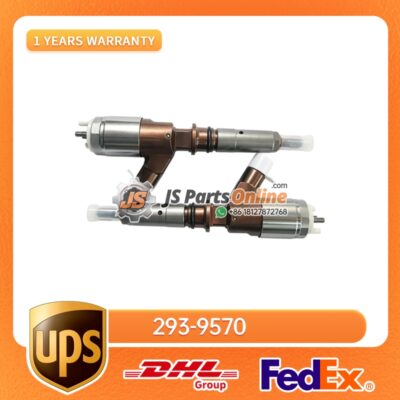
- Caterpillar Fuel Injectors — individually bench-tested HEUI and EUI units with per-unit documentation, supporting the CAT product families that dominate heavy equipment and truck fleets worldwide
- Bosch Common Rail Injectors — supplied with calibration codes, back-leakage verified on calibrated test benches
- Denso Diesel Injectors — precision-tested replacements for Japanese diesel platforms common in mixed fleets
- Fuel Injection Pump Plungers — metering components for mechanical fuel systems, supporting legacy iron still earning its keep
Conclusion
Choosing a diesel injector supplier is a procurement decision for the first order and an engineering decision for every order after that. The framework above — vetting on technical testing evidence, parts consistency, logistics capability, warranty process, and real total cost — converts a subjective, price-driven decision into a repeatable, evidence-based process that reduces long-term fleet costs.
The single most powerful question in this entire guide, the one that separates genuine technical suppliers from middlemen, remains: “Can you send me the test report for this injector before you ship it?” Ask it of every supplier you are considering, and let their answer — in speed and in substance — make the shortlist for you.
Related products



Related Posts
-
1

-
2

-
3

-
4

-
5

-
6



JSPartsonline:
Focus on injectors for 12 years,We sell high-quality fuel injectors at competitive prices.
Copyright 2025 © YUN·X . All right reserved.
