
How to Spot Counterfeit Diesel Injectors: Complete Authentication & Buyer Protection Guide
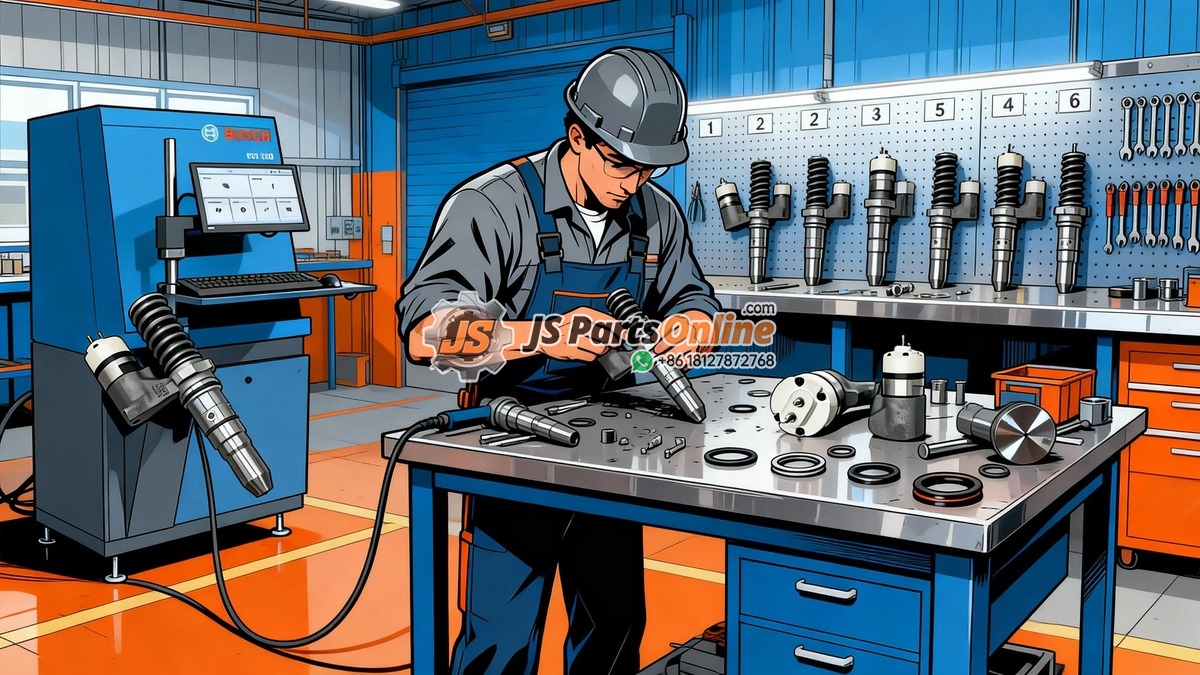
Introduction
The global market for counterfeit automotive parts is estimated in the tens of billions of dollars annually, and precision diesel components sit near the top of the counterfeiters’ priority list. The reason is simple economics: a genuine common rail injector or HEUI unit sells for hundreds of dollars, fits in a small box, and can be imitated externally with cheap castings, fake laser marks and photocopied packaging. The internals — where micron-level machining actually determines whether the part works — are invisible at the point of sale.
The consequences of installing a counterfeit injector go far beyond wasted money. Fake injectors have destroyed pistons through uncontrolled delivery, contaminated entire fuel systems with machining debris, and voided engine warranties. This guide gives you a practical, field-tested authentication process: how counterfeits reach buyers, the red flags at every stage from listing to unboxing to physical inspection, how to use manufacturer verification systems, and how to structure your purchasing so fakes never enter your parts stream in the first place.
Why Counterfeit Injectors Are Genuinely Dangerous
A counterfeit injector is not “a budget part with shorter life.” It is an unknown quantity installed into a system operating at up to 2,500 bar, metering fuel in millisecond pulses directly above a piston:
- Uncontrolled fuel delivery. Without genuine flow calibration, a fake can over-fuel a cylinder severely enough to melt pistons or wash cylinder walls — or under-fuel and create misfires, derates and DPF damage.
- Debris contamination. Counterfeit factories do not run cleanroom assembly. Machining swarf and casting sand from one fake injector can circulate through the rail, pump and remaining injectors — turning a $300 mistake into a $5,000 fuel system replacement.
- Catastrophic mechanical failure. Substandard metallurgy in a component holding back rail pressure is a genuine safety issue: cracked bodies, blown-out nozzle retaining nuts and external fuel leaks (fire risk) have all been documented.
- Zero warranty, zero recourse. No manufacturer warranties a counterfeit, and engine makers can deny related engine damage claims when non-genuine parts are implicated. The seller who shipped it has typically vanished by the time it fails.
How Counterfeits Reach You
Understanding the distribution paths tells you where to raise your guard:
- Online marketplaces with commingled or third-party inventory. Listings with genuine photos and descriptions can ship counterfeit product. Marketplace sellers with thin history, generic names and prices 40–60% below market are the classic vector.
- Gray-market “too good to be true” bulk offers. Emails and B2B platform offers of “overstock” or “factory surplus” genuine injectors at deep discounts. Genuine surplus of current-production precision diesel parts is rare; counterfeit “surplus” is unlimited.
- Look-alike packaging in physical supply chains. Counterfeit boxes have appeared in regional distribution in many countries — even careful buyers have received convincing fakes through informal wholesale channels.
- “Refurbished genuine” listings that are actually worn cores wiped clean, fitted with fake external parts, and sold as remanufactured. These are counterfeits of a different kind: the brand is real, the claimed condition is fake.
Red Flag #1: The Price
Precision injectors have a price floor set by their manufacturing reality: the nozzle assembly alone requires spray holes machined to micron tolerance, and every genuine unit is individually flow-tested. Field rule of thumb:
| Price vs. Authorized Dealer Price | Interpretation |
|---|---|
| 70–100% | Normal retail range; verify seller anyway |
| 50–70% | Possible for legitimate reman or promotions — demand test documentation and provenance |
| Below 50% | Treat as counterfeit until proven otherwise. New genuine parts are essentially never sold at half price |
Counterfeiters price fakes at 40–60% of genuine precisely because it is low enough to close the sale instantly but high enough to look plausible. A “new genuine Bosch” injector at one-third of dealer price is not a bargain; it is a casting with a sticker.
Inspecting the Packaging
Do this before installation — ideally before payment clears or the return window closes:
- Print quality. Genuine boxes use crisp, high-resolution printing with consistent brand colors. Fakes show blurry logos, off-shade colors, misaligned printing, spelling errors and low-grade cardboard.
- Security features. Bosch, Delphi/PHINIA, Denso and Caterpillar all use tamper-evident seals, holograms, and serialized labels on current packaging. Missing, damaged or obviously re-glued seals are disqualifying.
- Label data consistency. The part number, serial number and barcode on the box must match the markings on the injector itself. Counterfeit operations frequently pair one generic box label with mixed product.
- Country/factory logic. A part number that the OEM catalog says is produced in Germany arriving in packaging marked with a different origin — or with no origin at all — deserves an immediate verification call.
- Anti-counterfeit QR/scratch codes. Modern genuine packaging typically carries a scratch-off or QR verification code. Use it (next section). A box without any verification mechanism, for a brand that uses one, is a fake.
Using Manufacturer Verification Systems
The injector makers know they are counterfeited and provide free authentication tools — the single most underused weapon buyers have:
- Bosch: current packaging carries a MEC (unique code) under a scratch field / QR label verifiable through Bosch’s official verification app or web portal. The system reports whether the code is genuine and — critically — whether it has already been checked many times (cloned codes get reused across fake boxes).
- Delphi / PHINIA: serialized security labels with verification via their official checking service.
- Denso: hologram and serialized packaging; suspect product can be verified through authorized distributors.
- Caterpillar: genuine and Reman parts flow through the authorized dealer network with serialized identification; any Cat dealer can validate a part number/serial and tell you whether packaging is current. Genuine Cat injectors sold far outside the dealer/authorized channel at deep discounts deserve maximum suspicion.
Two practical rules: verify the code before installation, and treat “code already verified dozens of times” results as proof of cloning — a favorite counterfeiter trick is copying one genuine code onto hundreds of boxes.
Physical Inspection: Genuine vs. Fake
With the injector in hand, differences the box can hide become visible:
- Laser markings. Genuine injectors carry precise, uniform laser-etched part numbers, serials and calibration/trim codes. Fakes show shallow, uneven, dot-matrix-looking or crooked marks, wrong fonts, and missing calibration data. Compare against a known-genuine unit or OEM reference photos.
- Machining and surface finish. Genuine bodies show consistent, fine machining; fakes show tool chatter, rough castings, visible parting lines, sloppy thread crests and cosmetic plating over poor surfaces.
- Weight and dimensions. Substandard internals often change the weight noticeably. A gram scale and calipers against a known-genuine reference will expose many fakes in seconds.
- Connector and fitting quality. Electrical connectors that fit loosely, latch poorly, or use visibly cheap plastic; inlet fittings with imperfect sealing surfaces or damaged threads.
- Calibration coding. Modern common rail injectors must carry an individual calibration code (IMA/IQA/trim). A “new” coded-type injector with no individual code printed on it is either fake or was never flow-tested — equally disqualifying.
- Internal evidence (when you can get it). Genuine nozzles show perfectly uniform spray holes under magnification. If you have a pop tester or bench access, spray pattern and opening pressure testing exposes fakes immediately — counterfeits routinely fail atomization within seconds of observation.
Counterfeit vs. Cheap Aftermarket vs. Genuine Reman: Know the Difference
Not every low-cost injector is a counterfeit, and confusing the categories leads to bad decisions:
- Counterfeit: pretends to be an OEM brand it is not. Illegal, untested, dangerous. Never acceptable.
- Cheap no-name aftermarket: sold honestly under its own (or no) brand without OEM claims. Legal — but for precision common rail and HEUI applications, unbranded uncalibrated units carry many of the same technical risks: unknown metallurgy, unverified flow, no documentation.
- Professionally remanufactured: genuine OEM cores rebuilt with OEM-specification wear components, individually bench-tested, delivered with calibration codes and test documentation. This is the legitimate way to pay less than new-genuine price — the brand heritage is real, the testing is real, and the paperwork proves it.
The authentication question for a reman purchase shifts from “is the hologram real?” to “can the seller show me this serial number’s test report?” A legitimate remanufacturer answers instantly; a core-polisher cannot.
Vetting the Supplier: Your Real Defense
Every inspection technique above is a backstop. The primary defense is buying from sellers whose incentives make counterfeiting impossible:
- Verifiable business identity — real company name, physical address, reachable phone/email, actual business history. Counterfeit sellers are anonymous by design.
- Deep product knowledge. Ask a technical question: “What trim code family does this part number use?” “What engines does this cross to?” Legitimate specialists answer precisely; fake sellers copy-paste.
- Documentation on request. Test reports, calibration codes, warranty terms in writing. “No documentation” means “no purchase.”
- Real return policy and warranty with a named process — not marketplace boilerplate.
- Consistent specialist inventory. A seller offering diesel injection components alongside phone cases and cosmetics is a reseller of whatever is cheapest today.
- Track record. Reviews across platforms, longevity of the storefront, repeat commercial customers.
If You Suspect You Bought a Fake
- Do not install it. The cost of the part is sunk; the cost of the engine is not.
- Document everything — listing screenshots, packaging photos, markings, verification results.
- Verify officially via the brand’s authentication tool or an authorized distributor.
- Pursue refund through the payment channel (marketplace protection, card chargeback) with your evidence.
- Report it to the brand’s anti-counterfeit program — manufacturers actively pursue these sellers, and reports get fake listings removed.
Buy From a Source Built on Testing, Not Stories
At JS Parts Online, authentication anxiety is designed out of the transaction: we operate as a specialist diesel injection supplier, every unit is individually bench-tested before shipment, and delivery documentation ships with the part:
- Caterpillar Fuel Injectors — OEM-quality HEUI and EUI replacements with verified delivery specifications
- Bosch Common Rail Injectors — individually tested, supplied with calibration codes
- Denso Diesel Injectors — precision-tested units for Japanese diesel platforms
- Fuel Injection Pump Plungers — genuine-specification metering components for mechanical systems
Conclusion
Counterfeit diesel injectors succeed because they attack the gap between what a buyer can see — a box, a casting, a price — and what actually matters: micron-level internal machining and individual calibration. Close that gap and fakes lose. Check the price against reality, inspect packaging and markings, use the manufacturers’ free verification systems, demand per-unit test documentation, and concentrate your purchasing with specialist suppliers who can prove what they sell.
One rule summarizes the entire guide: genuine parts come with evidence. Evidence of origin, evidence of testing, evidence of calibration. Any seller who cannot produce it — at any price — is asking you to gamble a diesel engine to save a hundred dollars. Decline the bet.
Related products



Related Posts
-
1

-
2

-
3

-
4

-
5

-
6



JSPartsonline:
Focus on injectors for 12 years,We sell high-quality fuel injectors at competitive prices.
Copyright 2025 © YUN·X . All right reserved.
