
Closed-Loop Combustion Control: How Smart Fuel Injectors are Optimized in Real-Time
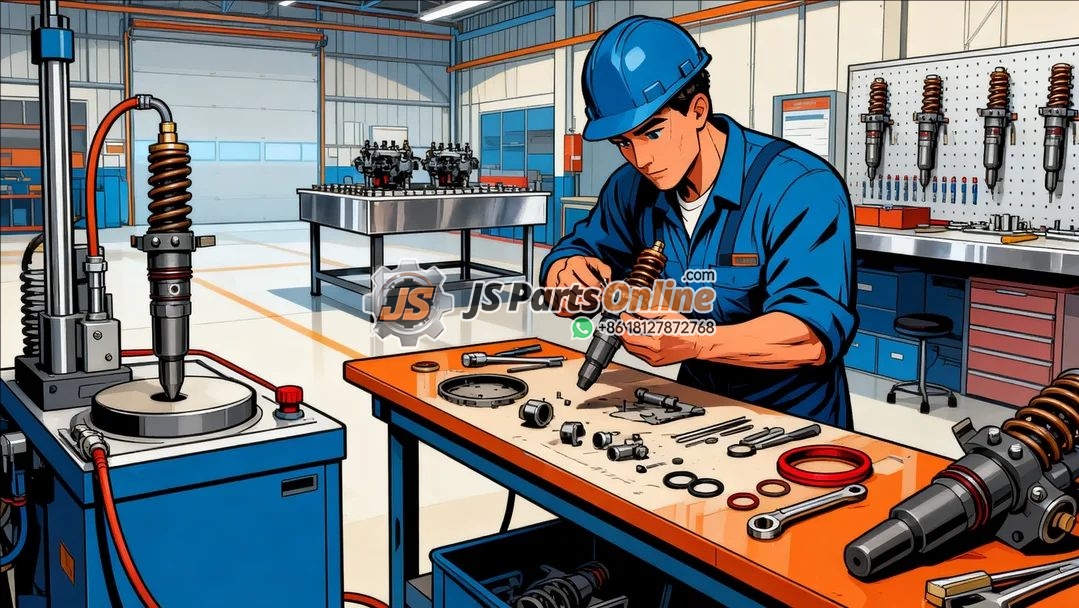
For decades, engine management was primarily an open-loop prediction. The Engine Control Unit (ECU) used maps—calibrated on a test bench for a “typical” engine—to command fuel injectors based on estimated air mass, temperature, and RPM. It corrected based on exhaust gas sensors, but these signals were delayed and collective. Today, a revolution in precision is underway: Closed-Loop Combustion Control (CLCC). This technology allows the ECU to “see” inside each cylinder, in real-time, and adjust each fuel injector’s operation stroke-by-stroke to achieve perfect combustion. This guide explains the sensors, algorithms, and high-speed actuation that make this possible. You’ll learn how CLCC maximizes efficiency, suppresses knock, compensates for injector aging and fuel variability, and represents the ultimate fusion of precision mechanical components and intelligent digital feedback, setting a new standard for performance and emissions control in both modern and future engines.
The Limitation of Traditional Control: Looking in the Rear-View Mirror
Traditional engine control has two primary feedback sources, both with inherent lag and aggregation:
- Exhaust Gas Oxygen (EGO) Sensors: Located in the exhaust stream, they measure the averageair-fuel ratio after combustion across multiple cylinders, with a transport delay. They cannot identify a problem in a specific cylinder.
- Knock Sensors: Detect the sound of abnormal combustion (knock) and instruct the ECU to retard timing reactively, after knock has already occurred, sacrificing performance and efficiency.
The Problem: The ECU cannot know if its command to the injector resulted in optimalcombustion for that specific cycle in that specific cylinder. It’s flying blind inside the most critical event.
The Game Changer: The In-Cylinder Pressure Sensor
The enabler of CLCC is a miniature, robust sensor integrated into the glow plug or mounted directly in the cylinder head. It measures the pressure trace inside the combustion chamber throughout the cycle with extreme temporal resolution.
- The Data Richness: The pressure trace is a direct fingerprint of the combustion event. Its shape reveals:
- Start of Combustion (SOC): When the fuel actually begins to burn relative to the injection command.
- Rate of Heat Release (ROHR): How quickly and completely the fuel is burning.
- Peak Pressure and Location: Indicators of efficiency and mechanical stress.
- Indicated Mean Effective Pressure (IMEP): A direct measure of the work produced by that specific cylinder on that specific cycle.
The Closed Loop: Sense, Analyze, Actuate, Repeat
CLCC turns the combustion chamber into a real-time laboratory. The process, occurring in milliseconds, is a continuous loop:
- Sense: The in-cylinder pressure sensor captures the pressure trace from the previous engine cycle.
- Analyze: The ECU’s high-performance processor analyzes the trace, extracting key metrics (SOC, IMEP, ROHR, peak pressure). Sophisticated control algorithms (often model-based) compare these measured values against an optimal target trajectory stored in the ECU’s memory.
- Decide & Actuate: The algorithm calculates the necessary correction. For the very next injection eventin that same cylinder, it adjusts the command to the precision fuel injector. The primary control variables are:
- Injection Timing: Advancing or retarding the start of injection to place combustion at the optimal point in the cycle.
- Injection Quantity: Fine-tuning the fuel amount to achieve the target IMEP and air-fuel ratio.
- (In multi-pulse systems) Pilot Injection Quantity/Timing: Adjusting the pilot to control noise and pre-combustion conditions.
- Repeat: The next cycle’s pressure is measured, verifying the correction and enabling continuous, adaptive optimization.
The Transformative Impact on Fuel Injector Performance and Engine Health
CLCC transforms the fuel injector from an open-loop actuator into a dynamically tuned instrument.
- Compensation for Injector Aging & Variability: As an injector wears or becomes slightly coked, its flow characteristics and response time drift. Open-loop systems suffer gradual performance loss. CLCC detects the resulting change in the combustion signature (e.g., delayed SOC) and automatically adjusts the injector’s commanded timing and pulse width to compensate, maintaining optimal performance throughout the injector’s life. This is a powerful extension of the concept behind injector coding and calibration, but now dynamic and continuous.
- Adaptation to Fuel Quality: Different fuel batches, biodiesel blends, or e-fuels have different cetane/octane numbers and burning velocities. CLCC detects the change in combustion phasing and automatically retunes injection timing to maintain efficiency and prevent knock, protecting the engine from poor fuel. This relates directly to the challenges of fuel quality discussed in our fuel quality guide.
- Active Knock Suppression at the Edge of Efficiency: Instead of waiting for a knock sensor to hear knock and then retarding timing conservatively, CLCC can operate at the very edge of the knock limit. It monitors the pressure trace for the onsetof knock-inducing pressure oscillations and can make minute, per-cycle adjustments to injection timing or quantity to suppress it before it becomes audible or damaging. This allows for more aggressive base timing and higher compression ratios, extracting more power and efficiency from every drop of fuel.
- Cylinder Balancing in Real-Time: CLCC can measure the IMEP of each cylinder every cycle. It can actively balance output by making tiny adjustments to individual injector fueling, ensuring smooth operation and maximizing total engine output. This is the ultimate realization of the principles of flow matching and balance, achieved dynamically by the ECU itself.
System Requirements: Not Just a Sensor
Implementing effective CLCC demands more than just adding a pressure sensor.
- High-Fidelity, Durable Sensors: Sensors must survive peak combustion pressures (200+ bar) and temperatures for the life of the engine.
- Extremely Fast Processing: Analyzing pressure traces and calculating corrections within one engine revolution requires significant processor power.
- High-Speed, Precision Actuators: The fuel injectors must be capable of responding to cycle-by-cycle adjustments with micron-level precision and microsecond-level repeatability. This demands the kind of advanced injector technology, including fast solenoids or piezo actuators, discussed in our look at the future of injection.
- Robust Control Algorithms: Developing the software that reliably translates pressure data into optimal injector commands is a core intellectual property of leading engine manufacturers and Tier 1 suppliers.
Implications for Diagnostics, Maintenance, and the Aftermarket
- Advanced Diagnostics: CLCC data is a treasure trove for diagnostics. Technicians can view combustion metrics for each cylinder, identifying weak injectors, compression issues, or air flow imbalances with unprecedented clarity. This elevates diagnostics beyond the methods in our diagnostic flowchart to a data-rich level.
- Predictive Maintenance Potential: Trends in the correction values needed to maintain optimal combustion (e.g., increasing need to advance timing for a given cylinder) can be an early warning sign of a degrading injector or other fault, enabling true predictive maintenance.
- Aftermarket Component Compatibility: Replacing a fuel injector in a CLCC system is even more critical. A poor-quality or mismatched injector will force the system to apply large, constant corrections, potentially operating at the limit of its compensation range and degrading overall performance and efficiency. The case for OEM-specification quality is stronger than ever.
Conclusion: The Symphony Conductor Inside the Cylinder
Closed-Loop Combustion Control represents the pinnacle of engine mechatronics. It erases the line between the physical combustion event and the digital control world, creating a dynamic, self-optimizing system. The fuel injector, under the command of this intelligent loop, becomes an adaptive agent of precision, constantly tuned to overcome the real-world variables of component wear, fuel changes, and environmental conditions. For engineers and technicians, understanding CLCC is to understand the future of high-efficiency internal combustion, where every stroke is measured, and every injection is perfected. It ensures that the precision engineering within the fuel injector is fully realized, cycle after cycle, for the life of the engine.
Demand Components Worthy of the Smartest Control Systems.
When your engine’s brain is this intelligent, equip it with a nervous system that can keep up. JSPartsonline supplies the high-precision, fast-responding fuel injectors that form the critical actuator in advanced closed-loop combustion control systems, ensuring your engine achieves its designed potential for efficiency and performance.
Optimize every combustion event. Explore our range of precision fuel injectors suitable for next-generation engine management systemsor consult our technical teamto discuss the right components for your performance or efficiency-focused application.
Related products


Related Posts
-
1

-
2

-
3

-
4

-
5

-
6



JSPartsonline:
Focus on injectors for 12 years,We sell high-quality fuel injectors at competitive prices.
Copyright 2025 © YUN·X . All right reserved.
