
Fuel Injector Manufacturing & Quality Control: A Journey from Raw Steel to Precision Component
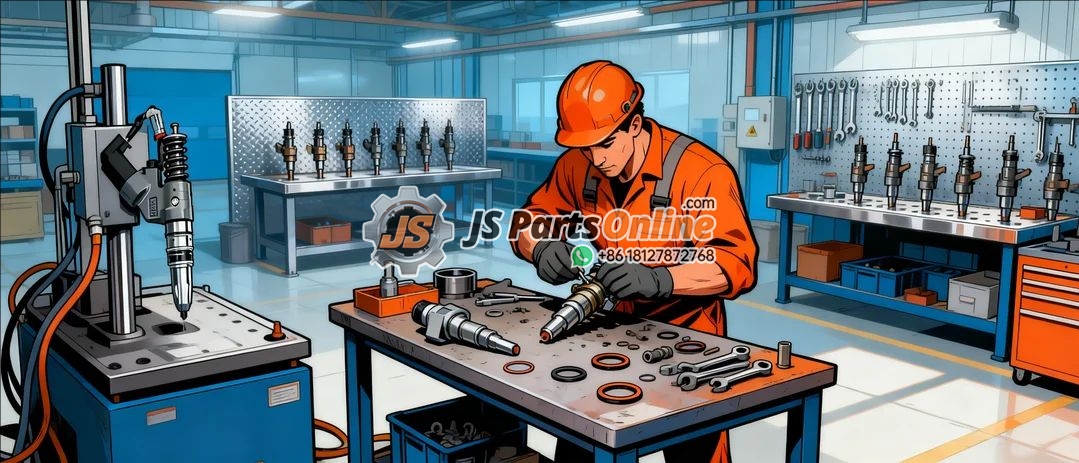
The modern fuel injector is a paradox: a component that must withstand the brutal, explosive environment inside a combustion chamber while operating with the precision of a surgical instrument. This duality is not achieved by accident, but through a meticulously controlled manufacturing journey where microns matter and failure is not an option. For engineers, procurement specialists, and quality managers, understanding this journey—from a blank of specialty steel to a sealed, calibrated, and tested injector—is key to appreciating the value and technology encapsulated in every unit. This guide ventures inside the world of high-volume precision manufacturing to illuminate the critical steps, advanced technologies, and relentless quality gates that define the production of a reliable fuel injector. We’ll explore how raw materials are transformed, how tolerances are held to unimaginable tightness, and how every injector is proven before it leaves the factory, ensuring it meets the exacting standards required for today’s high-pressure, clean-combustion engines.
The Foundation: Why Manufacturing Makes or Breaks Performance
Before the first cut is made, the design intent—optimal spray pattern, fast response, and million-mile durability—must be translated into a manufacturable process. The manufacturing and quality control (QC) stages are where this intent is either realized or lost. Imperfections invisible to the naked eye, such as microscopic tool marks, burrs, or sub-micron dimensional variances, can lead to:
- Poor atomization and increased emissions (from flawed nozzle holes).
- Internal leakage and reduced power (from imperfect needle/seat mating).
- Premature wear and catastrophic failure (from residual contaminants or subsurface material defects).
Thus, the factory floor is the first and most critical line of defense in delivering the performance promised by the design, directly impacting the total cost of ownership for the end user.
Stage 1: Precision Machining of Core Components
The journey begins with high-grade materials—hardened stainless steels, tool steels, and specialized alloys, whose importance is detailed in our materials science guide. These are shaped on computer-numeric-controlled (CNC) machining centers capable of sub-micron accuracy.
- Injector Body & High-Pressure Housing: Complex internal fuel galleries, sealing surfaces, and threaded ports are machined. The concentricity and perpendicularity of these features are critical for proper sealing and alignment during engine assembly. Any deviation can cause the installation issues highlighted in our installation mistakes guide.
- Needle Valve & Seat: These are the heart of the injector. They undergo precision turning, grinding, and lapping processes. The final mating surfaces are often lapped to a mirror finish to achieve near-perfect sealing. The roundness and straightness of the needle are measured in millionths of an inch.
Stage 2: The Nozzle: Where Macro Meets Micro
The nozzle tip is the most demanding component to manufacture.
- Laser Drilling: The microscopic fuel holes (typically 6-8 holes, each 0.10-0.15mm in diameter) are not drilled mechanically, but with ultra-short pulse (USP) lasers. This technology vaporizes material with minimal heat-affected zone, creating holes that are remarkably round, straight, and with a smooth interior surface—critical for a consistent fuel spray pattern. Each hole’s diameter, conicity (inlet vs. outlet shape), and positioning are verified with automated vision systems.
- Abrasive Flow Machining (AFM): After laser drilling, the nozzle may undergo AFM. A viscous, abrasive media is pumped through the holes at high pressure. This process gently removes the recast layer from laser drilling and polishes the interior to a hydraulically smooth finish, optimizing flow and reducing the risk of cavitation erosion.
Stage 3: Cleanliness: The Invisible Specification
A single microscopic particle can destroy a high-pressure fuel pump or jam an injector needle. Thus, cleanliness is not an afterthought; it is a core manufacturing discipline.
- Multi-Stage Cleaning: Components undergo a series of aggressive cleaning processes: ultrasonic baths in specialized solvents, high-pressure spray washes with deionized water, and precision rinsing.
- Cleanroom Assembly: Critical assembly stages, especially the mating of the needle and seat, take place in controlled cleanroom environments (ISO Class 7 or better) to prevent airborne contamination.
- Particle Analysis: Random samples of cleaned components and final assemblies are subjected to particulate analysis, where any residue is collected, weighed, and examined under a microscope to validate cleaning process efficacy.
Stage 4: Assembly, Calibration & Coding
- Automated, Precision Assembly: Robotic arms and automated workcells assemble components with precise, repeatable force. Critical torques (e.g., for the nozzle cap) are applied with calibrated, data-logging tools.
- Solenoid Integration & Electrical Testing: The solenoid coil is installed and its electrical parameters (resistance, inductance) are tested to ensure it will respond correctly to the ECU’s drive circuit.
- Flow Calibration & Coding: This is the most critical functional step. Each assembled injector is placed on a calibrated flow bench. It is operated at various pulse widths and pressures, and its dynamic flow rate is measured. Based on this data, a unique calibration code is assigned and laser-marked on the injector body. This code tells the vehicle’s ECU exactly how to adjust its command for that specific injector’s slight flow characteristic, a process essential for modern engines as explained in our coding and calibration guide.
Stage 5: The Gauntlet of Final Testing & Quality Gates
No injector ships without passing a battery of tests that simulate a lifetime of service in minutes.
- External & Dimensional Inspection: 100% visual inspection via automated cameras for surface defects. Critical dimensions are verified with coordinate measuring machines (CMM).
- High-Pressure Leak Testing: The injector is subjected to fuel or test fluid at its maximum operating pressure (e.g., 2,500+ bar) and checked for external leaks. It is also tested for internal leak-down to ensure the needle and seat seal perfectly when closed.
- Spray Pattern Visualization: Using high-speed cameras and stroboscopic lighting, the injector’s spray pattern is visually inspected for consistency, cone angle, and the absence of streaming or dripping. This is the ultimate validation of the manufacturing process for the nozzle and needle.
- Dynamic Flow & Stability Testing: The injector’s flow is verified across its entire operational range and over an extended cycle count to ensure stability. This data is used to create the final flow matching groups, ensuring sets of injectors perform identically, a necessity for smooth engine operation covered in our flow matching guide.
- End-of-Line Functional Test: A final simulation test mimicking an engine cycle verifies all electrical and hydraulic functions under dynamic conditions.
The Implications: What This Means for Buyers and the Aftermarket
This rigorous process defines the landscape for parts selection:
- The Cost of Precision: The investment in lasers, cleanrooms, CMMs, and flow benches explains the price differential between a precision-manufactured OEM/OEM-specification part and a generic alternative. You are paying for proven performance and durability.
- The Risk of the Unverified: Parts that bypass this level of manufacturing and QC (e.g., some low-cost aftermarket or counterfeit units) carry immense hidden risk. They may “fit,” but their internal condition, flow, and longevity are unknown and unverified, directly threatening engine health and emissions system integrity.
- The Value of Traceability: Reputable manufacturers maintain full traceability, linking each injector’s serial number back to its raw material batch, production line data, and test results. This is the hallmark of quality and is essential for advanced applications and warranty support.
Conclusion: Precision is a Process, Not a Wish
The reliability of a modern fuel injector is not a happy coincidence; it is the inevitable output of a process engineered to eliminate variation, contamination, and doubt. It represents a triumph of metrology, materials science, and automated precision over the chaos of mass production. For anyone specifying, selling, or installing these components, an appreciation for this journey fosters a respect for the technology in the box. It shifts the decision from a simple price comparison to a value assessment based on verified performance, controlled processes, and the peace of mind that comes from knowing a component was built to survive the inferno it was designed for.
Source Components Where the Process is the Product.
At JSPartsonline, we partner with manufacturers whose commitment to precision manufacturing and exhaustive quality control is as clear as their component designs. We believe in supplying parts where the integrity of the manufacturing journey guarantees the performance in your engine.
Demand proven precision. Explore our selection of fuel injectors from manufacturers who master the art and science of productionor contact our technical teamto discuss the critical quality factors for your application.
Related products




Related Posts
-
1

-
2

-
3

-
4

-
5

-
6


JSPartsonline:
Focus on injectors for 12 years,We sell high-quality fuel injectors at competitive prices.
Copyright 2025 © YUN·X . All right reserved.
