
Fuel Injectors for Racing & High-Performance: Engineering for the Extreme
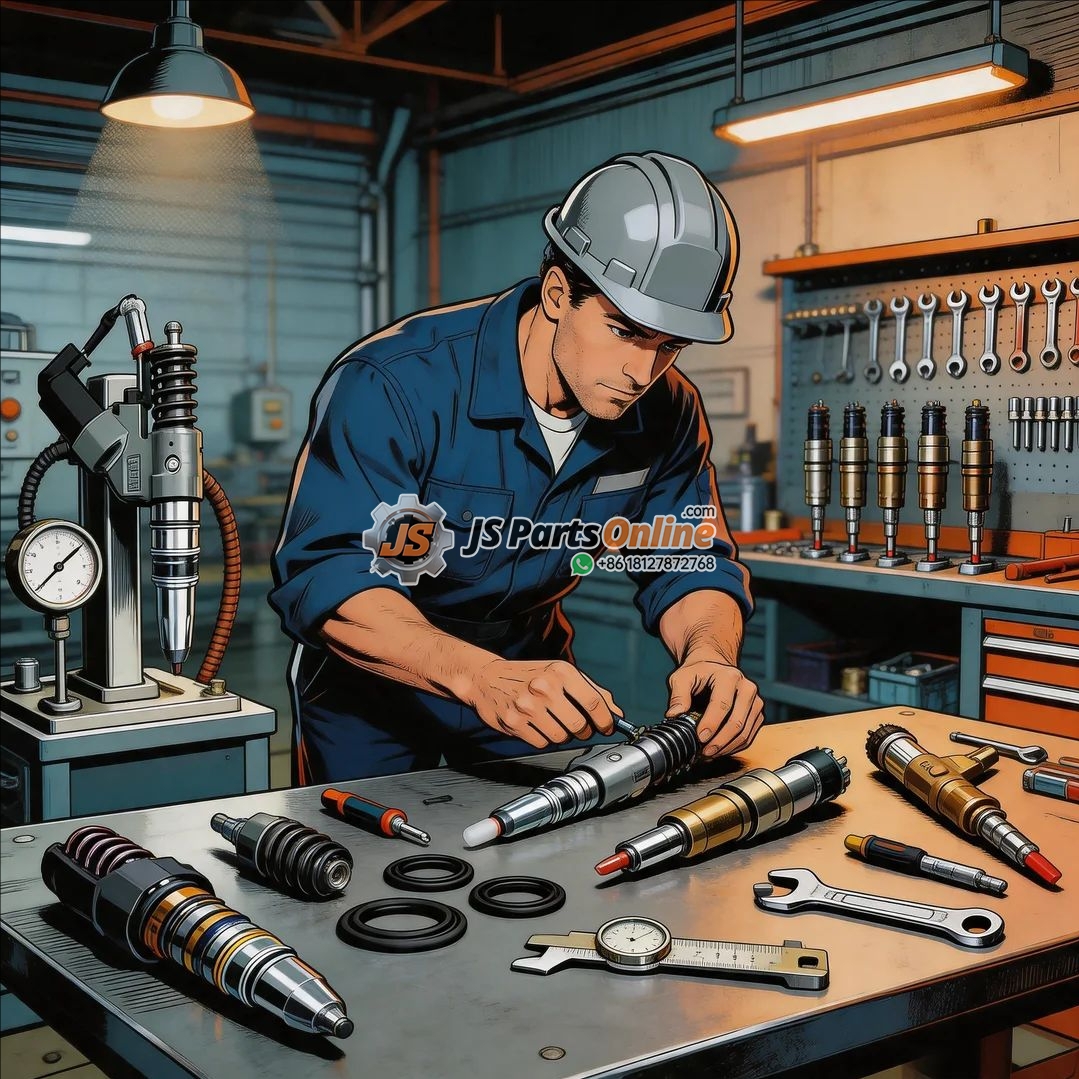
The demands placed on a fuel injector in a street-legal performance car are significant, but they pale in comparison to the brutal, uncompromising environment of competitive motorsport. In racing, every millisecond and every droplet of fuel counts towards victory or mechanical failure. Here, fuel injectors are not just components; they are high-precision, high-frequency fuel artillery operating at the edge of physical limits. This guide delves into the specialized world of racing and extreme high-performance fuel injectors. We’ll explore the critical design differences, the integrated fuel system architecture they demand, and the rigorous selection and tuning processes required to extract maximum, reliable power while surviving the intense thermal and vibrational punishment of the track, strip, or dyno cell.
The Crucible: Operating Conditions That Redefine “Extreme”
Racing environments amplify every challenge:
- Sustained High Load & RPM: Engines operate at 80-100% load for extended periods, requiring injectors to flow near their maximum duty cycle continuously without fatigue or thermal failure.
- Intense Heat Soak: Under-hood temperatures can skyrocket, especially in turbocharged applications or after a hot shutdown. Injectors must resist fuel vaporization (percolation) in the lines and nozzles, which can cause lean misfires and loss of power.
- Extreme Vibration & G-Forces: From cornering loads to brutal launches, injectors must maintain electrical connections and internal seal integrity where lesser units would fail.
- Ultra-Fast Dynamic Response: Throttle transitions and gear shifts in milliseconds require injectors with minimal latency (dead time) and the ability to deliver precise fuel at very short pulse widths for stable idle and low-speed control, even with massive flow capacity.
Anatomy of a Racing Injector: Key Design Differentiators
While they may look similar, racing injectors are engineered with specific attributes:
- Ultra-High Flow Rates with Broad Dynamic Range: Racing injectors are sized for the engine’s peak power potential, often 1,000-2,000+ cc/min. However, the best units are designed to maintain linearity and precise control at very low pulse widths (idle) despite their large size. This is achieved through advanced magnetic circuit design and precision machining of the seat and orifice.
- Optimized Flow Paths & Atomization: Internal geometries are designed to minimize flow restriction and promote excellent atomization even at high differential pressures. The goal is maximum fuel delivery with a spray pattern that supports complete combustion under high boost and high RPM, directly impacting the spray pattern science critical for power.
- Robust Thermal Management: Materials and construction are chosen to withstand high temperatures. Some injectors feature designs that promote cooling through fuel flow or have specific coatings to reflect radiant heat.
- Low-Impedance (Peak & Hold) vs. High-Impedance (Saturated): Most high-flow racing injectors are low-impedance (2-4 ohms). They use a “peak and hold” driver strategy: a high initial current to snap the needle open quickly, then a lower “hold” current. This provides faster opening times but requires more sophisticated ECU drivers or external ballast resistor boxes. The choice and setup are critical, as incorrect matching can damage the ECU or the injector.
The System is Everything: Fuel System Architecture for Racing
A racing injector cannot perform in a stock fuel system. It requires a holistic, high-performance fuel delivery architecture.
- Demand-Based Fuel Pressure Regulation: Many racing systems use a boost-referenced fuel pressure regulator to maintain a constant pressure differential across the injector (e.g., 43.5 psi or 3 bar) as manifold pressure changes. This ensures the injector’s flow characteristic remains predictable. In complex setups, fuel pressure sensors are used for ECU compensation.
- High-Flow Fuel Pumps & Lines: The pump(s) must supply enough volume to support all injectors at 100% duty cycle at the target pressure. Multiple pumps, large-diameter lines (-8 AN, -10 AN), and high-flow filters are standard. The symbiotic relationship is paramount, as failure here causes the issues described in our fuel pump and injector relationship guide.
- Fuel Rails Designed for Flow & Cooling: Billet or CNC-machined fuel rails with large internal volume prevent pressure drop from one end to the other. Some designs incorporate cooling fins or are mounted to manage heat.
- Fuel Cooling & Recirculation: In endurance racing or high-heat applications, standalone fuel coolers and continuous recirculation (return-style systems) are used to keep fuel temperatures in check, preventing vapor lock and maintaining injector stability.
The Selection Process: Choosing the Right Artillery
Selecting racing injectors is a data-driven calculation, not a guess.
- Calculate Required Flow Accurately: Use the standard formula: (Desired HP x BSFC) / (# of Injectors x Max Duty Cycle). Use a Brake Specific Fuel Consumption (BSFC) of 0.60 – 0.70 for forced induction race engines. Choose a conservative maximum duty cycle of 80-85% for headroom. This process is detailed in our performance injector upgrade guide.
- Prioritize Data from the Manufacturer: Never buy racing injectors without published latency (dead time) data across a range of voltages and a full flow characterization chart. This data is non-negotiable for your tuner to create a stable idle and accurate fuel map.
- Consider Matched Sets: For multi-cylinder engines, purchase flow-matched sets (typically within 1-2%). Imbalance causes uneven cylinder temperatures and power loss, and can be dangerous at the limit. This is the standard for professional engines, as highlighted in our guide on flow matching importance.
- Verify Electrical Compatibility: Ensure your ECU can drive the injector’s impedance (low or high) or that you have the correct driver box or resistors.
Installation & Tuning: The Final 1%
Precision installation and tuning unlock a racing injector’s potential.
- Installation Rigor: Follow all torque specs. Use high-quality, fuel-compatible seals and lubricate O-rings properly. Ensure the electrical connections are secure and protected from heat and vibration. The principles in our installation mistakes guide are doubly important here.
- Tuning is Mandatory & Critical: Installing larger injectors without a professional tune is a guarantee of failure. The tuner must:
- Input the new, exact flow rate and latency data.
- Re-scale the entire fuel map.
- Carefully tune idle and low-load areas using the latency data.
- Optimize the air/fuel ratio and ignition timing under load on a dynamometer.
- Validate fuel pressure consistency and injector duty cycles. This inseparable link is the core thesis of our article on injector upgrades and tuning.
Common Failure Modes in Racing & Prevention
- Thermal Failure (Vapor Lock/Seizure): Caused by extreme under-hood heat. Prevention:Use heat shields, thermal sleeves, fuel coolers, and ensure adequate fuel flow for cooling.
- Electrical Failure: Vibration can break solder joints or wires. Prevention:Use high-quality connectors, secure wiring looms, and strain relief.
- Clogging from Debris or Fuel Breakdown: Racing fuels and high temperatures can form gums. Prevention:Use a high-capacity, cleanable fuel filter, and avoid mixing incompatible fuels. Inspect and clean filters frequently.
- Fatigue from Excessive Duty Cycle: Running injectors at 100% duty cycle for prolonged periods can overheat the solenoid and lead to failure. Prevention:Size injectors with adequate headroom and monitor duty cycle in logs.
Conclusion: The Margin Where Engineering Meets Art
In racing and extreme performance, the fuel injector is a critical pivot point between mechanical potential and realized power. Its selection and integration demand a systems engineering approach, where every component from the tank to the tip is optimized for a single purpose: delivering fuel with unwavering precision under the most adverse conditions imaginable. Success is found in the details—the quality of the data, the rigor of the installation, and the art of the tune. By respecting the engineering and preparing for the extremes, you equip your engine not just to make power, but to survive the process of making it, lap after lap, pass after pass.
Equip Your Build with Components Forged for the Fight.
When your project demands the ultimate in fuel delivery performance and reliability, trust in components designed for the track, not just the street. JSPartsonline provides access to high-performance fuel injectors and systems from manufacturers who understand the demands of competitive motorsport.
Push the limits with confidence. Explore our selection of motorsport-grade fuel system componentsor consult with our performance racing specialiststo engineer your winning fuel system.
Related products



Related Posts
-
1

-
2

-
3

-
4

-
5

-
6



JSPartsonline:
Focus on injectors for 12 years,We sell high-quality fuel injectors at competitive prices.
Copyright 2025 © YUN·X . All right reserved.
