
How to Test a Diesel Fuel Injector — 6 Proven Methods for Accurate Diagnosis
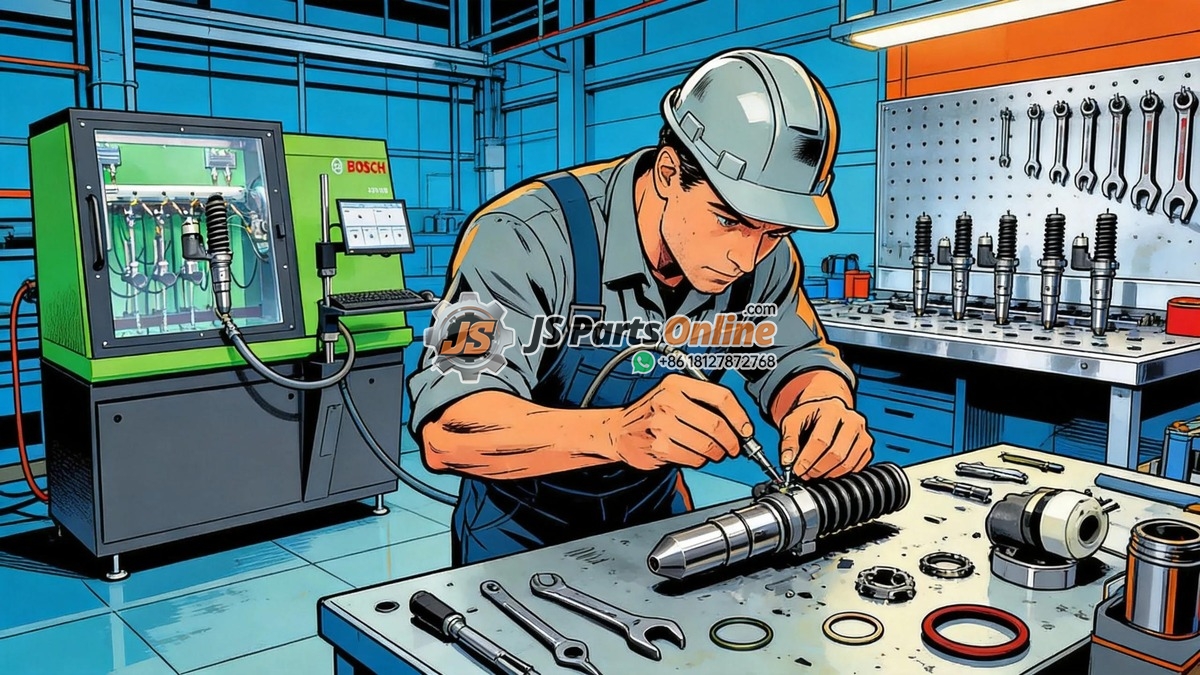
A failing diesel fuel injector doesn’t always announce itself with dramatic symptoms. Sometimes it’s a subtle increase in fuel consumption, a slight miss at idle, or a gradual loss of power that creeps in over thousands of miles. That’s why knowing how to test a diesel fuel injector is one of the most valuable diagnostic skills a diesel technician can develop. Before you replace anything, you need to confirm — with data — which injector is failing and how badly. This guide covers six proven testing methods, from the simple leak-off test you can do in your driveway to the manufacturer-level diagnostics used by professional diesel shops. Whether you’re working on a CAT C15 injector, a Bosch common rail injector, or a Denso HP4 injector, these methods will help you pinpoint the problem with confidence.
When Should You Test Your Fuel Injectors?
Proactive injector testing can save you from catastrophic engine damage. Test your injectors if you notice any of these warning signs:
- Increased fuel consumption — A 10% or greater drop in fuel economy without other obvious causes
- Rough idle or misfire — Engine shakes at idle, especially when cold
- Excessive smoke — Black smoke (over-fueling), white smoke (unburned fuel), or blue smoke (burning oil mixed with fuel)
- Hard starting — Extended crank time, especially when the engine is warm
- Engine knocking — A metallic knocking sound from a specific cylinder, often caused by abnormal injection timing
- Failed emissions test — High particulate matter or hydrocarbon readings
- Fuel in engine oil — Rising oil level or diesel smell on the dipstick
If you haven’t yet confirmed that injectors are the root cause, start with our diesel injector diagnosis guide before proceeding with testing.
Method 1: Visual Inspection
Before any electronic or flow testing, start with your eyes. A visual inspection can reveal injector problems that no test equipment can detect.
What to Look For
- Fuel leaks around the injector base — Fresh diesel stains or wet spots indicate a failed copper sealing washer or loose hold-down clamp
- Combustion gas blow-by — Black carbon deposits around the injector base indicate combustion gases are escaping past the seal
- Cracked injector body — Hairline cracks in the injector housing, usually near the high-pressure inlet or the nozzle nut
- Damaged electrical connector — Corroded pins, broken locking tabs, or melted plastic around the solenoid connector
- Return line condition — Cracked, swollen, or hardened rubber return lines are a common source of air intrusion
Pro tip: Use a flashlight and inspection mirror to examine hard-to-see areas. If you find any of these conditions, you’ve likely identified your problem injector. But don’t stop here — perform at least one additional test method to confirm before ordering a replacement.
Method 2: Injector Leak-Off (Return Flow) Test
The leak-off test is the single most effective DIY-friendly method for identifying bad diesel injectors. It works on all diesel injection systems — mechanical, HEUI, and common rail.
How It Works
All diesel injectors have a small amount of fuel that leaks past the plunger and nozzle clearance, which is returned to the tank through the return line. A healthy injector returns a consistent, small volume of fuel. A worn or damaged injector returns significantly more — sometimes 3 to 10 times the normal rate.
Equipment Needed
- Clear vinyl tubing (6mm or 8mm ID, matching your injector return ports)
- Graduated measuring cylinders or identical small bottles (one per injector)
- Zip ties or small hose clamps
- Stopwatch or timer
- Notebook and pen
Procedure
- Run the engine until it reaches normal operating temperature
- Disconnect the main fuel return line from the engine
- Connect a separate clear tube from each injector’s return port to an individual measuring cylinder
- Secure the measuring cylinders so they won’t tip over
- Start the engine and let it idle
- Measure the return fuel volume from each injector over exactly 60 seconds
- Record the volume for each cylinder
- Repeat at 2000 RPM (if safe to do so) for a more comprehensive test
Interpreting Results
| Condition | Return Flow Difference | Diagnosis |
|---|---|---|
| All injectors within 10% of each other | < 10% variation | Healthy injectors — look elsewhere for the problem |
| One injector returns 50–100% more than average | 50–100% higher | Worn nozzle — replace this injector |
| One injector returns 200%+ more than average | > 200% higher | Severe internal wear or stuck open — replace immediately |
| One injector returns significantly less than others | > 30% less | Partially blocked nozzle — may need cleaning or replacement |
| All injectors return high volume uniformly | All high but consistent | Possible high-pressure pump wear — test pump separately |
Method 3: Injector Resistance (Electrical) Test
This test applies only to electronically controlled injectors with solenoid actuators — common rail and HEUI injectors. It’s a quick check that can identify open circuits, short circuits, or degraded solenoid windings.
Equipment Needed
- Digital multimeter (DMM) with resistance measurement capability
- Engine service manual with injector resistance specifications
Procedure
- Disconnect the engine harness from all injector electrical connectors
- Set your multimeter to resistance (ohms, Ω)
- Measure across the two pins of each injector solenoid
- Record the resistance value for each injector
- Compare readings to manufacturer specifications
Typical Resistance Values
| Injector Type | Typical Resistance | Failing Value |
|---|---|---|
| Bosch common rail (CRIN) | 0.3–0.8 Ω | Open circuit (OL) or > 2 Ω |
| Denso common rail | 0.4–1.0 Ω | Open circuit (OL) or > 3 Ω |
| Delphi common rail | 0.3–0.7 Ω | Open circuit (OL) or > 2 Ω |
| CAT HEUI injectors | 0.5–2.0 Ω | Open circuit (OL) or > 5 Ω |
| Cummins XPI injectors | 0.3–0.9 Ω | Open circuit (OL) or > 2 Ω |
Note: Always verify specifications for your specific engine model. Resistance values vary between manufacturers and even between different injector generations from the same manufacturer.
Method 4: Injector Pop Test (Bench Test)
The pop test is the gold standard for injector testing, but it requires removing the injector from the engine and using a specialized test bench. This method is typically performed by diesel injection specialists, but understanding the process helps you interpret the results when your injectors are sent out for testing.
What the Pop Test Measures
- Opening pressure — The pressure at which the injector nozzle opens and begins to spray
- Spray pattern — The shape, angle, and atomization quality of the fuel spray
- Chatter quality — The sound and vibration pattern of the nozzle opening and closing
- Dribble or leakage — Whether the nozzle seals completely or allows fuel to drip after the injection event
- Pop pressure consistency — Whether the injector opens at the same pressure on repeated tests
Interpreting Pop Test Results
| Observation | Result | Action Required |
|---|---|---|
| Opening pressure within ±5% of spec, clean cone-shaped spray | ✅ PASS | Injector is good for continued service |
| Opening pressure 10%+ below spec | ❌ FAIL | Worn spring or nozzle — rebuild or replace |
| Uneven or distorted spray pattern (streaming, dripping, off-angle) | ❌ FAIL | Damaged nozzle tip — replace injector |
| Fuel dribbles after the pop event | ❌ FAIL | Worn nozzle seat — replace injector |
| No pop event or inconsistent pressure reading | ❌ FAIL | Stuck plunger or severe internal damage — replace injector |
Method 5: Cylinder Contribution / Balance Test
Modern diesel engines with electronic control modules (ECMs) can perform a cylinder contribution test — also called a balance test or power balance test. This is available through diagnostic software and some high-end scan tools.
How It Works
The ECM temporarily cuts fuel to each cylinder one at a time while monitoring the RPM drop. A cylinder that produces less power when cut than the others indicates that its injector is not delivering enough fuel. Conversely, a cylinder that shows almost no RPM change when cut is receiving too much fuel at the expense of the other cylinders.
Procedure (using diagnostic tool)
- Connect a compatible diagnostic tool (CAT ET, Cummins Insite, Bosch ESI[tronic], Autel, or Snap-on)
- Navigate to the injector or cylinder performance menu
- Select “Cylinder Cutout Test” or “Cylinder Contribution Test”
- Run the test at idle and repeat at 1500 RPM
- Review the contribution percentages — all cylinders should be within ±15% of each other
- An injector contributing significantly less than others is a strong candidate for replacement
Important caveat: A low contribution reading doesn’t always mean the injector is bad. It could also indicate low compression in that cylinder, a valve issue, or an intake/exhaust restriction. Cross-reference with a fuel injector fault code scan and a compression test before condemning the injector.
Method 6: Injector Pulse Width and Fuel Trim Analysis
This advanced diagnostic method uses live data from the ECM to evaluate injector performance while the engine is running under real conditions.
What to Monitor
- Injector pulse width — The duration (in milliseconds) that the injector solenoid is activated. Longer pulse widths indicate the ECM is compensating for reduced injector flow.
- Fuel trim values — Individual cylinder fuel trim corrections applied by the ECM. Large positive corrections indicate the ECM is adding more fuel to a cylinder that’s running lean.
- Rail pressure deviation — The difference between commanded and actual fuel rail pressure. Large deviations suggest a fuel delivery problem.
How to Interpret
| Data Point | Normal Range | Problem Indicator |
|---|---|---|
| Injector pulse width variation | ±5% between cylinders | > 15% variation indicates injector flow imbalance |
| Individual fuel trim | ±5% correction | > 15% correction on a single cylinder points to a failing injector |
| Rail pressure control deviation | ±30 bar (±435 PSI) | > 100 bar deviation indicates pump, regulator, or injector issues |
Testing Comparison: Which Method Should You Use?
| Test Method | Difficulty | Equipment Cost | Accuracy | Best For |
|---|---|---|---|---|
| Visual Inspection | ★☆☆ | $0 | Low (screening only) | Quick initial check for obvious failures |
| Leak-Off Test | ★★☆ | $10–$50 | High | DIY mechanics, preliminary diagnosis, identifying the bad injector |
| Resistance Test | ★☆☆ | $20–$200 | Medium | Checking solenoid integrity on electronically controlled injectors |
| Pop Test (Bench) | ★★★ | $500–$5,000+ | Very High | Professional rebuild shops, confirmation before replacement |
| Cylinder Contribution Test | ★★☆ | $200–$3,000 | High | Shops with diagnostic software, identifying which cylinder is weak |
| Live Data / Fuel Trim Analysis | ★★☆ | $200–$5,000 | Very High | Advanced diagnostics, confirming subtle injector degradation |
Common Test Mistakes to Avoid
- Testing a cold engine — Injector behavior changes significantly with temperature. Always test at operating temperature.
- Skipping the leak-off test — It’s the most accessible and reliable test for DIY mechanics. Don’t replace injectors without doing it first.
- Misinterpreting contribution test results — A weak cylinder isn’t always an injector problem. Check compression before blaming the injector.
- Ignoring fuel quality — Contaminated fuel can cause injector test results that look like component failure. Check your fuel filters and consider sampling the fuel before condemning injectors.
- Testing only at idle — Some injector problems only appear under load. Include a high-idle or road test in your diagnostic routine.
When Testing Points to Replacement
If your testing confirms that one or more injectors have failed, don’t wait. Driving with a bad injector causes secondary damage: fuel dilution of the engine oil, catalytic converter damage, and in extreme cases, hydraulic lock from a nozzle that sticks open. A single failed injector can destroy a $10,000 engine in under 100 miles of driving.
When you’re ready to purchase replacements, JSPartsonline.com stocks a comprehensive range of OEM-quality diesel fuel injectors for all major makes. Whether you need a single CAT diesel fuel injector for your C7, C9, or C15, a set of Bosch common rail injectors, or Denso injectors for your heavy-duty application, every injector is flow-tested and guaranteed to meet OEM specifications. We offer same-day shipping from our US warehouse and free technical support to help you complete the job with confidence.
Conclusion
Knowing how to test a diesel fuel injector is a skill that saves you time, money, and engine life. The leak-off test alone can identify 90% of failing injectors with equipment that costs less than a tank of fuel. For more advanced diagnostics, the cylinder contribution test and live data analysis provide precision confirmation that helps you make confident replacement decisions.
Start with the simplest test and escalate only if needed. In most cases, a leak-off test combined with a visual inspection and resistance check will tell you everything you need to know. And when the data says it’s time to replace — act promptly. Your engine’s longevity depends on it.
Test smart, replace confidently. Your diesel engine depends on precise fuel delivery.





JSPartsonline:
Focus on injectors for 12 years,We sell high-quality fuel injectors at competitive prices.
Copyright 2025 © YUN·X . All right reserved.
