
Diesel Fuel Injector Fault Codes Explained – Complete P0201 to P0266 Guide
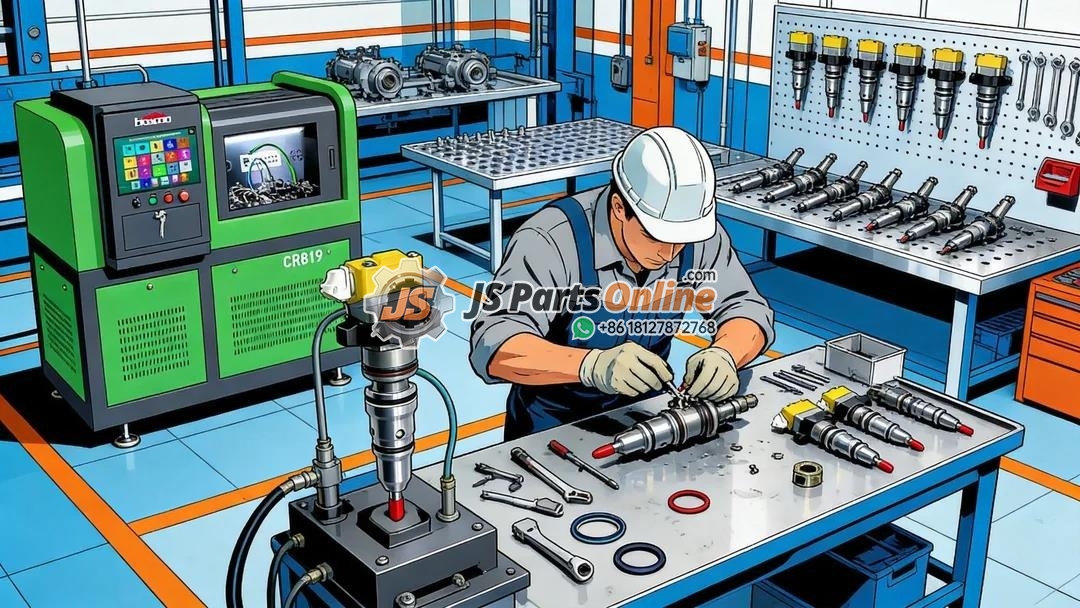
Your check engine light is on. You plug in your scan tool, and there it is: P0203 — Injector Circuit / Open — Cylinder 3. Now what? Understanding diesel fuel injector fault codes is the fastest path from a glowing dashboard light to a confirmed repair. Modern diesel engines generate dozens of injector-related diagnostic trouble codes (DTCs), each pointing to a specific failure mode — from a simple wiring issue to a complete injector failure. This guide covers every injector-related fault code from P0201 through P0266, explains what triggers each one, and walks you through the diagnostic steps that will save you from throwing parts at the wrong problem.
How Injector Fault Codes Work
Before diving into specific codes, it helps to understand how the ECU monitors injectors. Modern diesel ECUs use several strategies to detect injector problems:
- Electrical monitoring – The ECU measures the resistance of the injector solenoid circuit. If the resistance is too high (open circuit), too low (short circuit), or outside the expected range, it sets a circuit fault code (P0201–P0212 range)
- Contribution monitoring – The ECU compares crankshaft acceleration between cylinders. A cylinder that produces less power than expected triggers a contribution or balance fault (P0261–P0266 range)
- Fuel pressure monitoring – Rail pressure sensors detect pressure deviations caused by injector leakage or flow imbalance
- Exhaust gas monitoring – Oxygen sensors, EGR sensors, and DPF sensors can indirectly flag injector problems through abnormal exhaust composition
Not all injector fault codes mean the injector itself is bad. Electrical codes, in particular, are as likely to point to wiring, connectors, or the ECU as they are to the injector. The key is knowing how to interpret the code and test the correct component.
Injector Circuit Fault Codes (P0201 – P0212)
These are the most common injector-related codes and the most frequently misunderstood. A P020X code indicates the ECU has detected an electrical fault in the injector circuit for a specific cylinder.
Code Table — Injector Circuit DTCs
| Code | Description | Most Likely Cause |
|---|---|---|
| P0201 | Injector Circuit / Open — Cylinder 1 | Wiring harness fault, injector solenoid failure |
| P0202 | Injector Circuit / Open — Cylinder 2 | Wiring harness fault, injector solenoid failure |
| P0203 | Injector Circuit / Open — Cylinder 3 | Wiring harness fault, injector solenoid failure |
| P0204 | Injector Circuit / Open — Cylinder 4 | Wiring harness fault, injector solenoid failure |
| P0205 | Injector Circuit / Open — Cylinder 5 | Wiring harness fault, injector solenoid failure |
| P0206 | Injector Circuit / Open — Cylinder 6 | Wiring harness fault, injector solenoid failure |
| P0207 | Injector Circuit / Open — Cylinder 7 | Wiring harness fault, injector solenoid failure |
| P0208 | Injector Circuit / Open — Cylinder 8 | Wiring harness fault, injector solenoid failure |
| P0209 | Injector Circuit / Open — Cylinder 9 | Wiring harness fault, injector solenoid failure |
| P0210 | Injector Circuit / Open — Cylinder 10 | Wiring harness fault, injector solenoid failure |
| P0211 | Injector Circuit / Open — Cylinder 11 | Wiring harness fault, injector solenoid failure |
| P0212 | Injector Circuit / Open — Cylinder 12 | Wiring harness fault, injector solenoid failure |
Diagnosing P0201 – P0212 Codes
When a P020X code appears, follow this diagnostic sequence in order:
- Check the connector first – Remove the electrical connector from the affected injector. Look for corrosion, bent pins, pushed-back terminals, or green oxidation. Clean with electrical contact cleaner and re-seat the connector. Clear the code and test drive. More than 30% of P020X codes are fixed at this step alone.
- Measure injector resistance – Using a digital multimeter, measure the resistance across the injector solenoid pins. Compare to the specification in your service manual (typically 0.3–0.7 ohms for piezo injectors, 0.5–2.0 ohms for solenoid injectors). An open circuit (infinite resistance) means the injector solenoid has failed internally. A short circuit (near-zero resistance) also means replacement is needed.
- Check wiring continuity – Disconnect the ECU connector (note: this requires the battery to be disconnected for 15+ minutes on some ECUs). Measure continuity from the ECU pin to the injector connector. If continuity is broken, repair the wiring harness between the two points.
- Check for shorts to ground or power – Measure resistance from each injector circuit pin to engine ground and to battery positive. Any resistance below 10,000 ohms indicates a short that must be traced and repaired.
- Swap test – If the wiring checks out but the code persists, swap the injector with another cylinder. Clear codes and run the engine. If the code moves to the new cylinder, the injector is faulty and needs replacement.
For replacement injectors that meet OEM specifications, browse our selection of CAT diesel fuel injectors and Bosch common rail injectors.
Common Misdiagnosis with P020X Codes
The most expensive mistake technicians make with P020X codes is replacing the injector immediately. Remember: the code says “Injector Circuit,” not “Injector.” The ECU is detecting an electrical problem in the circuit that runs between the ECU, the wiring harness, and the injector solenoid. The injector is only one of three possible failure points. Wiring harness damage from chafing, rodent damage, or previous repairs is at least as common as actual injector failure in this code range.
Injector Circuit Range/Performance Codes (P1212 – P1220 and Manufacturer-Specific)
Beyond the generic P020X range, many diesel manufacturers use proprietary codes for injector circuit performance issues:
- P1212 (CAT / International) – Injector solenoid voltage high. Often triggered by a failing ECM driver or a short to battery voltage.
- P1213 (CAT / International) – Injector solenoid voltage low. Caused by high resistance in the circuit, failing ECM ground, or weak battery voltage during cranking.
- P1214 (CAT / International) – Injector solenoid circuit fault — multiple cylinders affected. Points to a common power or ground issue rather than an individual injector.
- P1216 (Cummins) – Fuel injection pump control circuit. Related to the CP3 or CP4 high-pressure pump rather than individual injectors.
- P1220 (General) – Fuel injector control circuit fault — generic code that may require manufacturer-specific diagnostics.
These codes often require a manufacturer-level scan tool (CAT ET, Cummins Insite, Ford IDS) for complete diagnosis because the data needed to pinpoint the fault is not available through generic OBD-II tools.
Cylinder Contribution / Balance Fault Codes (P0261 – P0266)
These codes indicate that a specific cylinder is not contributing its fair share of power. Unlike circuit codes, these usually point to the injector itself or to a mechanical engine problem in that cylinder.
Code Table — Cylinder Balance DTCs
| Code | Description | Most Likely Cause |
|---|---|---|
| P0261 | Cylinder 1 Contribution/Balance Fault | Injector failure, low compression, valve issue |
| P0262 | Cylinder 2 Contribution/Balance Fault | Injector failure, low compression, valve issue |
| P0263 | Cylinder 3 Contribution/Balance Fault | Injector failure, low compression, valve issue |
| P0264 | Cylinder 4 Contribution/Balance Fault | Injector failure, low compression, valve issue |
| P0265 | Cylinder 5 Contribution/Balance Fault | Injector failure, low compression, valve issue |
| P0266 | Cylinder 6 Contribution/Balance Fault | Injector failure, low compression, valve issue |
Diagnosing P0261 – P0266 Codes
Balance fault codes require a different diagnostic approach than circuit codes:
- Read live data – Use your scan tool to view cylinder balance rates (sometimes called “fuel trim” or “cylinder contribution” values). A balance rate of more than ±15% from the mean indicates a problem cylinder.
- Perform a cylinder cutout test – Most professional scan tools can command individual injectors to shut off. The cylinder with the smallest RPM drop is the weak cylinder — that’s your problem.
- Check for injector-related symptoms – Is there black smoke at idle? Rough running? Fuel dilution? These point toward an injector issue rather than a compression problem.
- Perform a leak-off (return flow) test – Excessive return flow from one injector confirms internal injector wear and is a definitive diagnosis for replacement.
- Compression test – If the injector checks out mechanically and electrically but the cylinder still shows weak contribution, perform a compression test. Low compression from worn rings, damaged pistons, or valve problems can mimic injector failure perfectly.
Pro tip: A single cylinder balance fault with no circuit codes and normal injector return flow often points to a mechanical engine problem, not an injector. Don’t replace injectors until you’ve ruled out compression issues.
Fuel Pressure Related Injector Codes
These codes don’t name the injector directly, but they often point to injector problems as the root cause:
| Code | Description | Injector Connection |
|---|---|---|
| P0087 | Fuel Rail / System Pressure Too Low | A single leaking injector can drop rail pressure. If the high-pressure pump and regulator check out, test injector return flow |
| P0088 | Fuel Rail / System Pressure Too High | A stuck-open injector or restricted return line can cause pressure spikes |
| P0090 | Fuel Pressure Regulator Control Circuit | Rarely injector-related — focus on the pump, regulator valve, and wiring |
| P0191 | Fuel Rail Pressure Sensor Range/Performance | Could indicate rail pressure oscillation from failing injectors. Check live data for pressure fluctuations under load |
| P0192 | Fuel Rail Pressure Sensor Circuit Low | Sensor electrical issue — less likely injector-related |
| P0193 | Fuel Rail Pressure Sensor Circuit High | Sensor electrical issue — less likely injector-related |
P0087 is the most important code in this group for injector diagnostics. If you have P0087 with no high-pressure pump faults, a leak-off test on all injectors should be your next step. A single injector returning 3–4 times the normal volume can drop rail pressure by 5,000–10,000 PSI at idle.
Manufacturer-Specific Injector Codes
Ford Power Stroke (6.0L, 6.4L, 6.7L)
- P2285 – Injector Control Pressure Sensor Circuit Low (6.0L HEUI system)
- P2286 – Injector Control Pressure Sensor Circuit High (6.0L HEUI system)
- P2617 – Crankshaft Position / Camshaft Position Correlation — often misdiagnosed as injector issue but actually timing-related
Cummins ISB / ISX / QSB
- P0652 – Injector Supply Voltage Circuit — indicates the ECM internal injector driver failed, not the injector itself
- P2146 – Fuel Injector Group 1 Supply Voltage Circuit
- P2147 – Fuel Injector Group 1 Supply Voltage Circuit Low
- P2148 – Fuel Injector Group 1 Supply Voltage Circuit High
- P2149 through P2156 – Fuel Injector Group 2–4 supply voltage circuits
CAT C7 / C9 / C15 (HEUI)
- P1212–P1214 – Injector solenoid voltage faults (discussed above)
- P1750 – HEUI injection control pressure — if pressure is low, injectors may not fire at all. Check the ICP sensor, IPR valve, and high-pressure oil pump before condemning injectors
For more information on specific CAT injectors, see our dedicated CAT injector selection guide.
Step-by-Step Diagnostic Flowchart
When you encounter any injector-related fault code, follow this systematic approach:
Step 1: Identify the Code Type
├── Circuit Code (P020X, P121X)
│   ├── Check connector first (fixes 30%+ of cases)
│   ├── Measure injector resistance
│   ├── Check wiring continuity
│   └── Swap test if needed
│
├── Balance Code (P026X)
│   ├── Read live cylinder contribution data
│   ├── Perform cylinder cutout test
│   ├── Leak-off test injectors
│   └── Compression test if injectors check OK
│
├── Pressure Code (P0087, P0088)
│   ├── Check fuel filter restriction
│   ├── Test high-pressure pump output
│   ├── Leak-off test all injectors
│   └── Inspect fuel pressure regulator
│
└── Manufacturer-Specific Code
    ├── Use dealer-level scan tool for detailed data
    ├── Search technical service bulletins (TSBs) for known issues
    └── Follow manufacturer-specific diagnostic procedure

Step 2: Confirm Before Replacing
├── Never replace an injector based on a code alone
├── Always verify with: resistance test + leak-off test + cutout test
└── Document before and after readings

Step 3: Source Quality Parts
├── OEM or certified aftermarket injectors only
├── Verify injector IMA/QR codes match ECU requirements
├── Use new copper washers, O-rings, and seals
└── Shop JSPartsonline.com for tested, guaranteed injectors
When It’s Not the Injector
A critical skill in injector diagnosis is knowing when the injector is innocent. These conditions can trigger injector-like fault codes without any injector being faulty:
- Weak battery – Low voltage during cranking causes injector circuit codes because the solenoid does not energize fully. Test battery voltage and charging system before diagnosing injector electrical faults.
- Contaminated fuel – Water, algae, or debris in the fuel system can cause multiple injector balance codes simultaneously. Inspect the fuel filter and drain the separator before replacing injectors.
- Damaged wiring harness – Chafed wires from engine vibration, rodent damage, or previous repairs are the most common hidden cause of injector circuit codes. Always inspect the full wiring path.
- ECM failure – Rare but real. If multiple injector circuit codes appear on different cylinder banks simultaneously (e.g., P0201 + P0205 + P0208), the ECM injector driver may have failed rather than three separate injectors.
- Low compression – A cylinder with low compression produces the same symptoms as a weak injector. Always perform a compression test before condemning an injector that passes electrical and flow tests.
Conclusion
Diesel fuel injector fault codes are your engine’s most direct diagnostic language — but only if you know how to read them. A P020X code means “check the circuit,” not “replace the injector.” A P026X code means “find the weak cylinder,” not automatically “buy new injectors.” And a P0087 code means “look for where the pressure is going,” with injector leakage as one possible answer among several.
The most expensive tool in your diagnostic kit is the parts cannon — replacing injectors based on codes without verification. The most valuable tool is a systematic diagnostic process: read the code, understand what it really means, perform the confirmatory tests, and only then replace the faulty component.
When replacement is the confirmed solution, choose quality parts from a trusted supplier. At JSPartsonline.com, every injector in our catalog is tested to meet OEM specifications. Whether you need CAT injectors for heavy equipment, Bosch common rail injectors for trucks and vans, or Denso injectors for Japanese diesel engines, we deliver quality parts with fast shipping and technical support.
Diagnose smart. Confirm before you condemn. And when it’s time to replace, choose quality that lasts.



JSPartsonline:
Focus on injectors for 12 years,We sell high-quality fuel injectors at competitive prices.
Copyright 2025 © YUN·X . All right reserved.
