
High-Performance Fuel Injector Upgrade Guide: Maximize Power & Efficiency
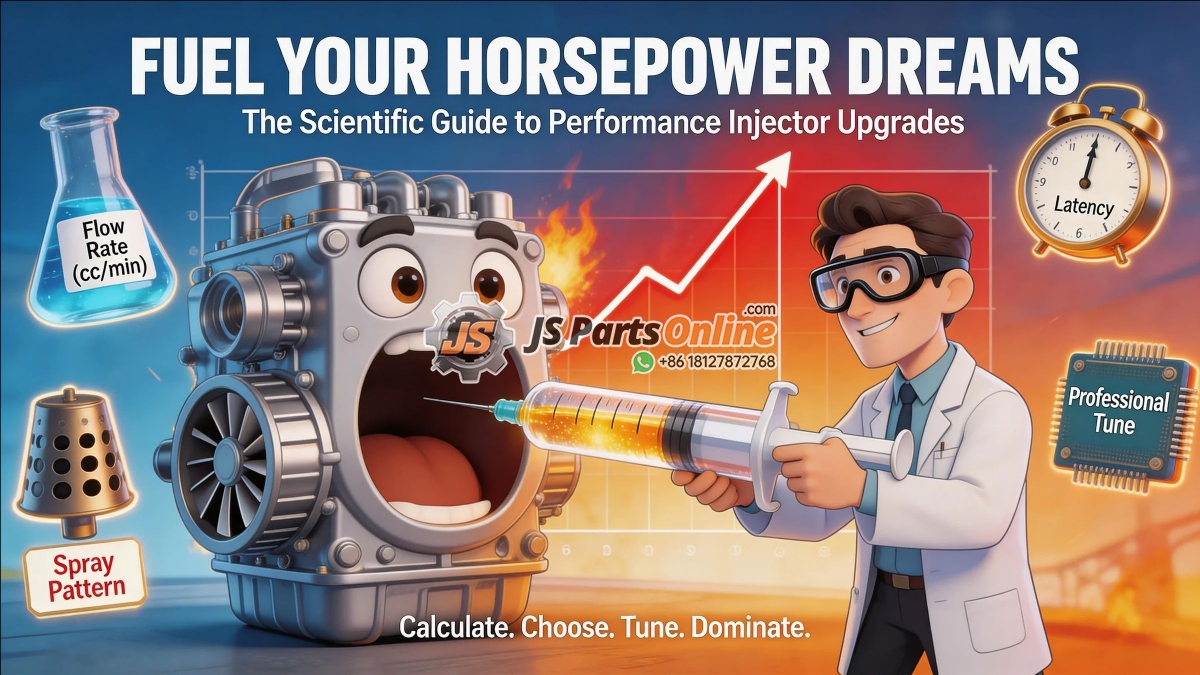
When you increase your engine’s ability to breathe—through forced induction, increased displacement, or aggressive camshafts—you must also increase its ability to drink. The factory fuel injectors, calibrated for a stock air-fuel ratio, will quickly become the bottleneck, starving your engine of fuel and risking catastrophic lean conditions under boost. Upgrading to performance fuel injectors is not an option; it’s a mandatory step for any serious power increase. This guide is for the enthusiast and builder. We’ll demystify the technical specs, explain how to calculate your exact flow needs, and cover the critical integration steps with engine management to ensure your upgrade delivers reliable, massive gains in horsepower and torque.
Why Stock Injectors Limit Modified Engines
OEM injectors are sized with a small safety margin above the engine’s stock power potential. When you add a turbocharger, supercharger, or significant internal modifications, you drastically increase the engine’s volumetric efficiency and airflow. To maintain a safe and powerful air-fuel ratio (typically ~12.5:1 under wide-open throttle for gasoline), you must deliver proportionally more fuel. A stock injector pushed beyond 80-85% of its maximum duty cycle becomes unreliable, can overheat, and simply cannot flow enough fuel, leading to:
- Lean Air-Fuel Mixtures: The primary cause of detonation (knock), which can melt pistons and destroy engines.
- Power Limitation: The ECU may pull timing or boost to protect the engine, capping your power gains.
- Inconsistent Performance: Injectors at static (100% open) cannot modulate fuel delivery, causing drivability issues.
Step 1: Calculating Your Required Injector Flow Rate
Choosing the correct size is the most critical step. Too small, and you kill your engine. Too large, and you ruin idle quality and low-speed drivability. Use this formula as a starting point:
For Gasoline:
(Desired HP x BSFC) / (# of Injectors x Injector Duty Cycle) = Required Injector Flow (lb/hr)
- Desired HP: Your realistic horsepower goal at the crank.
- BSFC (Brake Specific Fuel Consumption): A measure of efficiency. Use 0.55 – 0.60 for naturally aspirated engines, and 0.60 – 0.65 for forced induction engines. Higher BSFC is a safer estimate.
- # of Injectors: Typically 4, 6, or 8.
- Injector Duty Cycle: The maximum percentage of time the injector should be open. Do not exceed 80-85% for safety and headroom. Use 0.80 in the formula.
- Result: Flow in pounds per hour (lb/hr). To convert to cc/min (a common metric), multiply by 10.5.
Example: A turbocharged 4-cylinder goal of 400 HP.
(400 HP x 0.62 BSFC) / (4 injectors x 0.80 DC) = 248 / 3.2 = 77.5 lb/hr (or ~814 cc/min) per injector.
Pro Tip: Always consult your tuner or use a reputable online calculator. Your fuel pump and regulator must also support this increased flow demand.
Step 2: Understanding Key Performance Injector Specifications
Flow rate isn’t the only number that matters. For optimal performance and drivability, consider these factors:
- Spray Pattern: High-performance injectors often feature multi-hole (e.g., 4-8 holes) nozzles versus a single pintle. This creates a finer, more homogeneous fuel atomization, leading to better combustion efficiency, cooler cylinder temperatures, and reduced risk of knock. Superior atomization is especially critical in direct injection and high-boost applications.
- Latency (Dead Time): This is the tiny delay (in milliseconds) between the ECU sending the pulse and the injector actually beginning to flow fuel. Performance injectors should have published, consistent latency values across their operating voltage range. Accurate latency data is essential for your tuner to write a proper fuel map, especially at idle and low pulse widths. Inconsistent latency is a hallmark of poor-quality injectors.
- Impedance (Resistance): Match the impedance (High vs. Low) to your stock ECU or aftermarket engine management system. Swapping types may require installing or removing ballast resistors.
- Data & Matching: Reputable manufacturers provide full flow data at different fuel pressures and offer matched sets where all injectors flow within 1-2% of each other. This is non-negotiable for smooth operation. Explore our curated selection of flow-matched performance injector sets.
Step 3: Fuel System Integration & Supporting Mods
Injectors are part of a system. Upgrading them necessitates reviewing the entire fuel delivery pathway:
- High-Flow Fuel Pump: The pump must supply the total fuel demand of all injectors at your target power level and base fuel pressure.
- Fuel Pressure Regulator: A rising-rate fuel pressure regulator (for return-style systems) is often used with forced induction. It increases fuel pressure in a 1:1 ratio with boost, helping smaller injectors support more power, but precise control is key.
- Fuel Lines & Rails: Ensure lines are of adequate diameter and the fuel rail distributes fuel evenly without pressure drop across its length.
- Engine Management Tuning: This is the absolute MOST CRITICAL step. Installing larger injectors without updating the ECU’s fuel tables will cause the engine to run extremely rich, flood, and not idle. Professional tuning is mandatory. The tuner will input the new injector’s flow data and latency to calibrate the system.
Step 4: Installation & Break-In Best Practices
Follow standard installation procedures as in our fuel injector installation guide, with added emphasis:
- Cleanliness is Paramount: Any debris can clog a high-performance injector’s fine nozzle holes.
- Use Provided Seals: Always use the new, compatible seals included with the injectors.
- Initial “Clean” Run: Some tuners recommend a initial running period with a dedicated fuel system cleaner to ensure any manufacturing preservatives or microscopic debris are flushed from the new injectors before final tuning.
Common Pitfalls & How to Avoid Them
- Going Too Big, Too Soon: Oversized injectors are difficult to tune for smooth daily driving. Choose an injector that supports your nextpower goal, not your dream 500HP goal that’s years away.
- Ignoring Latency Data: Assuming all 1000cc injectors are the same leads to poor drivability. Provide your tuner with the manufacturer’s specific latency chart.
- Neglecting the Rest of the System: A 1000cc injector is useless if the in-tank pump can only feed 800cc worth of fuel.
- Skipping Professional Tuning: This is the fastest way to waste money and potentially damage your engine. Budget for tuning as part of the injector upgrade cost.
Conclusion: Precision Fueling for Maximum Power
Performance fuel injectors are the precision nozzles that feed your engine’s new-found appetite for air. Selecting the right size based on calculated need, understanding the importance of spray pattern and latency, and integrating them with a capable fuel system and professional tuning transforms raw potential into reliable, exhilarating power. It’s an engineering upgrade that pays dividends in every throttle response.
Ready to Feed Your Build?
Choosing the right performance injector is a partnership between your goals and our expertise. JSPartsonline offers a range of high-flow injectors from trusted manufacturers, complete with the technical data your tuner needs.
Stop limiting your power. Calculate your needs and browse our performance injector selection, or contact our performance specialistsfor a custom recommendation. Let’s build power, together.
Posts Widget
-
1

-
2

-
3

-
4



JSPartsonline:
Focus on injectors for 12 years,We sell high-quality fuel injectors at competitive prices.
Copyright 2025 © YUN·X . All right reserved.
