
How to Choose the Right Replacement Fuel Injector: A Buyer’s Guide
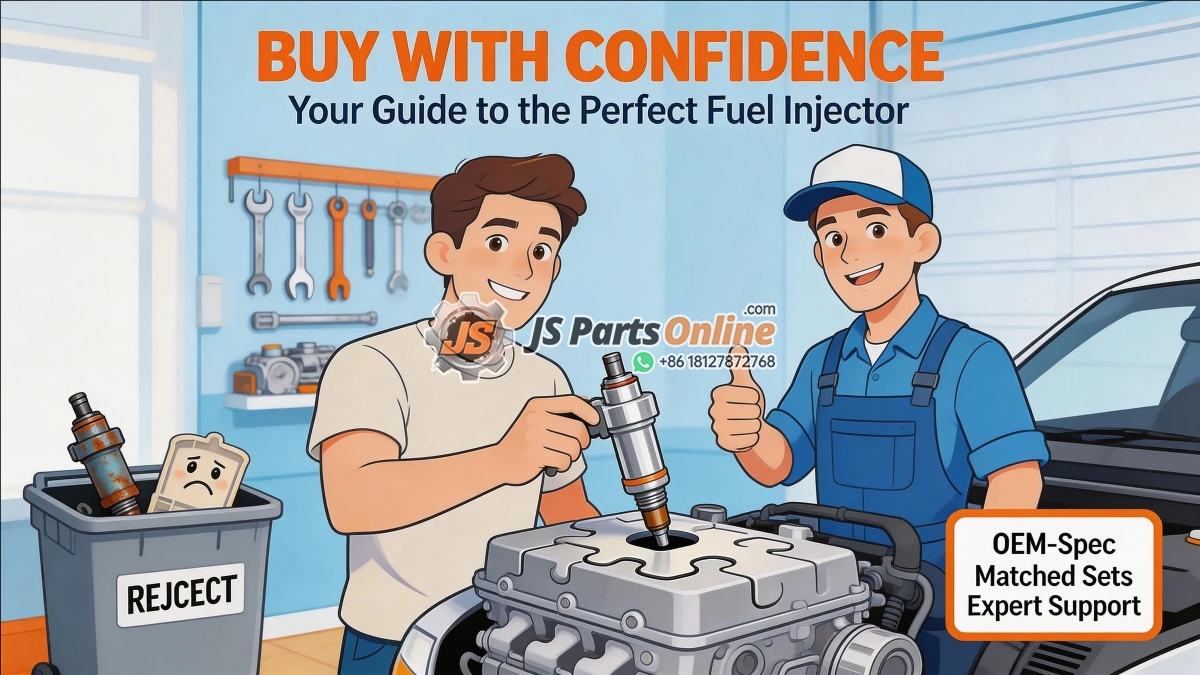
When a diagnostic confirms you need a new fuel injector, the next step is critical: choosing the right replacement. Selecting an incorrect or poor-quality injector can lead to immediate performance issues, check engine lights, and even engine damage—turning a routine repair into a costly mistake. With options ranging from cheap imitations to premium OEM parts, how do you navigate the market? This comprehensive buyer’s guide cuts through the confusion. We’ll walk you through the five essential factors you must consider to ensure you purchase a fuel injector that restores—or even enhances—your engine’s reliability, performance, and efficiency.
Why the Right Choice Matters More Than You Think
A fuel injector is not a generic commodity. It is a calibrated component that must match your engine’s specific fuel pressure, flow requirements, electrical characteristics, and physical dimensions. An incorrect choice can cause:
- Misfires and Rough Running: Due to flow imbalance or poor spray pattern.
- Reduced Fuel Economy and Power: From inefficient combustion.
- Catalytic Converter or DPF Damage: Caused by persistent rich or lean conditions.
- Complete Engine Control Unit (ECU) Adaptation Failure: Preventing the engine from running smoothly.
Investing time in selecting the correct part upfront saves money, downtime, and frustration in the long run.
Factor 1: Compatibility – The Non-Negotiable Starting Point
The replacement injector must physically and electronically integrate with your engine.
- Exact Part Number Match: The safest method. Use the OEM part number from your old injector or a reliable parts catalog. This number encodes the specific calibration for your engine’s year, make, model, and engine code.
- Physical Dimensions: Check the injector’s length, diameter, and connector type. A mismatch here means it simply won’t fit.
- Electrical Specifications: Ensure the impedance (resistance in ohms) of the replacement injector matches the original. Installing a high-impedance injector where a low-impedance one is required (or vice versa) can overload the ECU driver or fail to operate.
Pro Tip: Use the vehicle’s VIN number when searching for parts on professional sites to guarantee compatibility. If you’re unsure about your diagnostic, our guide on signs you need a diesel injector replacement can help confirm the failure.
Factor 2: OEM vs. Aftermarket – Understanding the Spectrum
The choice between OEM and aftermarket defines quality, price, and sometimes, performance.
- Genuine OEM (Original Equipment Manufacturer):
- What it is: The exact part made by the company that supplied the vehicle manufacturer (e.g., Bosch, Denso, Delphi).
- Pros: Guaranteed compatibility and performance. Meets all original specifications. Often includes a manufacturer’s warranty.
- Cons: Highest cost.
- Premium Aftermarket / OEM-Specification:
- What it is: High-quality parts, often from the same OEM manufacturer but sold in different packaging, or from reputable aftermarket brands that meet or exceed OEM specs.
- Pros: Excellent value. Delivers OEM-level performance and reliability, often at a lower price. Ideal for most repairs.
- Cons: Requires buying from a trusted supplier to avoid counterfeit or substandard parts.
- Budget Aftermarket / Will-Fit Parts:
- What it is: Generic parts designed to physically fit a range of applications.
- Pros: Lowest initial cost.
- Cons: Inconsistent quality, potential for shorter lifespan, and performance variances. Risk of causing the problems listed above. Not recommended for modern, sensitive engines.
Our Stance: For a balance of reliability and value, premium OEM-specification parts are the recommended choice for most vehicles. We stock a wide range of these vetted components. Explore our trusted Bosch fuel injector series as a prime example.
Factor 3: Flow Rate & Calibration – The Heart of Performance
The flow rate (measured in cc/min or lb/hr) is how much fuel an injector can deliver at a given pressure. Getting this right is paramount.
- Stock Replacement: Must match the OEM flow rate exactly. Even a slight variance (e.g., +-2%) can cause drivability issues if a single injector is replaced without adjustment.
- Performance Upgrades: If you’ve modified your engine (turbo, supercharger, tuning), you may need higher-flow injectors. This requires professional tuning of the ECU to accommodate the new fuel data. Never install larger injectors without a proper tune.
- Matched Sets: This is crucial, especially for high-mileage engines or performance applications. Purchasing a flow-matched set ensures all injectors deliver fuel within a very tight tolerance (e.g., within 1-2% of each other). This guarantees smooth idle, even cylinder pressure, and maximum efficiency. Always consider a matched set when replacing multiple injectors.
Factor 4: New, Remanufactured, or Used?
- New: The best option. Comes with a full warranty and no prior wear. The expected lifespan of a new, quality injector is 150,000+ miles with proper maintenance.
- Remanufactured: A core injector is professionally disassembled, cleaned, tested, and fitted with all new internal seals and worn components. A cost-effective and reliable choice if the process is done by a reputable rebuilder with proper testing.
- Used: High risk. Unless it comes with a comprehensive test report from a known-good vehicle, avoid it. You inherit its unknown wear and potential for imminent failure.
Factor 5: The Supplier – Your Source of Trust and Support
Where you buy is as important as what you buy. A reputable supplier provides:
- Accurate Compatibility Information: With robust catalogs and expert support.
- Quality Assurance: Sourcing from legitimate manufacturers.
- Technical Support: Ability to answer pre- and post-sale questions.
- Warranty: A clear, meaningful warranty that protects your investment.
- Positive Reviews & Industry Reputation: Look for suppliers specializing in fuel systems with a track record of customer satisfaction, like JSPartsonline with over a decade of export expertise.
The Smart Buyer’s Checklist Before You Purchase
- I have confirmed the exact part number or used my VIN to verify compatibility.
- I have chosen a quality tier (OEM or Premium Aftermarket) that matches my budget and reliability needs.
- I have verified the flow rate is correct for my application (stock or tuned).
- I am purchasing a flow-matched set if replacing more than one injector on a high-mileage or performance engine.
- I am buying from a reputable, specialized supplier that offers support and a warranty.
Conclusion: An Informed Decision is a Lasting Repair
Choosing a replacement fuel injector is a technical decision, not just a purchase. By prioritizing exact compatibility, investing in proven quality, understanding flow rates, and sourcing from an expert supplier, you secure a repair that will last. Don’t let a cheap part compromise a costly engine.
Ready to Make the Confident Choice?
Navigating the world of fuel injectors is our specialty. At JSPartsonline, we combine extensive catalogs of OEM-specification and performance injectors with the technical knowledge to help you select the perfect part.
Use our comprehensive fuel injector catalogwith advanced filters to find your match, or contact our parts expertsfor personalized, hassle-free assistance. Get the right part, the first time.
Posts Widget
-
1

-
2
-
3

-
4


JSPartsonline:
Focus on injectors for 12 years,We sell high-quality fuel injectors at competitive prices.
Copyright 2025 © YUN·X . All right reserved.
