
The Complete Fuel Injector Diagnostic Guide: From Symptoms to Solution
A rough idle, a flashing check engine light, or a sudden drop in fuel economy—your engine is telling you something is wrong. But is it a faulty fuel injector, or could it be a spark plug, a coil, or a sensor? Jumping straight to replacement without a proper diagnosis is a costly gamble. This comprehensive guide provides a professional, systematic approach to fuel injector diagnostics. We’ll walk you through a logical progression of tests, from simple observations anyone can do to advanced procedures used by mechanics. By following this method, you’ll move from noticing symptoms to identifying the root cause with confidence, ensuring you spend time and money fixing the actual problem, not just a symptom.
The Philosophy of Systematic Diagnosis
Effective diagnosis is a process of elimination. The goal is to isolate the faulty component by testing the simplest and most common possibilities first. This guide follows that principle, starting with no-cost checks and moving towards more specialized tools. Always prioritize safety: work in a well-ventilated area, disconnect the battery when appropriate, and relieve fuel system pressure before disconnecting any lines.
Phase 1: The Preliminary Investigation (No Tools Required)
Before touching a tool, gather clues. These observations will narrow down the potential causes.
- Identify the Symptoms: Be specific. Is the problem a constant misfire, or only when the engine is cold? Is there excessive black, white, or blue smoke? Refer to our detailed list of common fuel injector problems and symptoms to match what you’re experiencing.
- The “Sniff” and Visual Inspection:
- Fuel Smell: A strong odor of raw fuel around the engine bay, especially when hot, can indicate an external injector or fuel line leak.
- Visual Leaks: With the engine off and cool, look for wetness or staining around the base of each injector and along the fuel rail.
- Unusual Sounds: Use a long screwdriver or mechanic’s stethoscope to listen to each injector. A healthy injector should make a consistent, rapid ticking sound. A dead or clogged injector will sound dull, slower, or silent.
Phase 2: Electronic Diagnostics (The OBD2 Scanner is Your Best Friend)
Modern vehicles are designed to self-diagnose. A basic OBD2 scanner is an inexpensive, essential tool.
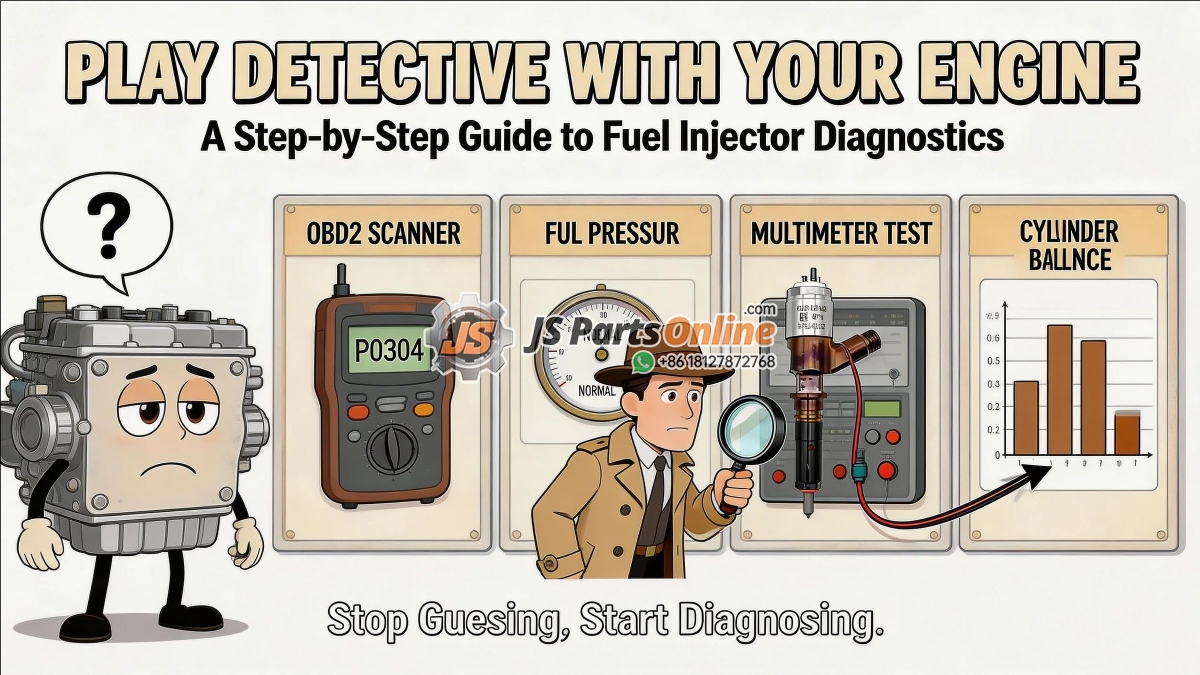
- Read Fault Codes: Connect your scanner. Codes like P0300 (Random Misfire) or P0301-P0312 (Cylinder-Specific Misfire) directly point to a combustion problem in one or more cylinders. A code like P0171/P0174 (System Too Lean) could indicate a clogged injector not delivering enough fuel.
- Check Live Data: More advanced scanners can show key parameters:
- Long-Term and Short-Term Fuel Trims: Consistently high positive fuel trims (+10% or more) at idle suggest the engine is adding fuel to compensate for a lean condition, potentially from a clogged injector. Negative trims can indicate a leaking injector.
- O2 Sensor Data: Erratic or slow-responding upstream O2 sensor readings can be a symptom of a fueling problem caused by a bad injector.
Phase 3: The Mechanical & Performance Tests
Now we move to tests that involve the engine’s mechanical operation.
- The Power Balance or Cylinder Contribution Test (Gold Standard):
- What it does: This test, performed by professional-grade scan tools, deactivates one fuel injector at a time and measures the resulting drop in engine RPM.
- How to interpret: A cylinder with a healthy injector will cause a significant, similar RPM drop compared to the others. A cylinder with a weak or clogged injector will show a much smaller RPM drop, revealing it was not contributing much power to begin with. This test definitively identifies the underperforming cylinder.
- Fuel Pressure Test:
- Why it matters: A faulty fuel pump or pressure regulator can mimic injector symptoms. You must rule out low system pressure first.
- The test: Connect a fuel pressure gauge to the service port on the fuel rail. Compare readings at key-on, idle, and under load to factory specifications. Low pressure can starve all injectors; excessively high pressure can overwhelm them.
- Leak-Down Test (for Leaking Injectors):
- What it does: This test checks if an injector is leaking fuel internally into the cylinder when it should be closed—a common cause of hard hot starts.
- The process: Specialized test kits connect to the fuel rail to measure the rate of pressure drop after the engine is shut off. A rapid pressure loss often points to a leaking injector. It can also identify which specific injector is leaking.
Phase 4: Component-Specific Verification
If previous tests point to a specific injector, these final checks confirm it.
- Electrical Test (Multimeter):
- Test Coil Resistance: Disconnect the injector’s electrical plug. Set a multimeter to ohms (Ω) and measure across the injector’s two terminals. Compare the reading to the manufacturer’s specification (typically 10-16Ω for high-impedance, 1-4Ω for low-impedance). A reading of “OL” (Open Loop) means the coil is broken; a very low reading (near 0Ω) indicates a short. The injector must be replaced. This is a key step in our guide on how to test a diesel fuel injector.
- Physical Inspection & Cleaning (Upon Removal):
- If an injector is removed, inspect the nozzle for heavy carbon deposits or physical damage. Sometimes, professional ultrasonic cleaning can restore a mildly clogged injector, which is a more cost-effective solution than immediate replacement for high-quality units like Bosch or Denso injectors.
The Diagnostic Decision Tree: Putting It All Together
Follow this logic based on your test results:
- Single Cylinder Misfire Code (e.g., P0304) + Failed Power Balance on Cylinder 4:
- Next Step: Perform a swap test. Swap the suspected bad injector in cylinder 4 with a known good one from another cylinder. Clear codes and test drive.
- If the misfire MOVES to the new cylinder: You’ve confirmed a faulty injector. Proceed to our buyer’s guide to choose a replacement.
- If the misfire STAYS on cylinder 4: The problem is not the injector—it’s likely ignition (coil, plug) or compression in that cylinder.
- Multiple Misfire Codes (P0300) + High Fuel Trims + No Single Cylinder Failure:
- Likely Cause: A systemic issue like low fuel pressure, a massive vacuum leak, or multiple clogged injectors from contaminated fuel.
- Next Step: Perform a fuel pressure test and inspect for vacuum leaks. Consider a professional fuel system cleaning service.
Conclusion: Diagnose First, Replace Second
A methodical diagnostic approach transforms engine repair from guesswork into a science. It prevents the unnecessary replacement of good parts and ensures your repair budget is spent effectively. The cost of a basic scanner and a few hours of your time is insignificant compared to the cost of replacing a set of injectors that didn’t need to be replaced.
Need a Confirmed Replacement? We Have the Solution.
Once your diagnostics conclusively point to a failed fuel injector, the next step is choosing a reliable replacement. JSPartsonline provides the OEM-specification and premium aftermarket injectors you need, backed by the technical data to ensure a perfect fit.
Don’t replace parts in the dark. Use our comprehensive catalog to find the exact injector your diagnosis calls for, or contact our technical support teamfor help interpreting your diagnostic findings. We’re here to help you fix it right, the first time.

Posts Widget
-
1

-
2
-
3
-
4


JSPartsonline:
Focus on injectors for 12 years,We sell high-quality fuel injectors at competitive prices.
Copyright 2025 © YUN·X . All right reserved.
