
When to Replace Fuel Injectors: The 5 Definitive Signs It’s Time
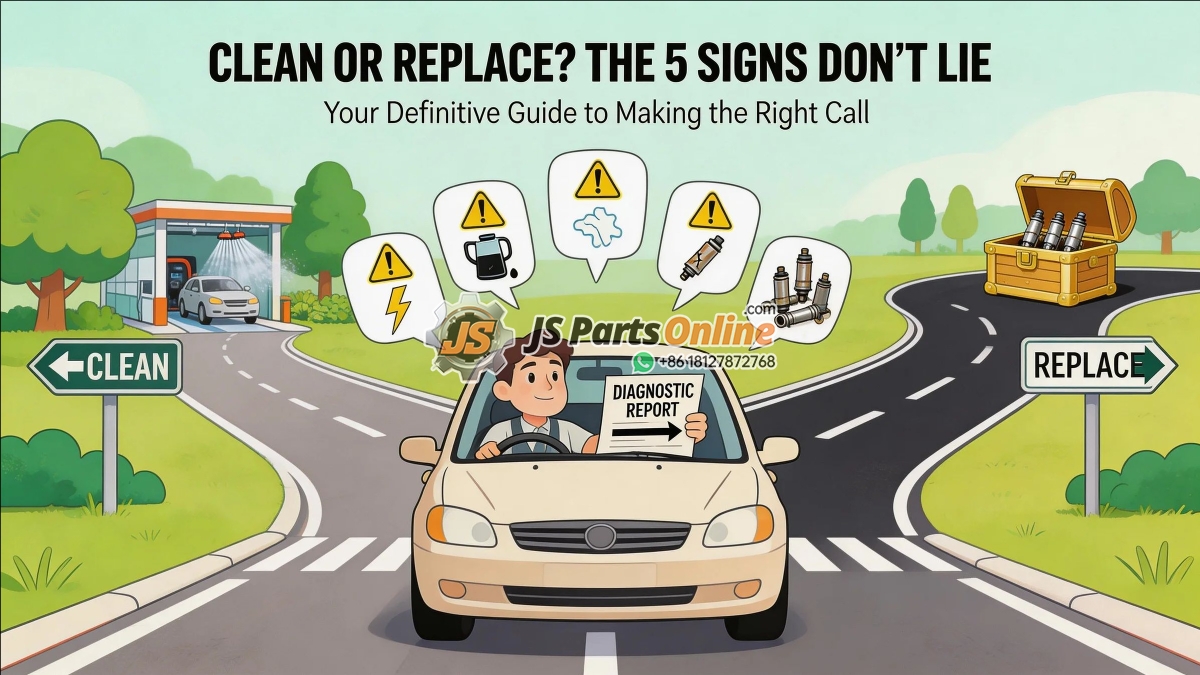
Your engine’s performance is declining. You’ve read about cleaning, and you’ve considered replacement, but the line between the two can seem blurry. Making the wrong call can waste hundreds on ineffective cleaning or thousands on premature replacement. The decision shouldn’t be a guess. This guide cuts through the uncertainty by detailing the five concrete, diagnostic-driven signs that indicate your fuel injectors have moved beyond maintenance and require replacement. We’ll help you interpret symptoms, understand what different test results truly mean, and give you the confidence to invest in a repair that will last.
The Cleaning vs. Replacement Threshold: A Mental Model
Think of fuel injector degradation as a spectrum. On one end is contamination (carbon, varnish), which cleaning can often resolve. On the other end is mechanical or electrical failure (wear, breakage), which only replacement can fix. Your job is to identify where on this spectrum your injectors lie. The following signs push the needle firmly toward “replace.”
Sign 1: Confirmed Electrical Failure (The Multimeter Doesn’t Lie)
This is the most black-and-white diagnostic.
- The Test: Using a digital multimeter, measure the resistance (in ohms, Ω) across the injector’s solenoid coil terminals. Refer to the manufacturer’s specification (e.g., 12-16Ω for high-impedance, 1-4Ω for low-impedance).
- The “Replace” Verdict:
- Open Circuit (OL or Infinite Resistance): The internal coil wire is broken. The injector is electronically dead and will not fire.
- Short Circuit (Very Low or 0Ω Resistance): The coil windings are shorted together. This can overload the vehicle’s ECU driver circuit.
- Why Cleaning Won’t Help: An electrical fault is internal and physical. No amount of solvent can repair a broken wire or a shorted coil. This is a core principle in our fuel injector diagnostic guide.
Sign 2: Persistent Leak-Down After Cleaning
A leaky injector is a failing injector. Leakage can be internal (dripping into the cylinder) or external.
- The Test: A professional leak-down test measures the rate of fuel pressure drop in the rail after the engine is off. A rapid drop points to one or more injectors not sealing.
- The “Replace” Verdict: If a professional ultrasonic cleaning service has been performed—which includes disassembly and replacement of all internal seals—and the injector still fails a post-cleaning leak-down test, the issue is mechanical wear of the nozzle needle and seat. This precision mating surface is worn beyond the ability of new seals to compensate.
- The Risk: A leaking injector causes hard hot starts, fuel dilution of engine oil, and can hydro-lock a cylinder.
Sign 3: Poor or Uncorrectable Spray Pattern & Flow
This is the gold standard test and the most telling sign of wear or physical damage.
- The Test: Injectors are removed and tested on a professional pop tester and flow bench. Technicians visually inspect the spray pattern and measure the exact flow volume.
- The “Replace” Verdict:
- Bad Spray Pattern: The fuel streams, drips, or sprays in an inconsistent, non-conical shape. This indicates a damaged, eroded, or clogged nozzle that cleaning cannot restore.
- Flow Out of Specification: The injector flows significantly less (clogged/worn) or more (worn) fuel than its specification. If the flow cannot be brought within a tight tolerance (e.g., within 2-3% of spec) after cleaning, the internal components are worn out.
- The Consequence: Even if the injector “works,” a bad spray pattern destroys combustion efficiency, costing you power and fuel economy. This is especially critical for performance engines, as covered in our high-performance injector guide.
Sign 4: Physical Damage or Corrosion
What your eyes can see is often a definitive answer.
- The Inspection: Upon removal, closely inspect the injector.
- The “Replace” Verdict:
- Cracked or Damaged Body: Any crack in the metal body is an immediate fail. It will leak under pressure.
- Severe Tip Corrosion or Melting: The nozzle tip is eroded, pitted, or physically melted from excessive heat. This is common in engines that have run lean or had pre-ignition issues.
- Broken or Stuck Pintle/Needle: Visual or tactile confirmation that the internal moving part is jammed or broken.
- Why Cleaning Won’t Help: Cleaning removes deposits, not cracks or melted metal. Physical damage is permanent.
Sign 5: Multiple Injectors Failing in a High-Mileage Engine
This is a strategic and economic consideration.
- The Scenario: You diagnose one clearly failed injector in an engine with 150,000+ miles. The others are “okay” but likely at the end of their service life.
- The “Replace” Verdict: Replacing just the one failed injector with a new unit can create a severe imbalance. The old, worn injectors will flow differently than the new one, leading to rough running and forcing the ECU to compensate in ways that hurt performance and efficiency. The most reliable and cost-effective long-term solution is often to install a matched set of fuel injectors. This ensures balanced performance and prevents you from paying for labor to access the same fuel rail again in six months when the next one fails. For a smooth-running engine, explore our selection of OEM-specification matched injector sets.
The Decision Flowchart: Your Action Plan
- Start with Diagnostics: Never replace based on symptoms alone. Use a scanner, multimeter, and professional testing to gather evidence (Signs 1, 2, 3).
- Try Cleaning FIRST if… the only symptom is mild performance loss, and diagnostics point to clogging (e.g., slightly low flow but good pattern). A professional cleaning is a valid and lower-cost first step.
- REPLACE if… any of the 5 signs above are confirmed: Electrical fault, Persistent leak, Bad spray pattern/low flow, Physical damage, or Multiple high-mileage units.
- Choose Quality Parts: Once replacement is decided, invest in parts that won’t put you back in this situation prematurely. Follow our guide for choosing the right replacement injector.
Conclusion: Invest in Certainty, Not Hope
“Maybe cleaning will fix it” is an expensive hope when dealing with a mechanically or electrically failed component. The five signs outlined here are based on measurable, observable failure. Recognizing them saves you from the cycle of ineffective repairs, wasted money on additives, and the risk of damaging your engine with faulty fuel delivery. When you see these signs, the most reliable path forward is a quality replacement.
Make the Confident Choice with the Right Part.
When diagnostics point to replacement, you need a component you can trust to restore performance for the long haul. JSPartsonline provides the OEM-specification and premium aftermarket injectors that meet the exacting standards your diagnosis demands.
Don’t second-guess your diagnostics. Find the exact replacement injector or matched set for your engine, or contact our technical teamto discuss your diagnostic results and the best solution. We’re here to ensure your repair is final.

Posts Widget
-
1

-
2

-
3
-
4


JSPartsonline:
Focus on injectors for 12 years,We sell high-quality fuel injectors at competitive prices.
Copyright 2025 © YUN·X . All right reserved.
