
How to Choose a Diesel Injector Testing Service: Complete Buyer’s Guide
Introduction
Sending a set of six diesel injectors to a testing shop is an act of trust. You’re handing over components worth $1,500 to $5,000 — components that determine whether your engine runs smoothly for another 300,000 miles or scores a piston on the first startup. Yet most fleet managers and independent shops choose a testing service based on two criteria: price and turnaround time.
This is a mistake. Diesel injector testing is a precision industrial process, and the quality gap between a professional ISO-certified facility and a shop with an aging test bench and minimal calibration capability is enormous. This guide explains exactly what to look for when choosing a diesel injector testing and calibration service — and what questions to ask before you hand over your injectors.
Why Testing Quality Varies Dramatically
Not all injector testing is created equal. The difference between a basic operational check and a full professional calibration comes down to equipment, process, and technician expertise:
| Testing Level | What’s Done | Equipment Required | Typical Provider |
|---|---|---|---|
| Basic pop test | Checks opening pressure only — tells you if the injector opens, not how well it sprays | Hand-operated pop tester ($200-500) | General diesel shop, DIY |
| Operational check | Measures delivery at 2-3 operating points; basic spray observation | Entry-level test bench ($5,000-15,000) | Small independent shop |
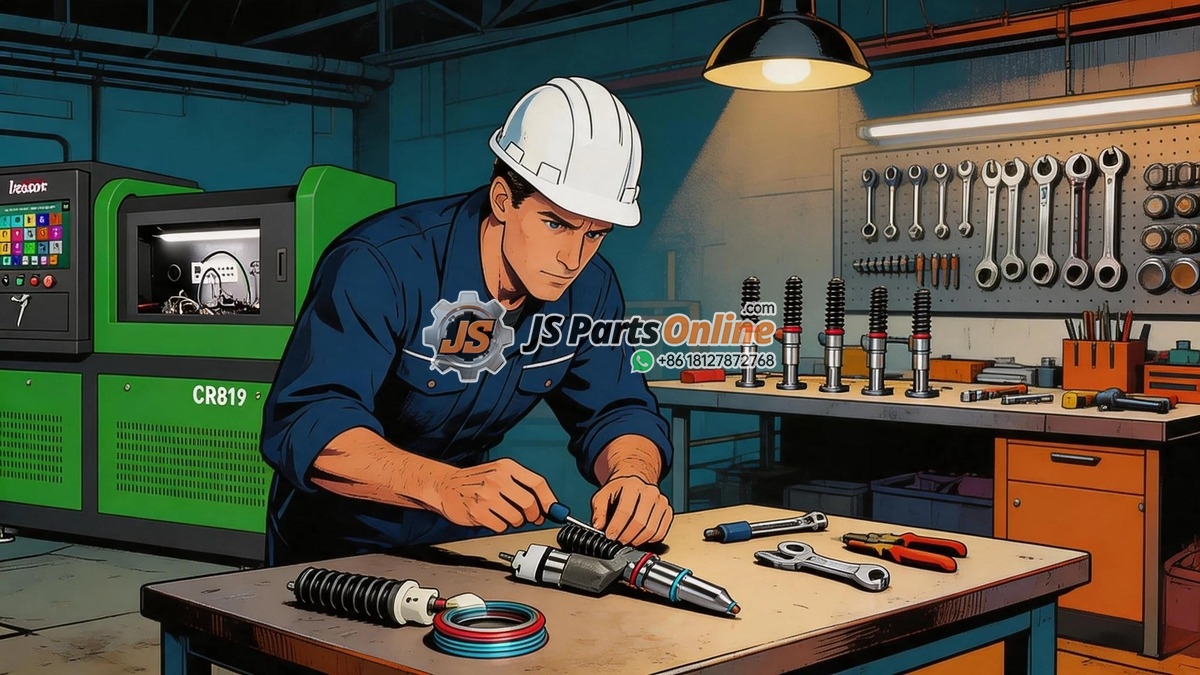
| Standard test cycle | Full delivery mapping across 6-8 operating points; spray pattern imaging; back-leakage measurement | Professional test bench — CR819, Bosch EPS815, Hartridge CRi-PC ($40,000-80,000) | Diesel injection specialist |
| ISO-calibrated full test | All of the above plus: NIST-traceable calibration, temperature-compensated measurements, IMA code reading/writing, full digital report with statistical analysis | Top-tier bench with calibration certification, IMA programming capability, climate-controlled test environment | Factory-authorized or ISO 9001/17025 facility |
The Equipment Question: What Test Bench Do They Use?
The test bench is the single most important piece of equipment in any diesel injection shop. The make and model tells you a lot about their capability level:
Tier 1: Professional-Grade Test Benches
- Bosch EPS815 / EPS708 / EPS200: The industry gold standard. These benches offer 2,500+ bar pressure capability, 0.1mm³ measurement accuracy, automatic IMA code programming, and comprehensive data logging. If a shop runs Bosch equipment, they’re serious about diesel injection
- Hartridge CRi-PC / CRi-Pro: British-made precision equipment regarded as equal to Bosch in capability. The CRi-Pro in particular is designed for high-volume remanufacturing operations
- Delphi Sealed Rail Test Stand: Delphi’s own testing platform with specific capabilities for Delphi injector systems (found extensively in European diesel vehicles)
- Reaion CR819: High-quality Chinese-manufactured bench that has gained widespread adoption globally. The CR819 offers full common rail testing capability at a more accessible price point, making professional-grade testing available to more shops
Questions to Ask About Their Equipment
- “What make and model of test bench do you use?” — A shop should answer this immediately and proudly
- “When was the bench last calibrated?” — Professional shops calibrate their benches quarterly and can show you the calibration certificate
- “What’s the measurement accuracy in mm³/stroke?” — The answer should be 0.1mm³ or better
- “Can your bench read and program IMA/trim codes?” — Essential for modern common rail injectors; if they say “we don’t do that,” move on
Certifications and Standards: What Actually Matters
Not every certification is worth the paper it’s printed on. Here’s what genuinely indicates quality:
Certifications That Matter
- ISO 9001:2015: Quality management system certification. It doesn’t guarantee injector expertise specifically, but it demonstrates that the business operates with documented, repeatable processes
- ISO 17025: Laboratory testing and calibration competency. This is the gold standard for measurement accuracy and traceability. An ISO 17025 accredited lab’s measurements are traceable to national standards (NIST in the US)
- Bosch Authorized Diesel Center: Factory-trained and authorized by Bosch to service Bosch injector systems. They have access to Bosch proprietary calibration data, software updates, and technical support
- Delphi Authorized Service Center: Similar factory authorization for Delphi/Delphi Technologies injector systems
- AERA / ADS membership: Industry associations for engine rebuilders and diesel specialists — indicates professional engagement with the broader industry
Red Flags in Certification Claims
- “Certified by our equipment manufacturer” — means they bought a machine and received basic operator training
- “All our technicians are factory-trained” — ask: trained by which factory, when, and can you show the certificate?
- “We’re the #1 rated shop on [platform]” — online reviews measure customer service, not technical competence
The Test Report: Your Proof of Quality
A professional test report is not a receipt — it’s a technical document. Every injector you receive back from testing should come with a detailed test report. Here’s what a complete report includes:
| Section | What You Should See | Why It Matters |
|---|---|---|
| Injector identification | Part number, serial number, IMA/trim code | Confirms the injector you sent is the one tested; IMA code is required for ECU programming |
| Test conditions | Rail pressure (bar), pulse width (µs), test fluid temperature, ambient temperature | Measurements are meaningless without conditions — delivery at 30°C vs 70°C can differ by 5-10% |
| Delivery mapping | mm³/stroke at multiple operating points: pre-injection (pilot), idle, part load, full load, post-injection | The critical data — this tells you how the injector will perform across the entire engine operating range |
| Back-leakage | ml/min at maximum rail pressure | Internal wear indicator; elevated back-leakage reduces rail pressure capacity |
| Response time | Actuation delay in microseconds | Affects injection timing accuracy; must be consistent across injector set |
| Spray pattern | Pass/Fail with description; ideally an image of the spray pattern | Visual confirmation of nozzle condition |
| Flow matching summary | Deviation between injectors in the set at key operating points | Critical for multi-cylinder engines — shows cylinder-to-cylinder balance |
| Technician identification | Name/ID of technician who performed the test | Traceability |
| Test date | When the test was performed | Recency matters — an injector tested six months ago may have different characteristics due to storage conditions |
Turnaround Time vs. Quality: Setting Realistic Expectations
Professional injector testing takes time because it should take time. Here’s what to expect:
- Testing-only (no repairs): 1-3 business days for a set of 6 injectors. This includes mounting, warm-up, complete test cycle, report generation, and packaging
- Testing with minor repairs (seals, cleaning): 3-5 business days. Ultrasonic cleaning alone can take 2-4 hours for badly carboned injectors
- Full remanufacturing (new nozzle, control valve, calibration): 5-10 business days. Some shops quote 2-3 weeks during peak season
- Expedited service: Many shops offer rush service (24-48 hours) for an additional fee — typically 25-50% surcharge
Warning: A shop that promises same-day testing for a set of common rail injectors is almost certainly cutting corners. A complete test cycle on one injector takes 15-20 minutes minimum, plus mounting/unmounting, warm-up, and report generation. Six injectors at 20 minutes each is 2 hours of pure test time — and that’s without any setup, cleaning, or calibration work.
Warranty and Guarantee: What’s Reasonable to Expect
A quality testing service stands behind their work:
- Testing warranty: The test results are guaranteed accurate. If an injector they tested and passed fails on the engine within a reasonable period (typically 30-90 days), they should re-test it at no charge
- Workmanship warranty: Any seals, O-rings, or other components they installed during testing are covered against premature failure — typically 90 days to 12 months
- Remanufacturing warranty: A full reman should carry a minimum 12-month warranty, with many quality shops offering 24 months
Questions to Ask Before Sending Your Injectors
Call the shop and ask these questions directly. How they answer is as informative as what they answer:
- “What test bench do you use, and when was it last calibrated?”
- “Do you read and provide IMA/trim codes for common rail injectors?”
- “What measurement accuracy can your bench achieve?”
- “Can I see a sample test report?” — A professional shop will have a redacted sample ready to share
- “Do you test in a climate-controlled environment?” — Temperature affects fuel viscosity and delivery measurements
- “What test fluid do you use?” — ISO 4113 calibration fluid is the standard; using diesel fuel introduces measurement variability
- “What cleaning process do you use before testing?” — Ultrasonic cleaning with appropriate solvents; no wire brushing of nozzle tips
- “How do you handle injectors that fail testing?” — You want a clear process: notification, options (repair vs reman vs core return), and pricing
- “What’s your current turnaround time?” — And “has it been consistent recently?”
- “Are your measurements traceable to national standards?”
Red Flags in a Testing Service
| Red Flag | What It Probably Means |
|---|---|
| Significantly lower price than competitors | They’re running a quick pop test, not a full calibration cycle |
| “Same-day service” for common rail injectors | They’re skipping test points or not doing full thermal stabilization |
| Can’t or won’t share a sample test report | Their reporting is inadequate or nonexistent |
| No IMA code capability | They’re servicing older systems only; can’t properly handle modern common rail |
| No climate control in the test area | Measurement accuracy varies with ambient temperature |
| Won’t let you see the shop | They’re hiding something — disorganization, dirty environment, or non-existent equipment |
| No calibration certificate for their bench | Their measurements can’t be trusted |
Our Testing Standards at JS Parts Online
Every diesel injector we supply undergoes professional testing on CR819 and Bosch-certified test benches. We provide complete test reports with every injector, including IMA/trim codes for ECU programming. Browse our tested and calibrated injectors:
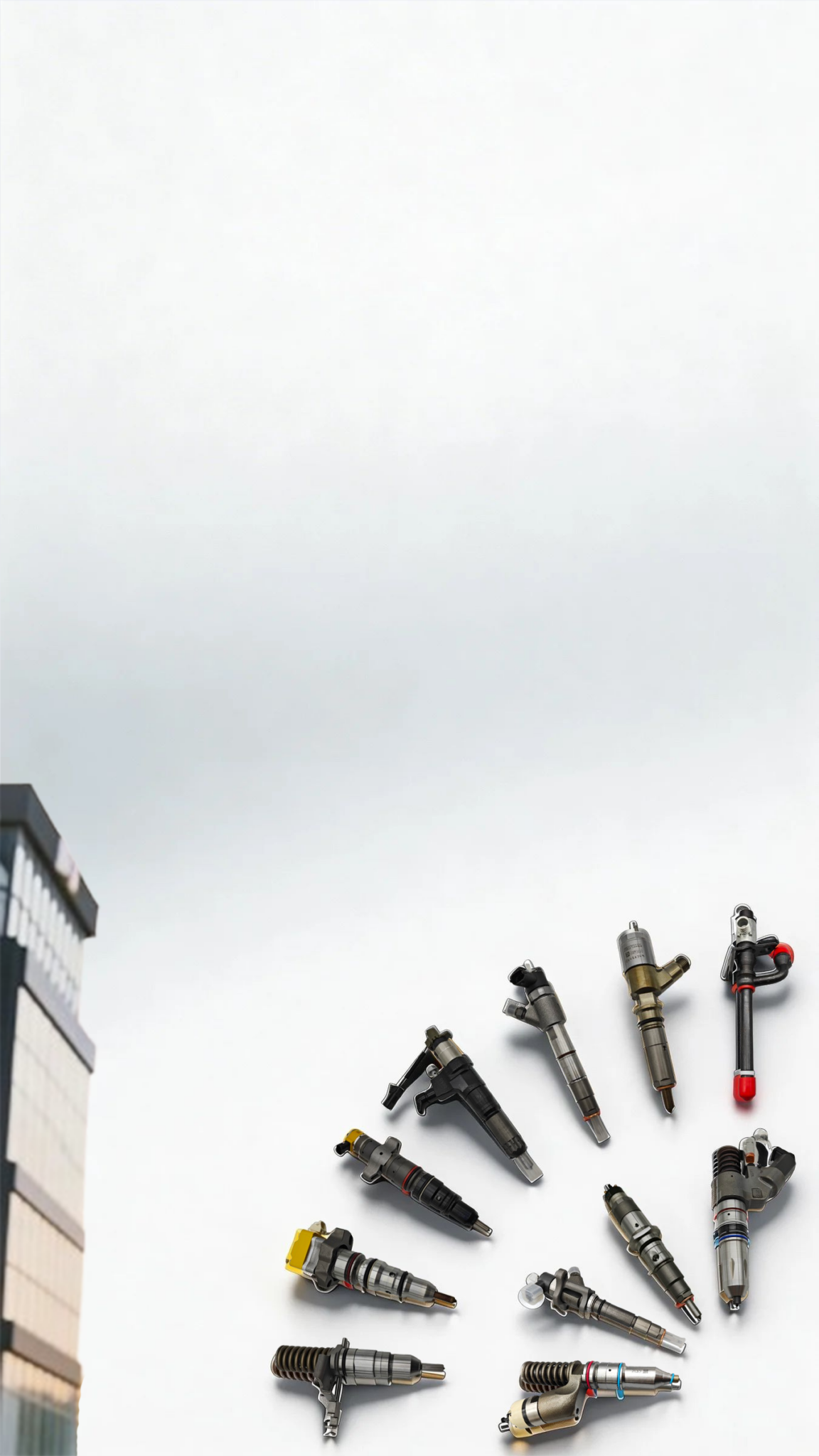
- Caterpillar Fuel Injectors — All tested and flow-matched for your CAT engine
- Bosch Common Rail Injectors — Each with complete calibration data
- Denso Diesel Injectors — Japanese precision, professionally verified
Conclusion
Choosing a diesel injector testing service isn’t about finding the cheapest option or the fastest turnaround. It’s about finding a shop with the right equipment, certified processes, and experienced technicians who treat your injectors as the precision components they are.
A quality test report is worth more than the testing fee. It’s documentation that your injectors meet specification — documentation that protects you if an engine fails after service, that helps your technician program the ECU correctly, and that gives you the confidence to install those injectors and turn the key. Cheap testing is expensive. Pay for quality once, or pay for the consequences forever.
Related products




Related Posts
-
1

-
2

-
3

-
4

-
5

-
6


JSPartsonline:
Focus on injectors for 12 years,We sell high-quality fuel injectors at competitive prices.
Copyright 2025 © YUN·X . All right reserved.
