
Remanufactured Fuel Injectors: The Complete Value Analysis (Beyond the Price Tag)
Faced with a failed fuel injector, the price of a brand-new OEM unit can be a hard pill to swallow, especially for high-output diesel or luxury applications. The market offers a compelling alternative: remanufactured fuel injectors. But the term “remanufactured” is often misunderstood, conflated with “used” or “refurbished,” leading to skepticism and missed opportunities for significant savings without sacrificing quality. This guide is a definitive value analysis that moves beyond the simple price comparison. We’ll dissect what a true professional remanufacturing process entails, build a detailed total cost of ownership (TCO) model comparing it to new, expose the red flags of subpar rebuilders, and provide you with a concrete decision-making framework. Our goal is to empower you to confidently evaluate whether a premium remanufactured injector is the smart, reliable choice for your repair, or if the situation demands the investment in new.
Demystifying “Remanufactured”: It’s Not a Used Part, It’s a Surgical Rebuild
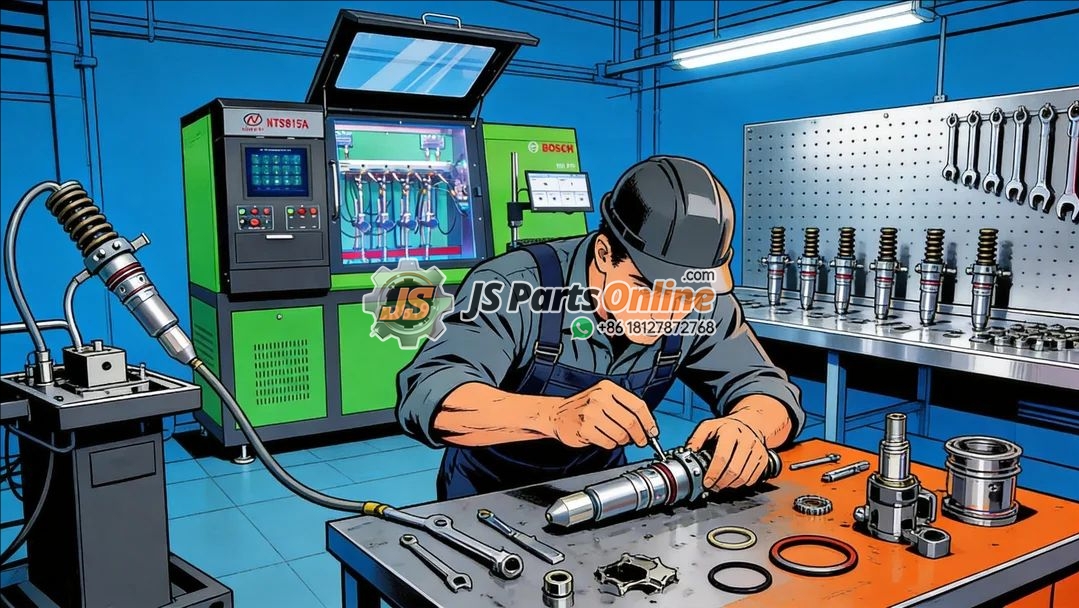
The core of the value proposition lies in the process. A high-quality remanufacturer doesn’t clean and ship; they restore to original specification.
- The Analogy: Think of a remanufactured engine. Every wearable component is replaced. A true injector remanufacturing process is a micro-scale version of this. It addresses the root cause of failure—internal wear—not just the symptoms.
- The Contrast with “Refurbished” or “Serviced”: As outlined in our dedicated remanufactured vs. refurbished guide, refurbishment typically means cleaning, new seals, and testing. Remanufacturing means replacement of all critical wear components.
The Anatomy of a True Remanufacturing Process: Where the Value is Built
Understanding these steps is key to judging quality.
- Complete Disassembly & Inspection: The injector is stripped to its individual components. The body is inspected for cracks or warping. Cores that are damaged beyond repair are rejected.
- Component-Level Replacement: This is the heart of the value. New parts are installed, which typically include:
- Precision Nozzle and Needle Valve Assembly: The most critical wear pair affecting spray pattern and sealing.
- Solenoid Coil and Electrical Components: Ensures reliable, fast actuation.
- Internal Springs, Seats, and Filters.
- Full Set of Seals: All O-rings and gaskets, often upgraded to latest materials.
- Advanced Cleaning: Ultrasonic cleaning removes all carbon and varnish from internal passages and the body.
- Precision Reassembly: Performed in a controlled environment to OEM torque and clearance specifications.
- Comprehensive Testing & Calibration (The Non-Negotiable Step): The rebuilt injector is placed on a flow bench. It undergoes:
- Leak-Down Test: Verifies the needle/seat seals perfectly.
- Static and Dynamic Flow Testing: Measures fuel delivery at various pulse widths to ensure it meets original flow specifications.
- Spray Pattern Visualization: Confirms the atomization pattern is correct.
- Electrical Function Test: Checks solenoid response and resistance.
- Re-Calibration and Coding: The injector is assigned a new, as-built calibration code. This code, which must be programmed into your vehicle’s ECU, is the final step that makes it a “plug-and-play” unit, a necessity covered in our coding guide.
The Total Cost of Ownership (TCO) Analysis: New vs. Premium Remanufactured
The decision isn’t just “New: 500vs.Reman:300.” You must consider the total cost over the expected life of the repair.
| Cost/Value Factor | New OEM Injector | Premium Remanufactured Injector | Budget/”Refurbished” Injector |
|---|---|---|---|
| Initial Part Cost | Highest. | 30-50% lower than new. Significant upfront saving. | Lowest. |
| Component Quality | All new components, latest revisions. | Critical wear parts are new. Body is seasoned, proven core. | Unknown. May retain worn internals. |
| Testing & Calibration | Full OEM factory testing. | Should include full post-rebuild test report. | Often minimal or undocumented. |
| Warranty | Standard OEM warranty (e.g., 24 months). | Should mirror or approach OEM warranty (e.g., 12-24 months) from reputable rebuilders. | Often short (90 days). High risk. |
| Expected Service Life | Full OEM life expectancy. | Near-OEM life expectancy when rebuilt to spec with new internals. | Unpredictable. High risk of premature failure. |
| Risk of Comeback/Secondary Damage | Lowest. | Low, if from a reputable source. | Very High. Failure can damage pumps, DPFs, and cause costly downtime. |
| Total Cost of Ownership (TCO) | High upfront, predictable low risk. | Best balance. Lower upfront cost with managed risk and good longevity. | Potentially Highest. Low price is negated by high risk of repeat failure and collateral damage. |
The TCO Conclusion: A premium remanufactured injector from a specialist offers a superior TCO for the majority of repairs on engines outside the brand-new warranty period. The budget option’s TCO is almost always worse due to unmanaged risk.
The 5 Critical Questions to Ask Any Remanufacturer
Your due diligence is the final layer of risk management. Never buy without clear answers.
- “What specific internal components are replaced with NEW parts?” Demand a list. “All wearable parts” is not specific enough. Look for “nozzle, needle, solenoid, springs, seals.”
- “Can you provide the post-rebuild test report for the injector set I’m buying?” A “yes” indicates transparency and quality control. A “no” is a major red flag.
- “What is the warranty, and is it labor-inclusive?” A strong warranty (e.g., 2 years/unlimited miles) is the rebuilder’s confidence. Labor coverage is a significant plus.
- “Do you provide the new calibration code, and is coding required?” They should affirm both. If they say coding isn’t needed for a modern engine, they are not experts.
- “What is your core return policy and acceptable core condition?” Understand the refundable core charge and what constitutes a reject (e.g., cracked body, broken solenoid).
When Does a Remanufactured Injector Make the Most Sense? (The Sweet Spot)
- High-Cost Applications: Where a new injector is prohibitively expensive (e.g., heavy-duty diesel, some European performance cars).
- Mid-to-High Mileage Vehicles (Out of Warranty): The vehicle’s value doesn’t justify the cost of all-new components, but you want reliable, long-term performance.
- Matched Set Replacement: When replacing multiple injectors on a high-mileage engine, a flow-matched remanufactured set can be an excellent way to restore balance and performance at a reasonable cost, a strategy crucial for commercial fleet management.
- You Have a Quality Core: The remanufacturing process starts with a sound, rebuildable core. An injector that failed electrically but has a good body is an ideal candidate.
When Should You Still Buy New?
- Brand-New or Under-Warranty Vehicles: Protect the manufacturer’s warranty.
- Critical, Zero-Failure Applications: Prime power generators, mission-critical equipment where any risk is unacceptable.
- No Quality Remanufacturer Exists: For some very new or obscure applications.
- The Core is Damaged: If your old injector has a cracked body or other physical damage, it may not be acceptable as a core, making remanufactured options less viable.
The Final Decision Framework: Your Checklist
Score your options:
- [ ] Process Verified: Supplier clearly details rebuild process and new parts used.
- [ ] Proof of Performance: Post-rebuild test report is available.
- [ ] Warranty Strength: Warranty is robust (12+ months) and clear.
- [ ] Technical Support: Supplier understands coding and application details.
- [ ] TCO Calculation: Upfront savings + warranty + expected life outweigh the perceived risk.
If you can check these boxes for a remanufactured option, it represents outstanding value. If not, the safety of a new OEM or high-quality new aftermarket part, as compared in our OEM vs. Aftermarket analysis, may be the wiser choice.
Conclusion: Value is Verified Performance, Not Just Low Price
A premium remanufactured fuel injector is not a cheap alternative; it is a value-engineeredsolution. Its worth is derived from a rigorous industrial process that replaces wear, verifies function, and backs it with a guarantee. By understanding this process, performing a true TCO analysis, and vetting suppliers with critical questions, you can confidently access this segment of the market. It allows you to make repairs that are both economically sensible and technically sound, extending the life of your vehicle or equipment without compromising on the reliability that precision fuel injection demands. In the end, the greatest value lies in a component that performs flawlessly, regardless of its origin story.
Choose Value, Not Just a Price Point.
Navigating the remanufactured market requires a trusted partner. JSPartsonline works with select, vetted remanufacturing specialists whose processes and testing meet our stringent standards, allowing us to offer high-value solutions that don’t force you to choose between your budget and your peace of mind.
Make an informed decision. Explore our selection of premium remanufactured fuel injector solutions for your applicationor contact our parts specialiststo discuss the best value path—new or remanufactured—for your specific repair scenario.
Related products




Related Posts
-
1

-
2

-
3

-
4

-
5

-
6



JSPartsonline:
Focus on injectors for 12 years,We sell high-quality fuel injectors at competitive prices.
Copyright 2025 © YUN·X . All right reserved.
