
Commercial Vehicle Fuel Injectors: Demands, Durability & Maintenance for Maximum Uptime
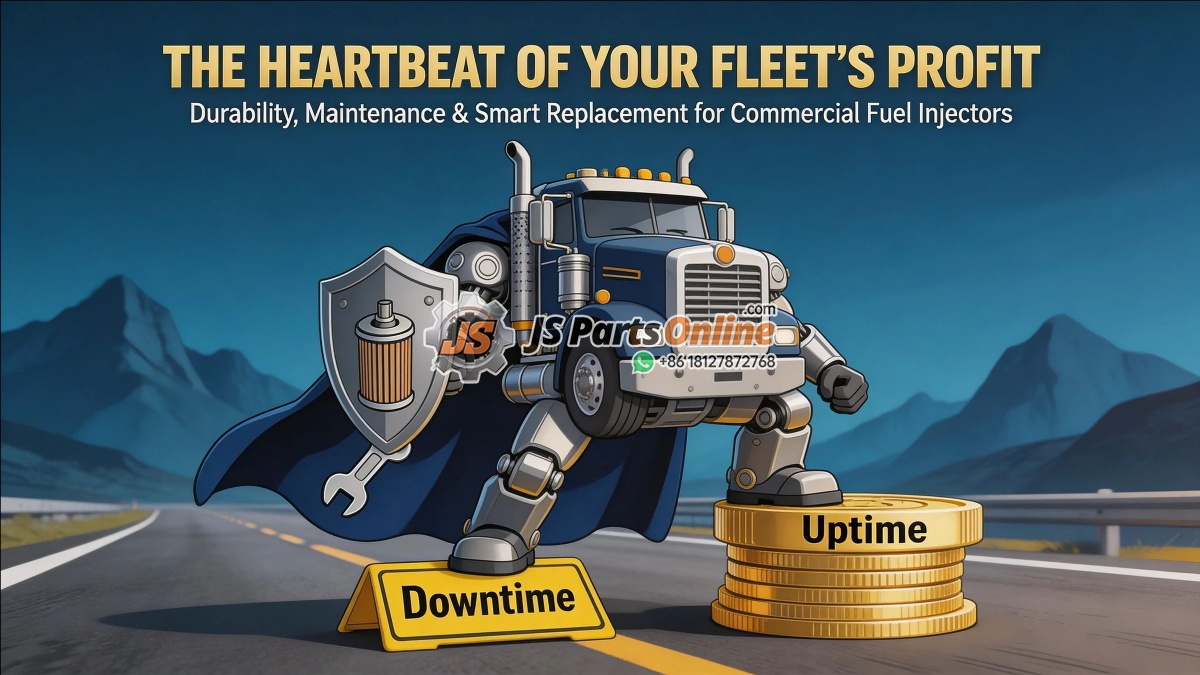
In the world of commercial transportation, every minute of unscheduled downtime translates directly to lost revenue. At the core of a diesel engine’s reliability is its fuel injection system, a set of components operating under relentless stress. Commercial vehicle fuel injectors are not simply larger versions of their automotive counterparts; they are engineered for a different universe of demands: continuous high load, extended idle times, and millions of combustion cycles. This guide is for fleet managers, owner-operators, and technicians. We’ll examine the unique challenges these injectors face, outline a rigorous preventive maintenance strategy, explain how to diagnose issues before they cause a breakdown, and guide you in selecting replacement parts that prioritize durability and total cost of ownership over initial price.
The Unforgiving Operating Environment of a Commercial Injector
To understand maintenance, you must first understand the stress:
- Continuous High Load & Pressure: Long-haul trucks and heavy equipment run at high engine load for thousands of miles, keeping injector pressures consistently at the system maximum (often 30,000+ PSI). This accelerates wear on precision internal components.
- Extended Idling: Refrigerated trucks (“reefers”), delivery vehicles, and equipment often idle for hours, a condition that promotes incomplete combustion, carbon buildup, and fuel dilution of engine oil—all enemies of injector health.
- High Annual Mileage: A fleet vehicle can accumulate 100,000+ miles per year, meaning its injectors will cycle billions of times, testing the fatigue limits of every spring, needle, and solenoid.
- Variable Fuel Quality: Operating across regions and countries exposes engines to inconsistent fuel quality, varying levels of contaminants, and differing lubricity standards, especially for diesel.
The High Cost of Failure: Beyond the Part Itself
A single failing injector in a commercial vehicle has a domino effect:
- Direct Repair Cost: The part and labor.
- Downtime Cost: The vehicle earns nothing while being repaired. This is often 5-10x the part cost.
- Secondary Damage: A severely malfunctioning injector can cause wash-down of cylinder walls, damage to the Diesel Particulate Filter (DPF), or even lead to a cracked piston from pre-ignition.
- Increased Operating Costs: Poor combustion from a weak injector increases fuel consumption and oil degradation across the entire engine.
Proactive Maintenance: The Fleet Manager’s Playbook
Reactive repairs are a budget killer. A proactive schedule is non-negotiable.
- Fuel Filtration is Your #1 Priority: This cannot be overstated. For commercial diesels, the primary and secondary fuel filters are the most critical maintenance items. Change them at half the manufacturer’s recommended interval if operating in dusty conditions or with uncertain fuel sources. A failed filter can destroy an entire set of injectors and the high-pressure pump in one tank of bad fuel. Our core philosophy on this is detailed in the fuel injector maintenance guide.
- Oil Analysis Program: Implement regular used oil analysis. It can detect early signs of fuel dilution—a key indicator of a leaking injector—long before it causes major wear or performance issues.
- Use High-Quality Fuel Additives: Consider a consistent dosing program with a reputable additive that enhances fuel lubricity (to protect the pump and injectors) and contains detergents to keep injector nozzles clean. This is especially valuable for biodiesel blends or in regions with poor fuel quality.
- Monitor Engine Data: Modern fleet telematics and engine control modules (ECMs) provide invaluable data. Watch for trends in fuel economy and cylinder balance rates. A gradual decline in MPG or an imbalance in a specific cylinder can be the earliest sign of an injector beginning to degrade. This connects directly to the diagnostic principles in our fuel injector diagnostic guide.
- Professional Cleaning as Preventive Maintenance: During major scheduled services (e.g., at an engine overhead), consider sending the injectors out for professional ultrasonic cleaning and flow testing. This can restore performance and identify a weak injector before it fails on the road, as explained in our ultrasonic cleaning deep dive.
Diagnosing Issues: Signs to Act On Immediately
Don’t wait for a tow truck. Train drivers and technicians to recognize these signs:
- Hard Starting, Especially When Hot: A classic sign of an injector leaking internally.
- Loss of Power Under Load: The truck feels sluggish on hills or when pulling heavy weights.
- Excessive Exhaust Smoke: New or increased black smoke (unburned fuel) or white smoke (unvaporized fuel) under acceleration.
- Rough Idle or Misfire: The engine shakes noticeably at a stop.
- Increased Oil Level: Caused by significant fuel dilution from leaking injectors.
- Fault Codes: ECM codes for cylinder misfire (P0300 series) or injector circuit faults.
Replacement Strategy: Choosing Parts for Maximum Uptime
When replacement is necessary, the decision must be based on Total Cost of Ownership (TCO), not just purchase price.
- Never Replace Just One Injector on a High-Mileage Engine: If one injector has failed due to wear, the others are on the same timeline. Replacing with a single new injector creates an imbalance. The ECU will struggle to compensate, and you will likely be replacing another within months, paying for labor twice. Always replace commercial diesel injectors in a complete, flow-matched set. This is the single most important rule for long-term reliability.
- Insist on OEM-Specification or Genuine Quality: The engine’s performance, emissions compliance, and durability depend on injectors that meet exact original specifications for flow, spray pattern, and response time. The risks of budget “will-fit” injectors are magnified in a commercial application. Review the critical differences in our OEM vs. Aftermarket guide.
- Ensure Proper Coding/Calibration: Modern heavy-duty diesel engines absolutely require injector coding. The new injector’s trim code must be programmed into the ECM. Skipping this step will result in poor performance, excessive emissions, and likely an immediate derate. This is a mandatory final step, as critical as the physical installation covered in our installation guide.
The JSPartsonline Advantage for Fleet Operations
We understand that for you, a fuel injector isn’t a part—it’s a pivotal component in your operational reliability. Our offering is built for the commercial world:
- Durability-First Selection: We focus on supplying injectors from top-tier manufacturers known for durability in severe service applications.
- Matched Sets Available: We provide complete, flow-matched sets for popular engine platforms, ensuring balanced performance and simplifying your procurement.
- Technical Support: Our team can help you identify the correct part using your engine serial number (ESN) or old part numbers, reducing the risk of incorrect orders.
- Built for the Long Haul: The materials and construction of the injectors we supply are chosen to withstand the punishing environment detailed in our article on fuel injector materials science.
Conclusion: Reliability is a System, Not an Accident
In commercial vehicle operations, fuel injector management is a strategic discipline. It combines vigilant preventive maintenance, educated diagnostics, and smart replacement strategies focused on longevity, not just upfront cost. By treating your fuel system as the critical asset it is—protecting it with great filtration, monitoring its health, and renewing it with quality, matched components—you directly protect your fleet’s uptime, profitability, and reputation.
Equip Your Fleet for Reliability, Not Just Repair.
Don’t let a fuel system component dictate your schedule. Partner with a supplier who understands the stakes of commercial vehicle operation.
Browse our selection of heavy-duty and commercial fuel injectors and maintenance kits, or contact our fleet specialists to develop a proactive plan for your vehicles. Keep your fleet on the road and earning.
Related products




Related Posts
-
1

-
2

-
3

-
4

-
5

-
6



JSPartsonline:
Focus on injectors for 12 years,We sell high-quality fuel injectors at competitive prices.
Copyright 2025 © YUN·X . All right reserved.
