
Excessive Diesel Injector Return Flow: Causes, Diagnosis & Fixes
Every common rail diesel injector has a return (back-leakage) line. A small amount of fuel continuously flows through the injector’s internal clearances for cooling and lubrication, then returns to the tank. This is normal. But when return flow increases beyond specification, it starves the injector of pressure, disrupts rail pressure stability, and triggers a cascade of performance problems.
Excessive return flow is one of the most commonly misdiagnosed issues in diesel injection systems. Many mechanics replace injectors unnecessarily, while others ignore a failing injector until it damages the high-pressure pump. This guide gives you the exact testing procedures, specification limits, and repair decision framework used by professional diesel shops.
What Causes Excessive Injector Return Flow?
Return flow originates from two internal leakage paths within the injector:
- Control chamber leakage—Fuel leaks past the control plunger and ball valve in the injector’s upper section. This fuel returns to the tank via the back-leak connector.
- Nozzle needle guide clearance leakage—A microscopic clearance between the nozzle needle and its guide bore allows a small fuel film for lubrication. As this clearance wears, the leakage rate increases exponentially.
| Root Cause | Mechanism | Typical Mileage at Onset | Severity |
|---|---|---|---|
| Nozzle needle/guide bore wear | Abrasive particles in fuel erode the precision clearance (2-4 microns) | 200,000 – 400,000 km | Progressive; engine still runs |
| Control valve seat erosion | High-pressure fuel cavitation damages the ball seat | 250,000 – 500,000 km | Progressive; worsens with hot fuel |
| Water-damaged internal surfaces | Water in fuel causes micro-pitting and corrosion | Any mileage after water event | Immediate and severe |
| Contaminated fuel (dirt past filter) | Silica dust scores nozzle guide and control valve | After one tank of dirty fuel | Immediate; often multiple injectors |
| Excessive injector body temperature | Overheating causes thermal expansion, increasing clearances | After overheating event | Symptoms improve when engine cools |
| Broken nozzle spring | Loss of preload allows uncontrolled needle movement and leakage | Rare; usually mechanical defect | Sudden and severe; engine may not run |
Return Flow Testing: The Complete Procedure
Tools Required
- Injector leak-off test kit (graduated bottles with hoses and adapters)—approximately $40-80
- Clean diesel fuel for reference
- Stopwatch or timer
- Notebook to record per-cylinder measurements
- Diagnostic scan tool (optional, for rail pressure monitoring)
Step-by-Step Test Procedure
Step 1: Safety preparation. Park on level ground, engine off, key removed. Allow engine to cool to ambient temperature. Cold testing is preferred—clearances are at their tightest, and any leakage measured cold will be significantly worse when hot. Keep a fire extinguisher nearby.
Step 2: Access the return connectors. Remove the engine cover. On most inline engines, the return connectors are on top of each injector. They are the smaller-diameter hoses or banjo fittings (typically 6-8mm), not the high-pressure supply lines. Label each connector with cylinder number using masking tape.
Step 3: Disconnect the factory return line. Carefully disconnect the return hose from each injector. Some diesel may spill—catch it with a rag. On Bosch systems, these are quick-connect fittings; on Denso, they may be banjo bolts with copper washers (replace washers on reassembly).
Step 4: Connect the test kit. Connect each graduated bottle’s hose to the return port of its corresponding injector. Ensure hoses are fully seated and bottles are upright and secure. Do not pinch or kink the hoses.
Step 5: Crank or run the engine. There are two methods:
Method A—Cranking test (no-start condition): Disable the injector electrical connectors or fuel pump relay so the engine will not start. Crank the engine for 15 seconds. Measure the fuel collected in each bottle. This method works when the engine cannot be run and gives a ballpark assessment.
Method B—Running test (preferred): Start the engine and let it idle for exactly 2 minutes (or 5 minutes for a more thorough assessment). Monitor rail pressure with a scan tool; if rail pressure drops significantly or the engine stalls, stop immediately—one or more injectors have catastrophic return flow.
Step 6: Measure and record. After the timed test period, read the fuel level in each graduated bottle. Record the volume for each cylinder. Clean bottles between tests if repeating.
Interpreting Return Flow Test Results
| Injector Type | Test Method | Normal Range (per injector) | Warning Limit | Fail Limit (Replace) |
|---|---|---|---|---|
| Bosch CRIN1/2 (solenoid) | 2 min idle | 10 – 25 ml | 30 – 40 ml | >40 ml or >50% above average |
| Bosch CRIN3 (solenoid) | 2 min idle | 15 – 35 ml | 40 – 50 ml | >50 ml or >50% above average |
| Denso HP3 (solenoid) | 2 min idle | 8 – 20 ml | 25 – 35 ml | >35 ml or >50% above average |
| Denso HP4 (solenoid) | 2 min idle | 10 – 25 ml | 30 – 40 ml | >40 ml or >50% above average |
| Delphi Multec DCR | 2 min idle | 12 – 30 ml | 35 – 45 ml | >45 ml or >50% above average |
| Siemens/VDO Piezo | 2 min idle | 5 – 15 ml | 20 – 30 ml | >30 ml or >50% above average |
Key diagnostic insight: Absolute values matter less than relative balance. An injector returning 50% more fuel than the average of the other five is failing, even if its absolute value is within the "normal" range. Cylinder balance is the true test of injector health.
Symptoms That Point to Excessive Return Flow
| Symptom | Mechanism | Confidence Level |
|---|---|---|
| Long cranking time before start (5+ seconds) | Rail pressure bleeds down through leaky return path | High (80%+) |
| Engine stalls at idle after hot restart | Hot fuel thins; clearances expand; return flow exceeds pump capacity | Very high (90%+) |
| P0087 (fuel rail pressure too low) DTC | Return flow exceeds HP pump delivery capacity | High (check all injectors) |
| Single-cylinder misfire at cruise | One injector’s excessive leakage starves that cylinder | Moderate; also check compression |
| Fuel in engine oil (rising oil level) | Leaking injector return inside valve cover on certain engines | Confirm via oil analysis |
| Overheating high-pressure pump | Pump working at 100% duty cycle to compensate for leakage | Moderate; pump may be failing independently |
Repair Options: Replace, Rebuild, or Recondition?
| Condition | Recommended Action | Estimated Cost per Injector | Expected Lifespan After Repair |
|---|---|---|---|
| Return flow 20-40% above average; nozzle good | Replace control valve assembly only | $120 – $250 | 150,000 – 250,000 km |
| Return flow >50% above average; high mileage | Complete injector replacement | $350 – $650 (new) / $180 – $300 (reman) | 250,000 – 400,000 km |
| All injectors moderately high (uniform wear) | Full set replacement or remanufacture | $1,500 – $3,900 (set of 6) | 250,000 – 400,000 km |
| Water contamination found | Replace all 6 injectors + HP pump + flush system | $3,000 – $6,000 total | Full system lifespan restored |
| Catastrophic failure (nozzle tip broken) | Replace injector + inspect piston for damage | $400 – $800 + potential engine work | Depends on collateral damage |
Preventing Return Flow Problems
- Fuel filtration is your first defense. Install a 2-micron secondary fuel filter after the factory filter. Most OEM filters are 5-10 microns absolute; particles between 2-5 microns are the most destructive to injector clearances. Brands like Bosch recommend 2-micron absolute filtration for all common rail systems.
- Drain the water separator weekly. Water is the fastest injector killer. Even trace amounts cause micro-pitting on precision surfaces that accelerates wear exponentially.
- Use OEM or premium aftermarket injectors. Cheap remanufactured injectors may have been "rebuilt" with oversized clearances that produce high return flow from day one. Our Denso and Bosch injectors are sourced from ISO-certified manufacturers with full test reports.
- Perform annual return flow testing. Make it part of your preventive maintenance schedule. A $80 test kit and 30 minutes of labor can catch a failing injector before it takes out the high-pressure pump—saving $2,000-4,000.
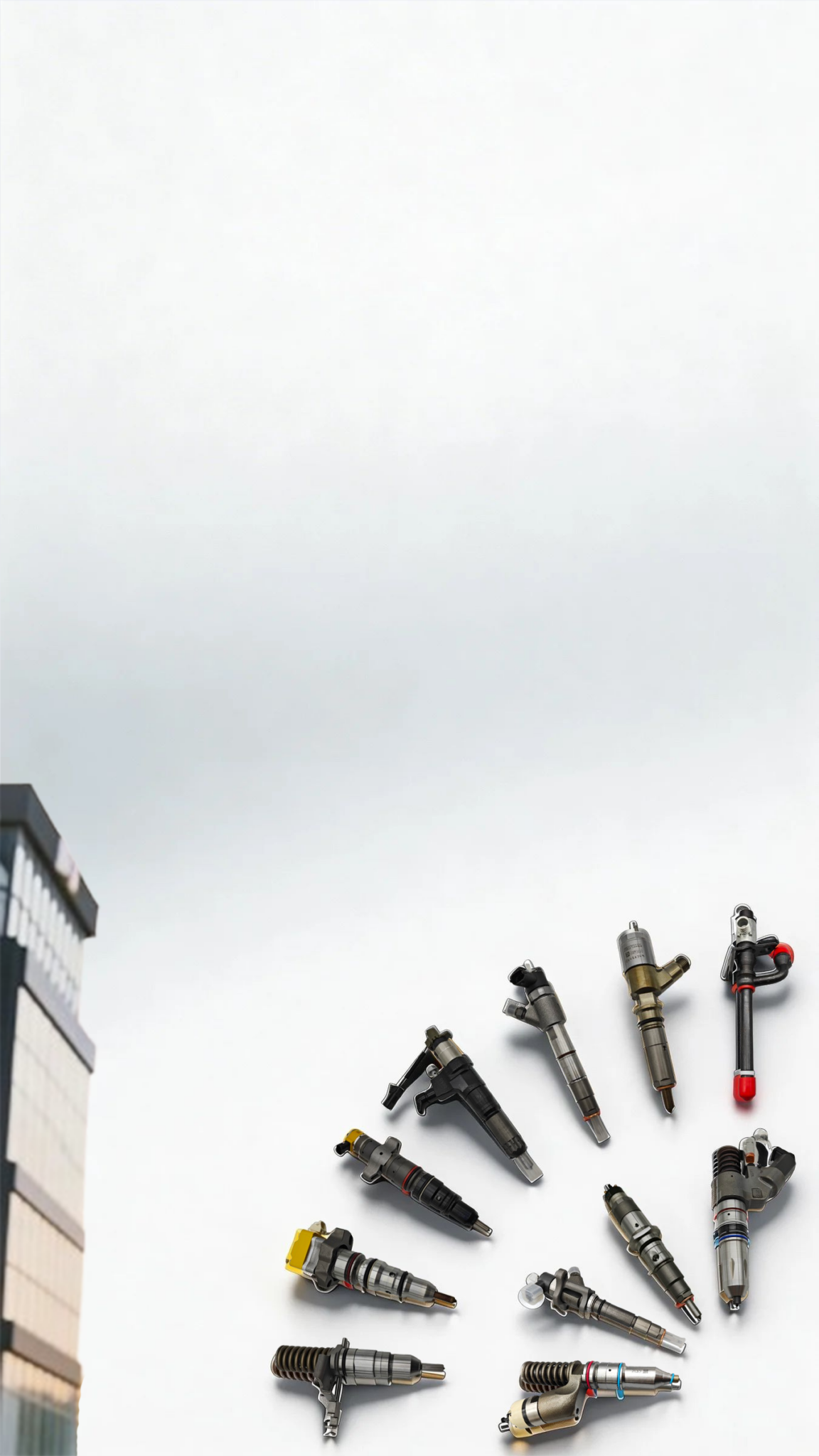
Need replacement injectors? Browse our complete range of Bosch common rail injectors, Denso HP3/HP4 injectors, and Caterpillar injectors for OEM-quality replacements at competitive prices.
Related products




Related Posts
-
1

-
2

-
3

-
4

-
5

-
6

JSPartsonline:
Focus on injectors for 12 years,We sell high-quality fuel injectors at competitive prices.
Copyright 2025 © YUN·X . All right reserved.
