
Diesel Injector Spray Patterns and Atomization: A Technical Guide
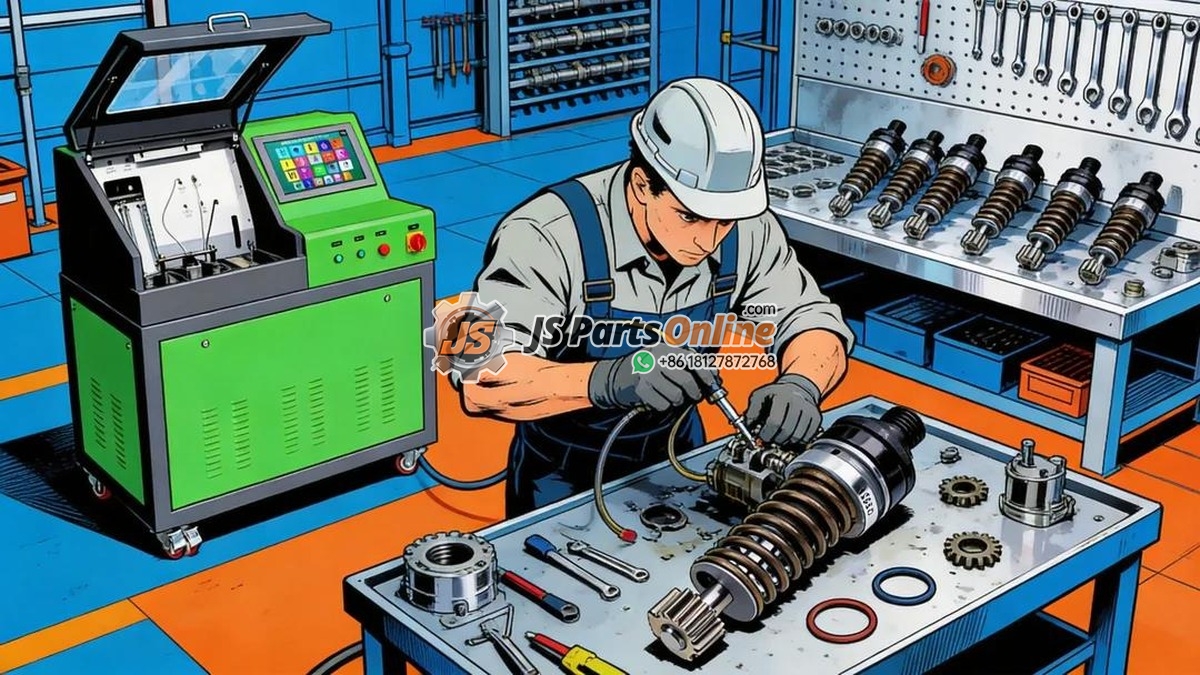
The spray pattern of a diesel fuel injector is one of the most overlooked yet critical factors in engine performance. A perfectly timed injection means nothing if the fuel is not atomized correctly because poor spray patterns lead directly to incomplete combustion, black smoke, power loss, and accelerated engine wear. In this guide, we break down the science of injector spray patterns, the different nozzle types that produce them, and how to diagnose spray-related problems before they damage your engine.
1. Why Spray Patterns Matter
Diesel combustion depends on mixing fuel with compressed hot air in the cylinder. The finer the atomization, the larger the fuel surface area exposed to oxygen, and the more complete the burn. Modern diesel injectors atomize fuel into droplets as small as 5-10 microns which is thinner than a human hair. When spray patterns degrade, droplet size increases, combustion becomes uneven, and you lose both power and fuel economy.
Poor atomization causes fuel droplets to impinge on cylinder walls, washing away the protective oil film and causing cylinder bore polishing. It also creates localized hot spots that increase NOx emissions and carbon deposits on piston crowns and valve faces. For heavy-duty diesel engines, especially those in mining, marine, and construction applications, spray pattern integrity directly impacts service intervals and engine longevity.
2. Injector Nozzle Types and Their Spray Characteristics
| Nozzle Type | Hole Count | Spray Angle | Best Application | Atomization Quality |
|---|---|---|---|---|
| Single-Hole Pintle | 1 | 0 to 4 degrees | Pre-combustion chamber (IDI) engines, older indirect-injection systems | Moderate, relies on pre-chamber turbulence |
| Multi-Hole VCO | 5 to 8 | 140 to 160 degrees | Direct injection (DI) engines, heavy-duty diesel, modern CAT/Cummins/Detroit | Excellent, fine droplet distribution |
| Multi-Hole Sac-Type | 5 to 8 | 140 to 160 degrees | DI engines, lower emissions than VCO but higher sac volume HC | Very good, slightly wider spray cone |
| Micro-Sac | 6 to 10 | 150 to 165 degrees | Euro V/VI compliant engines, high-pressure common rail | Excellent, minimized sac volume reduces HC emissions |
| Mini-Sac K-Hole | 6 to 8 | 145 to 158 degrees | Tier 4 Final engines, DPF-equipped systems | Superior, k-factor hole geometry improves flow |
The valve covers orifice (VCO) nozzle is the most common design in modern heavy-duty diesel injectors. Unlike sac-type nozzles, the VCO nozzle seat is directly above the spray holes, eliminating the sac volume where unburned fuel can accumulate. This significantly reduces hydrocarbon (HC) emissions at the expense of slightly reduced flow efficiency at extreme pressures.
3. Spray Pattern Analysis: What Good vs. Bad Looks Like
| Pattern Description | Visual Appearance | Likely Cause | Engine Symptom |
|---|---|---|---|
| Normal / Ideal | Fine mist, symmetrical cone, no visible streams | Properly functioning injector | Smooth idle, clean exhaust, normal power |
| Streaming / Dribbling | Visible liquid stream, large visible fuel droplets | Worn nozzle seat, carbon buildup on tip, low pop pressure | Black smoke, rough idle, fuel dilution of oil |
| Uneven / Asymmetrical | Pattern leans to one side, fan-shaped instead of conical | Partially blocked spray hole, bent needle, nozzle erosion | Cylinder imbalance, misfire, localized overheating |
| Hollow Cone | Fuel concentrated at edges, center dry | Incorrect nozzle for application, excessive sac volume | Poor cold start, incomplete combustion at light load |
| After-Drip | Fuel droplets after main injection event ends | Weak nozzle spring, needle seat wear, injector body leakage | Increased HC, DPF loading, oil dilution |
| Split / Forked Stream | Multiple separate streams from one hole | Spray hole erosion, cavitation damage, manufacturing defect | Hot spot formation, piston crown damage |
On a test bench, a healthy injector produces a crisp chatter sound with each injection event and a fine, even mist that fills the spray chamber uniformly. If you hear a dull thud or see any visible liquid stream, the injector needs attention, either cleaning, nozzle replacement, or complete overhaul.
4. Atomization Physics: The Key Parameters
Atomization quality is determined by four primary parameters that work together to break fuel into the smallest possible droplets:
| Parameter | What It Controls | Effect of Increase | Effect of Decrease |
|---|---|---|---|
| Injection Pressure | Fuel velocity through nozzle holes, droplet breakup energy | Finer atomization, longer spray penetration, risk of wall impingement | Larger droplets, poor mixing, incomplete combustion |
| Nozzle Hole Diameter | Orifice flow area, initial droplet size | Higher flow rate but larger droplets, less penetration resistance | Finer droplets, lower flow per injection event |
| Spray Cone Angle | Fuel distribution across combustion chamber | Wider coverage, better air utilization, risk of wall wetting | Narrower coverage, localized rich zones, poor air use |
| L/D Ratio (Length/Diameter) | Flow coefficient, discharge efficiency | Better flow direction control, reduced cavitation | Poor spray targeting, increased sac volume effects |
Modern common rail systems achieve injection pressures up to 36,000 psi, roughly 2,500 bar, which produces near-perfect atomization under normal operating conditions. HEUI systems (CAT 3406E, C7, C9, C12) operate at lower peak pressures around 21,000 psi but compensate with split-shot injection strategies that improve fuel-air mixing without requiring extreme nozzle pressures.
5. Common Spray Pattern Problems by Injector Type
| Injector Type | Most Common Spray Issue | Root Cause | Resolution |
|---|---|---|---|
| HEUI (CAT 3406E, C7-C15) | Low injection pressure leads to poor atomization at idle | Worn intensifier piston, degraded engine oil, HPOP wear | Oil change, HPOP output test, injector rebuild |
| MEUI / EUI (CAT ACERT, Detroit DD) | Uneven spray across cylinders | Cam lobe wear, rocker arm adjustment drift, plunger scuffing | Valve adjustment, injector height check, plunger replacement |
| Common Rail (Cummins ISX, Volvo D13) | After-drip and nozzle coking | Fuel contamination, excessive return flow, ECU drift | Fuel filtration upgrade, injector cleaning, IMA code verification |
| Mechanical (CAT 3406B, Cummins N14) | Streaming at low RPM | Weak nozzle spring, low pop pressure, governor calibration | Nozzle replacement, pop pressure reset, governor adjustment |
6. Diagnosing Spray Pattern Issues Without a Test Bench
Not every shop has a dedicated injector test bench. Here is how to identify spray-related problems using accessible diagnostic methods:
- Cylinder Cutout Test: Use a scan tool to disable individual injectors while monitoring RPM drop. A cylinder with minimal RPM change during cutout indicates poor combustion, often spray-related. Compare all cylinders; a single laggard is a strong spray pattern suspect.
- Exhaust Temperature Analysis: Measure exhaust manifold temperature at each cylinder port. A cold cylinder (50 to 100 degrees F below others) means incomplete combustion. Spray pattern problems, especially streaming or hollow cone patterns, create precisely this symptom.
- Fuel Trim / Balance Rates: On common rail engines, monitor injector balance rates via scan tool. Values exceeding plus or minus 3.0 mm per stroke indicate a cylinder working harder or easier than others. A negative balance rate (ECU reducing fuel) often points to better-than-expected combustion on that cylinder, while a positive rate suggests poor atomization requiring more fuel to maintain power.
- Borescope Inspection: Remove the injector and inspect the piston crown through the injector bore. Localized carbon buildup on one side of the piston, wash marks on cylinder walls, or uneven piston crown coloration all indicate spray pattern asymmetry.
- Oil Analysis: Fuel dilution over 2 percent in used oil analysis, combined with black smoke complaints, strongly suggests spray pattern degradation and cylinder wall washing.
7. Maintaining Optimal Spray Patterns
| Maintenance Action | Frequency | Benefit |
|---|---|---|
| Fuel filter replacement | Every 15,000 to 25,000 miles or per OEM schedule | Prevents abrasive particles from eroding spray hole geometry |
| Water separator drain | Weekly in humid climates, every service on marine applications | Water causes cavitation erosion at nozzle tip; drains protect spray holes |
| Fuel quality testing | Quarterly or when switching fuel suppliers | Poor cetane, high sulfur, or biodiesel blends above B20 alter spray behavior |
| Injector cleaning additive | Every oil change interval | PIB-based detergents remove nozzle coking before it affects spray pattern |
| HEUI oil quality monitoring | Every oil change with used oil analysis | Oil viscosity directly affects HEUI injection pressure and atomization quality |
| Injector pop test / bench test | Every 150,000 to 200,000 miles or when symptoms appear | Catches spring fatigue and nozzle erosion before engine damage occurs |
8. When to Replace vs. Clean Based on Spray Symptoms
| Symptom | Cleaning Likely to Help? | Replacement Needed? | Rationale |
|---|---|---|---|
| Mild nozzle coking, slightly uneven spray | Yes, ultrasonic cleaning effective | No, try cleaning first | Carbon deposits are removable; base nozzle geometry still intact |
| Streaming / dribbling with visible nozzle wear | No, cleaning cannot restore seat geometry | Yes, nozzle or complete injector | Seat erosion is permanent; cleaning cannot rebuild metal |
| After-drip with no visible nozzle damage | Maybe, try cleaning | Yes if cleaning fails | Could be carbon keeping needle off seat, or could be spring fatigue |
| Asymmetrical spray with one clogged hole | Yes, ultrasonic plus flow bench cleaning | Only if hole is eroded permanently | Single-hole blockage often clears with professional cleaning |
| Multiple eroded or enlarged spray holes | No, erosion is irreversible | Yes, replace nozzle assembly | Cavitation erosion permanently alters hole geometry and flow rate |
Conclusion
Spray pattern quality is the unseen variable that determines whether your diesel engine runs efficiently or burns fuel wastefully. A well-atomized spray, symmetrical, finely misted, and properly angled, is the difference between a 500,000-mile engine and one that needs an overhaul at 200,000. Regular fuel system maintenance, prompt attention to spray-related symptoms, and using quality replacement nozzles when needed keep your diesel engine performing at its best.
For OEM-quality replacement injectors and nozzles across Caterpillar, Cummins, Detroit Diesel, and Volvo platforms, browse our complete diesel injector catalog. All injectors are flow-tested and spray-pattern verified before shipping. If you need help diagnosing a spray pattern issue, contact our technical team for expert guidance.
Related products




Related Posts
-
1

-
2

-
3

-
4

-
5

-
6



JSPartsonline:
Focus on injectors for 12 years,We sell high-quality fuel injectors at competitive prices.
Copyright 2025 © YUN·X . All right reserved.
