
How to Install a Fuel Injector: A Step-by-Step Professional Guide
Installing a new fuel injector is a precise task that bridges the gap between a successful purchase and a perfectly running engine. While the process is methodical, it demands attention to detail, respect for high-pressure fuel systems, and the correct procedure to avoid leaks, damage, or poor performance. Whether you’re a seasoned DIYer or a first-timer, this comprehensive guide will walk you through the professional method for installing a fuel injector. We cover critical safety warnings, necessary tools, and the meticulous steps—from system depressurization to the final startup check—to ensure your installation is safe, reliable, and restores your engine to peak condition.
Critical Safety Warnings Before You Begin
Working with fuel systems is hazardous. Adhering to these warnings is non-negotiable:
- High Pressure Risk: Modern direct injection and diesel systems retain extremely high pressure (over 2,000 PSI) even when off. You MUST properly depressurize the system.
- Fire Hazard: Fuel is highly flammable. Work in a well-ventilated area, away from sparks or open flames. Have a Class B fire extinguisher nearby.
- Personal Safety: Always wear safety glasses and chemical-resistant gloves. Fuel and cleaning solvents are harmful to skin and eyes.
Tools & Parts You Will Need
Gathering everything beforehand ensures a smooth process.
- Basic Tools: Ratchet, socket set, torque wrench, screwdrivers, pliers.
- Specialty Tools: Fuel line disconnect tools (for quick-connect fittings).
- Shop Supplies: Lint-free rags, a small container for bolts, brake cleaner or electrical contact cleaner.
- New Parts: Your new, compatible fuel injector (ensure it’s correct using our buyer’s guide). New injector seals, O-rings, and copper washer or gasket (these are almost always included with a quality injector and must never be reused).
Step-by-Step Installation Procedure
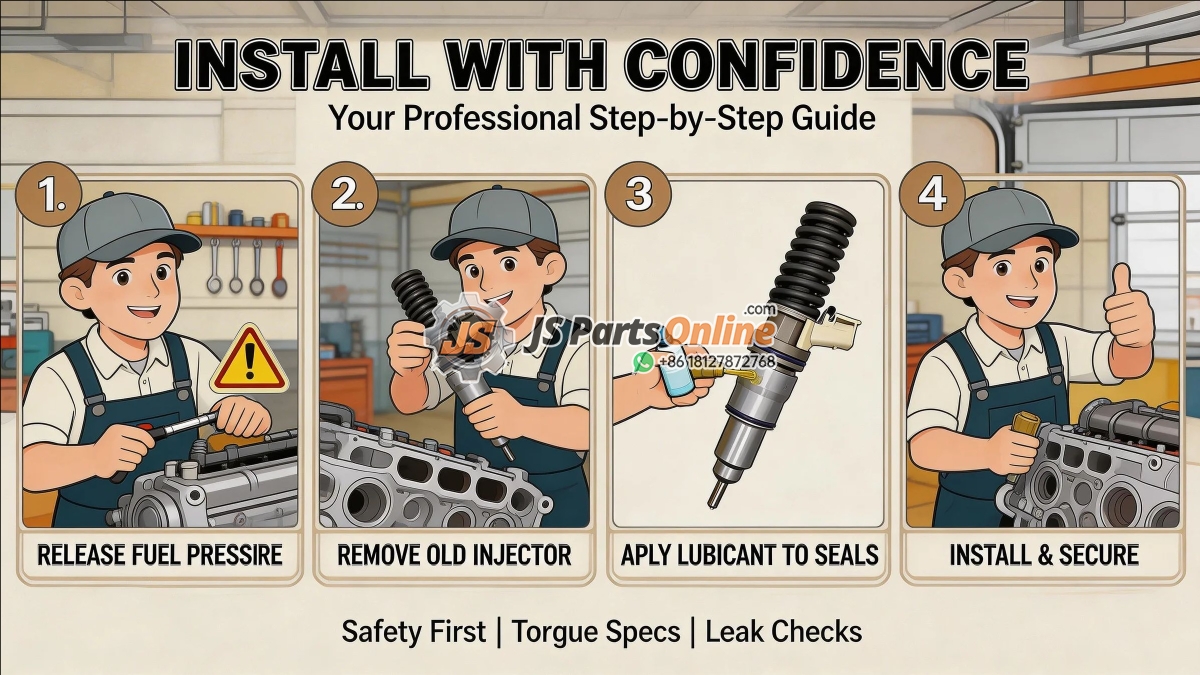
Step 1: Preparation & Fuel System Depressurization
- Disconnect the Battery: Locate the negative (-) battery terminal and disconnect it to prevent any chance of sparks during the procedure.
- Relieve Fuel Pressure:
- For most gasoline port injection vehicles: Locate the fuel pump fuse or relay in the under-hood fuse box. Start the engine and let it run until it stalls from fuel starvation. Crank the starter for an additional 3 seconds. This evacuates most pressure from the rail.
- For high-pressure direct injection or diesel systems: Consult a service manual. The process often involves using a scan tool to deactivate the pump or loosening a special service fitting on the fuel rail with extreme caution, using rags to catch seepage.
- Let the Engine Cool: Work on a cool engine to prevent burns.
Step 2: Access & Remove the Old Fuel Injector
- Remove Engine Covers: Take off any plastic beauty covers or air intake components to access the fuel rail and injectors.
- Disconnect Electrical Connectors: Unplug the wiring harness from each injector you are replacing. Use a small pick or screwdriver to release the locking tab gently.
- Disconnect Fuel Lines: Using the correct fuel line disconnect tool, carefully detach the fuel supply and return lines from the fuel rail. Have a rag ready for minor spillage.
- Unbolt the Fuel Rail: Remove the bolts holding the fuel rail to the intake manifold. Often, the entire rail can be lifted out with the injectors still seated. Gently wiggle and lift the rail straight up. The injectors’ O-rings may offer resistance.
- Remove the Old Injector: Once the rail is lifted, carefully twist and pull the old injector straight out of its manifold socket. Avoid prying on the electrical connector or fuel inlet.
Step 3: Critical Cleaning & Inspection
- Clean the Injector Socket: Use a lint-free rag and a spray of brake cleaner to meticulously clean the bore in the cylinder head or intake manifold where the injector sits. No debris can enter the engine.
- Inspect the Socket: Look for any scratches, corrosion, or old seal residue. A small pick or soft brush can remove stubborn deposits. Ensure the new injector will seat on a clean, smooth surface.
Step 4: Preparing & Installing the New Injector
This is the most critical phase for preventing leaks.
- Lubricate New Seals: Lightly coat the brand new O-rings, seal, and copper washer (if applicable) with a thin film of clean engine oil or the specific seal lubricant provided in the kit. This prevents tearing during installation and allows the injector to seat properly.
- Important: Do NOT use fuel, grease, or silicone spray as a lubricant.
- Seat the Injector: Without twisting, carefully push the new injector straight down into its clean socket by hand until it seats fully. You should feel a firm stop. For some direct injection injectors, a new hold-down clamp must be installed and torqued to specification.
- Reinstall the Fuel Rail: Carefully guide the fuel rail so all injectors slide into their respective ports simultaneously. Push the rail down evenly until seated. Reinstall and torque the fuel rail bolts to the manufacturer’s specification. Overtightening can crack the rail or manifold.
Step 5: Reassembly & Final Checks
- Reconnect All Components: Reattach fuel lines (listen for a definitive “click” on quick-connects), electrical connectors, and any vacuum lines.
- Reconnect the Battery.
- Pre-Start Safety Check: Before cranking, turn the ignition to the “ON” position (but do not start) for 2-3 seconds, then off. Repeat 2-3 times. This allows the fuel pump to pressurize the system, enabling you to visually inspect for any major leaks at the connections you just made.
- Start the Engine: Start the engine. It may crank slightly longer as the system primes. Immediately check for fuel leaks around the injector bases and fuel lines. Also, listen for any air or vacuum leaks.
- Scan for Codes: Use an OBD2 scanner to clear any old codes and check for new ones. A pending code for a fuel trim imbalance may appear initially and should clear after the engine’s computer adapts over a short drive cycle.
Post-Installation Tips & Troubleshooting
- Test Drive: After confirming no leaks, take a short, gentle drive. Monitor for smooth idle, proper throttle response, and the absence of fuel smells.
- Common Issues:
- Rough Idle/Misfire: Likely a torn O-ring during installation, a leaking injector, or a connector not fully seated. Re-check your work.
- Fuel Smell: A sure sign of a leak. Shut off the engine immediately and re-inspect. Most often caused by a damaged seal or improperly seated quick-connect fuel line.
- Poor Performance: Verify you installed the correct injector and that all electrical connections are secure.
Conclusion: Precision Leads to Reliability
A successful fuel injector installation hinges on patience, cleanliness, and using the correct new seals. Rushing or reusing old components is the fastest path to a repeat repair. By following this guide, you ensure that your investment in a quality injector translates directly into restored engine performance and long-term reliability.
Need a Reliable Injector & Seal Kit for Your Project?
A flawless installation starts with flawless parts. JSPartsonline provides OEM-specification fuel injectors that come complete with all necessary, high-quality seals and installation hardware.
Ensure your repair is done once and done right. Find your exact injector and seal kit hereor contact our support teamfor technical guidance on your specific installation.
Posts Widget
-
1

-
2

-
3
-
4


JSPartsonline:
Focus on injectors for 12 years,We sell high-quality fuel injectors at competitive prices.
Copyright 2025 © YUN·X . All right reserved.
