
Diesel Fuel Injector Flow Matching and Calibration Guide
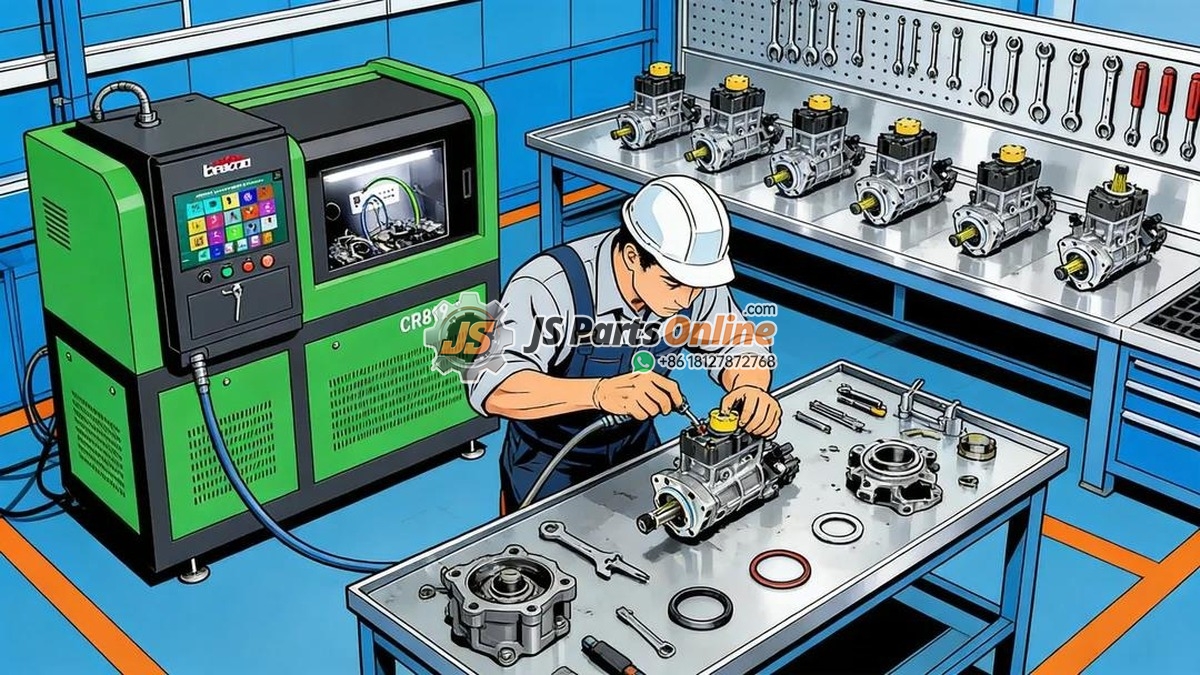
Installing a brand-new set of diesel fuel injectors does not guarantee a perfectly running engine. Injectors are precision devices with manufacturing tolerances that create real-world flow variations of 2 to 5 percent between units even when brand new. Flow matching, the process of selecting and calibrating injectors as a matched set, is what transforms six individual injectors into a balanced system that delivers uniform power, fuel economy, and emissions across all cylinders. This guide explains the flow matching process, calibration procedures for each injector type, and why matched sets matter for your diesel engine.
1. Why Flow Matching Matters
In a six-cylinder diesel engine, if cylinder 3 receives 3 percent less fuel than cylinder 1, the ECM detects this through crankshaft acceleration monitoring and compensates by adjusting individual injector pulse widths. This is what balance rates measure on a scan tool. While ECM compensation keeps the engine running smoothly, it is a reactive fix, not a solution. The over-compensated cylinder runs at a different combustion timing, the under-compensated cylinder never reaches optimal power, and overall fuel efficiency suffers.
A properly flow-matched injector set eliminates the need for ECM compensation at its source. All six injectors deliver fuel within plus or minus 1 percent of each other across the full operating range, from idle to full load. The result is smoother idle, faster throttle response, lower exhaust temperatures, and measurable fuel economy gains of 2 to 5 percent compared to unmatched replacement injectors.
2. Flow Matching vs. Calibration: Understanding the Difference
| Aspect | Flow Matching | Calibration / Coding |
|---|---|---|
| What It Is | Selecting injectors with near-identical flow characteristics across a set | Programming individual injector characteristics into the ECM |
| How It Works | Bench testing multiple injectors, grouping by flow rate at multiple test points | Reading injector trim codes (IMA/QR/alpha codes) and entering into ECM via scan tool |
| When Required | Any time more than one injector is replaced; strongly recommended for full sets | Required for common rail injectors; optional but beneficial for HEUI and MEUI |
| Equipment Needed | Injector test bench with flow measurement capability | OEM diagnostic software (CAT ET, Cummins Insite, Detroit DDDL) |
| Result if Skipped | Cylinder imbalance, rough idle, increased fuel consumption | ECM uses default injector maps; may work adequately but not optimally |
Flow matching and calibration are complementary, not interchangeable. Flow matching ensures the injectors are physically capable of delivering similar fuel quantities. Calibration tells the ECM exactly what the injector’s characteristics are so it can compensate for any remaining differences. The best practice is both: purchase a flow-matched set and then program the trim codes into the ECM.
3. The Flow Matching Process
A professional injector test bench performs flow matching by testing each injector at multiple operating points that simulate real-world engine conditions. The typical test matrix includes:
| Test Point | Simulates | Measurement | Acceptance Criteria |
|---|---|---|---|
| Idle (low pulse width, low rail pressure) | Engine at idle, 600-800 RPM | Fuel delivery volume over 1000 injections | Max 2 percent variance across set |
| Part Load (medium pulse width, medium pressure) | Highway cruise, 1400-1800 RPM | Fuel delivery volume over 500 injections | Max 1.5 percent variance across set |
| Full Load (maximum pulse width, maximum pressure) | Wide-open throttle, rated power RPM | Peak flow rate, injection duration consistency | Max 1 percent variance across set |
| Pilot Injection (ultra-short pulse) | Pilot injection event for noise/emissions control | Minimum stable delivery quantity | All injectors must fire consistently; no misfires |
| Back-Leakage Test | Injector return flow, internal sealing condition | Return fuel volume at rated pressure | Within OEM specification; matched across set within 10 percent |
After testing, injectors are grouped into matched sets based on their flow characteristics. A properly matched set shows near-identical flow curves when plotted across the test points, while an unmatched set shows diverging lines. The best matching results come from injectors produced in the same manufacturing batch, but a skilled technician with a quality test bench can match injectors from different batches to within tight tolerances.
4. Calibration by Injector Type
| Injector Type | Calibration Method | Tools Required | Without Calibration |
|---|---|---|---|
| HEUI (CAT 3406E, C7-C15) | Injector trim code (4-digit alphanumeric) stamped on solenoid body; enter into ECM via CAT ET | CAT ET, trim code reader | ECM uses default trim; engine runs but with 3 to 5 percent cylinder balance variance |
| MEUI / EUI (CAT ACERT, Detroit DD) | Trim file or calibration code on injector body; use OEM software to flash ECM | CAT ET, Detroit DDDL, Cummins Insite | Engine may set balance rate DTCs; fuel economy and emissions affected |
| Common Rail Solenoid (Cummins ISX, ISB) | IMA code (7-character alphanumeric) on injector top; enter via Insite injector calibration screen | Cummins Insite with injector calibration enabled | ECM defaults to nominal injector map; balance rates may exceed 3.0 mm per stroke |
| Common Rail Piezo (modern CAT, Volvo D13/D16) | QR code or data matrix on injector; scan and upload via OEM diagnostic tool | OEM scan tool with camera capability | Piezo injectors are highly sensitive to calibration; skipping can cause rough running and DTCs |
| Mechanical (CAT 3406B, Cummins N14) | No electronic calibration; mechanical matching via pop pressure and delivery valve adjustment | Pop tester, shim kit, delivery valve lapping tools | Mechanical matching is mandatory, not optional; unmatched mechanical injectors cause severe imbalance |
A common mistake is installing common rail injectors without entering the IMA codes. The engine will start and run, sometimes without setting a fault code, but fuel delivery errors of up to 10 percent per cylinder accumulate silently. Over thousands of hours, this manifests as uneven piston crown temperatures, accelerated liner wear on over-fueling cylinders, and carbon packing on under-fueling cylinders.
5. Understanding Injector Balance Rates
Balance rates are the ECM’s real-time compensation values for cylinder-to-cylinder fuel delivery differences. They are the single most useful diagnostic parameter for evaluating whether your injectors are properly matched and calibrated.
| Balance Rate Value | What ECM Is Doing | What It Means | Action Required |
|---|---|---|---|
| 0.0 to plus/minus 1.0 mm/stroke | Minimal compensation | Injectors are well-matched and calibrated | None, this is the target condition |
| Plus 1.0 to plus 3.0 mm/stroke | Adding fuel to this cylinder | Injector under-delivering; possible clogged nozzle, worn plunger, or wrong calibration | Verify trim code; bench test injector; clean or replace if confirmed |
| Minus 1.0 to minus 3.0 mm/stroke | Reducing fuel to this cylinder | Injector over-delivering; possible nozzle erosion, stuck-open condition | Verify trim code; inspect nozzle condition; replace if eroded |
| Plus 3.0 to plus 5.0 mm/stroke | Heavily adding fuel | Injector significantly under-performing; likely mechanical issue | Immediate investigation; cylinder likely contributing less power than others |
| Above plus 5.0 or below minus 5.0 | At compensation limit | Cylinder severely out of balance; DTC likely set | Urgent repair required; continued operation risks engine damage |
| All cylinders offset in same direction | System-wide compensation | Not an injector matching issue; likely fuel pressure, air system, or sensor problem | Check rail pressure sensor, boost leaks, MAF sensor before injector replacement |
6. Injector Trim Codes and IMA Codes
Modern diesel injectors are individually tested at the factory and assigned a calibration code that describes their unique flow characteristics. For common rail injectors, this is typically a 7-character IMA (Injector Menge Abgleich, German for injector quantity adjustment) code printed on the injector body or solenoid cap.
The IMA code encodes the injector’s deviation from nominal flow at multiple test points. When entered into the ECM, the ECM adjusts the injector’s pulse width map to compensate for these deviations. Without the IMA code, the ECM uses a generic map that may be 5 to 8 percent off from the injector’s actual characteristics.
Common calibration code formats by manufacturer:
- Caterpillar HEUI: 4-character alphanumeric trim code stamped on the solenoid cap, entered via CAT ET under Injector Trim Calibration
- Cummins Common Rail: 7-character IMA code printed on a metal tag or laser-etched on the injector body, entered via Insite Calibration menu
- Detroit Diesel: Calibration code stored in a QR data matrix on the injector, scanned and uploaded via DDDL 8 software
- Volvo / Mack: 7-character calibration code on injector body, entered via Tech Tool under Injector Classification
- Bosch (aftermarket): C2I or C3I code format on injector packaging; must use Bosch-compatible scan tool for entry
7. DIY Flow Matching: What You Can Do Without a Test Bench
While professional flow matching on a test bench is ideal, there are practical steps you can take to improve injector balance without expensive equipment:
- Buy matched sets from reputable suppliers: Quality aftermarket suppliers flow-match injector sets before shipping. Look for suppliers that provide a printed flow test report with each set showing flow values at multiple test points for every injector in the set.
- Verify trim codes before installation: If you have a set of injectors, check that all trim codes are entered into the ECM after installation. Many engines run poorly simply because the codes were never programmed.
- Monitor balance rates post-installation: After installing new injectors, run the engine at operating temperature and monitor balance rates at idle, 1500 RPM no-load, and under light load. Allow 30 minutes of run time for rates to stabilize before evaluating.
- Cylinder cutout test for gross imbalance: If you suspect one cylinder is significantly off, a cylinder cutout test reveals gross injector delivery problems instantly. An injector that causes no RPM drop when cut is contributing essentially zero power.
- Return flow comparison: On common rail engines, measuring individual injector back-leakage volumes provides an indirect check of internal injector condition. Excessive back-leakage on one injector in a set means less fuel delivered to that cylinder.
8. The Cost of Unmatched Injectors
| Scenario | Initial Cost | Fuel Penalty | Annual Fuel Cost at 100,000 Miles per Year | Break-Even Period |
|---|---|---|---|---|
| Unmatched aftermarket injectors, no calibration | Lowest purchase price | 3 to 5 percent worse fuel economy | 1,500 to 2,500 dollars extra fuel | N/A, ongoing cost exceeds savings within months |
| Unmatched injectors with trim codes programmed | Low purchase plus calibration labor | 1 to 3 percent worse fuel economy | 500 to 1,500 dollars extra fuel | N/A, still losing money over matched set |
| Flow-matched set with calibration | 15 to 20 percent higher purchase price | Baseline, optimal fuel economy | No penalty | Immediate, matched set premium recovered in 3 to 6 months |
For commercial operators running multiple trucks, the math is compelling. A fleet of 10 trucks each saving 1,500 dollars per year in fuel from properly matched injectors generates 15,000 dollars in annual fuel savings, far exceeding the modest premium for flow-matched injector sets.
Conclusion
Flow matching and calibration transform diesel fuel injectors from individual components into a synchronized system. Whether you are maintaining a single owner-operator truck or managing a fleet of heavy equipment, specifying flow-matched injector sets and programming trim codes correctly delivers measurable fuel savings, smoother engine operation, and extended engine life. The small premium for matched injectors is one of the fastest-payback investments in diesel engine maintenance.
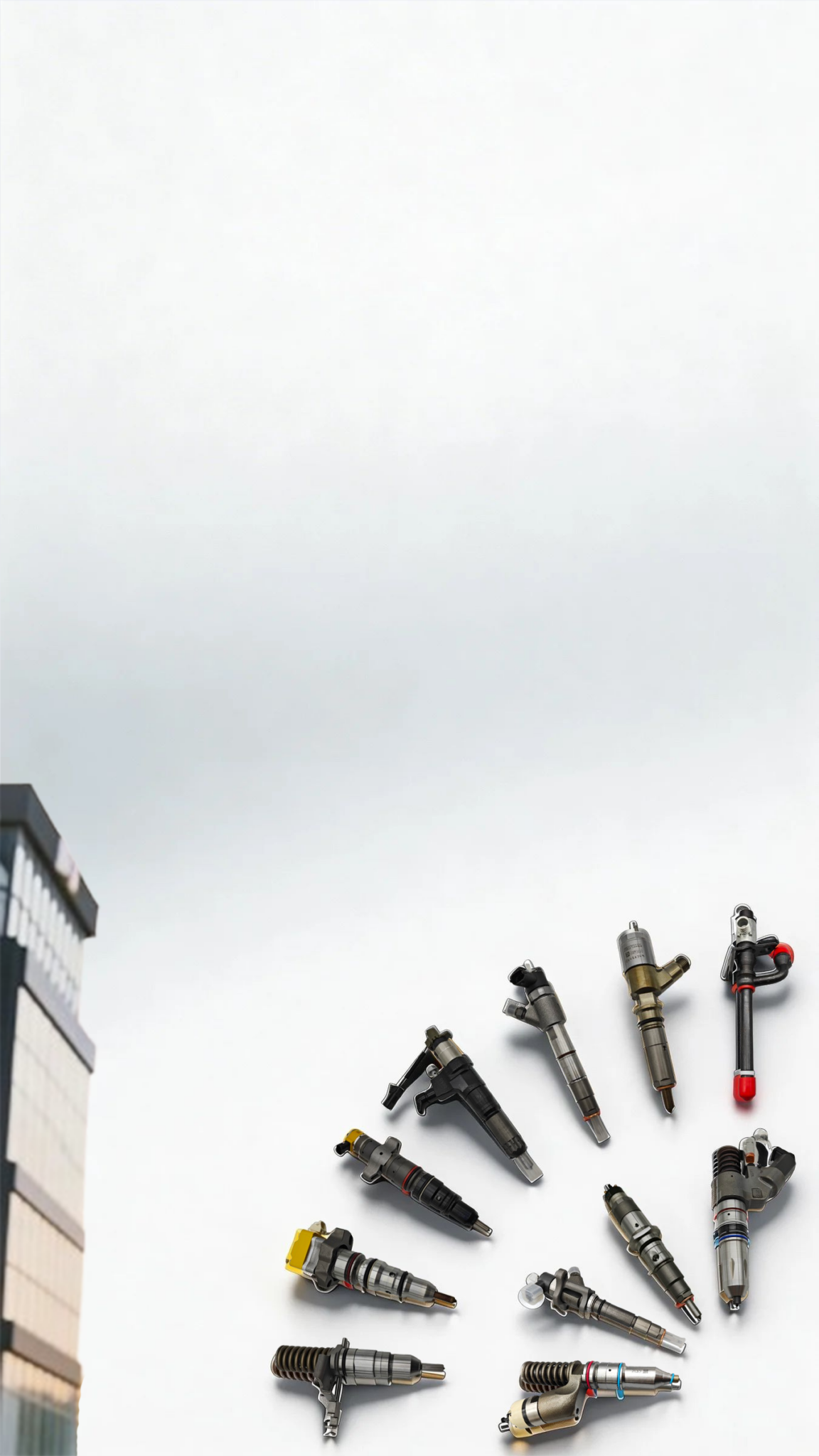
For flow-matched, calibrated diesel fuel injector sets for Caterpillar, Cummins, Detroit Diesel, and Volvo engines, browse our matched injector catalog. Every set ships with a printed flow test report and trim code documentation. If you need help selecting the right set for your engine serial number, contact our technical support team.
Related products




Related Posts
-
1

-
2

-
3

-
4

-
5

-
6


JSPartsonline:
Focus on injectors for 12 years,We sell high-quality fuel injectors at competitive prices.
Copyright 2025 © YUN·X . All right reserved.
