
Diesel Fuel Injector Preventive Maintenance Schedule Guide
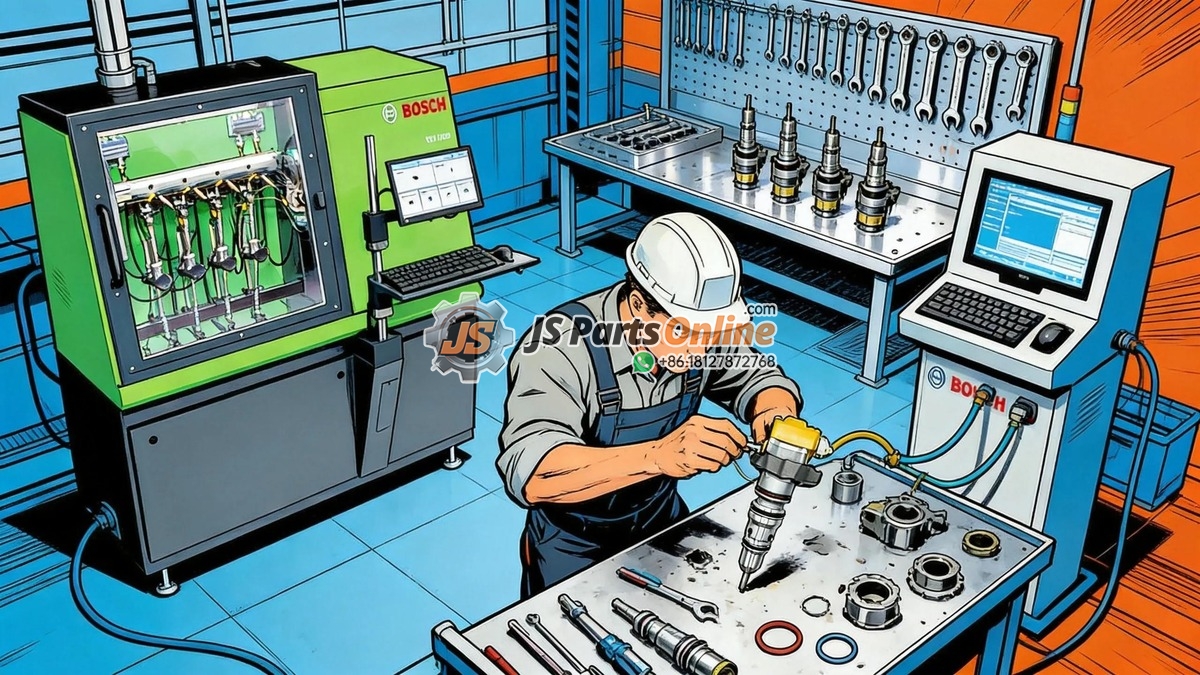
Diesel fuel injectors are precision components that can last 15,000 to 30,000 hours when properly maintained—or fail catastrophically in under 1,000 hours when neglected. The difference almost always comes down to preventive maintenance, not luck. This guide provides a complete preventive maintenance schedule organized by operating hours, engine type, and operating conditions, designed to maximize injector service life and minimize unscheduled downtime.
1. The Four Pillars of Injector Longevity
| Pillar | What It Includes | Impact on Injector Life | Cost of Neglect |
|---|---|---|---|
| Fuel Filtration | Primary filters, secondary filters, water separators | Single largest factor—clean fuel prevents 80% of premature injector failures | $2,000-$8,000 per injector set replacement |
| Oil Management (HEUI engines) | Oil quality, viscosity, change intervals, oil analysis | Directly affects injection control pressure and injector actuation | $3,000-$8,000 for injector set + high-pressure oil pump |
| Fuel Quality Management | Water drainage, biocide treatment, fuel conditioners | Water and microbial growth destroy injector internals within weeks | $1,500-$6,000 per injector set |
| Scheduled Inspection | Balance rates, return flow, visual inspection, performance trends | Early detection prevents catastrophic failure; injectors replaced individually instead of full sets | $500-$2,000 for planned vs. $5,000-$15,000 for unplanned failure |
2. Preventive Maintenance Schedule by Operating Hours
| Interval | Maintenance Task | For HEUI Engines | For Common Rail Engines | For Mechanical Engines |
|---|---|---|---|---|
| Daily | Drain water separator; check for fuel leaks; visual inspection | Check engine oil level and condition | Check for diesel in oil (fuel dilution) | Check injection pump oil level (if separate sump) |
| Every 250 Hours | Replace primary fuel filter; inspect fuel lines for cracking | Check ICP sensor readings if available | Check fuel rail pressure stability | Check injection pump timing |
| Every 500 Hours | Replace secondary fuel filter; inspect injector harness connections | Oil and filter change (critical for HEUI) | Check injector return flow volume | Check and adjust valve clearances |
| Every 1,000 Hours | Fuel system pressure test; injector balance rate check | Perform cylinder cutout test; check trim codes | Check IMA codes are still programmed; verify no code loss | Pop-test injectors; check spray pattern |
| Every 2,000 Hours | Complete injector performance test; return flow measurement | Pressure-test high-pressure oil system; check IPR valve | Measure individual injector back-leakage; replace if > OEM spec | Bench-test injection pump output; check plunger-barrel clearances |
| Every 5,000 Hours | Injector removal and bench test; replace sealing washers and O-rings | Replace injector O-rings as preventive measure | Replace high-pressure connectors and sealing washers | Replace plunger and barrel assemblies if clearance > spec |
| As Needed (Condition-Based) | Replace injectors based on balance rate, return flow, or performance trends | Replace when balance rates exceed +/- 3.0 mm/stroke | Replace when return flow exceeds OEM specification | Replace when pop pressure drops below specification |
3. HEUI-Specific Maintenance: Oil Is Everything
On HEUI engines (CAT 3406E, C7, C10, C12, C15), the engine oil serves a dual purpose: it lubricates the engine and provides the hydraulic medium that drives the fuel injectors. This means oil quality and change intervals are directly linked to injector performance and life:
- Use only the OEM-specified oil grade and API classification. HEUI injectors are intolerant of incorrect viscosity—too thick and the injector cannot pressurize fuel adequately; too thin and injection control pressure bleeds off.
- Never exceed the recommended oil change interval by more than 10 percent. Sheared oil molecules and accumulated soot change the oil’s hydraulic properties, directly degrading injector performance.
- Consider used oil analysis at every oil change. Trends in wear metals (iron, copper, aluminum) provide early warning of injector poppet valve or plunger wear.
- After an injector replacement, change the engine oil and filter immediately. The old injectors may have been leaking fuel into the oil, and the fresh oil ensures clean hydraulic medium for the new injectors.
4. Fuel Filtration: The Best Injector Insurance
| Engine Type | Primary Filter (Microns) | Secondary Filter (Microns) | Water Separation | Critical Note |
|---|---|---|---|---|
| HEUI (CAT 3406E, C7-C15) | 10-15 micron | 2-5 micron absolute | Required—water destroys HEUI injector poppet valves | Run secondary filter at 2 micron for maximum injector life |
| Common Rail (Cummins ISX, CAT C9.3) | 10-15 micron | 2-5 micron absolute | Required—water causes nozzle tip erosion at 30,000 PSI | High-pressure pump also requires clean fuel; injector damage is secondary to pump damage |
| Mechanical (CAT 3406B, Cummins N14) | 10-25 micron | 5-10 micron | Highly recommended | Mechanical plungers are more forgiving but still damaged by abrasive particles |
| Unit Injector / MEUI (CAT ACERT) | 10-15 micron | 2-5 micron absolute | Required | Camshaft-driven plungers require ultra-clean fuel for longevity |
5. Condition Monitoring: Catching Problems Before They Catch You
Modern scan tools make injector condition monitoring straightforward. Track these parameters and act on trends, not just threshold violations:
- Injector balance rates: Record at every oil change or 500-hour interval. Balanced rates at 0.0 +/- 1.0 mm/stroke are normal. A slow drift toward +/- 2.0 on one cylinder indicates progressive injector wear—schedule replacement before it exceeds +/- 3.0.
- Injector return flow (common rail): Measure at 2,000-hour intervals. An injector with return flow 50 percent higher than the set average is approaching failure, even if no DTC is set.
- Fuel economy trend: A 1 to 2 percent gradual increase in fuel consumption over several oil change intervals, without other explanation, often indicates injectors beginning to lose efficiency.
- Engine oil analysis: Fuel dilution above 2 percent on a HEUI engine suggests injector internal leakage. Soot loading trends provide indirect evidence of combustion quality deterioration.
6. Operating Condition Adjustments
The standard maintenance schedule should be accelerated for engines operating in severe conditions:
- High-idle applications (generator sets, pumps): Reduce filter change intervals by 25 percent. Extended idling produces more soot and increases oil contamination rates.
- High-dust environments (mining, construction, agriculture): Reduce fuel filter intervals by 50 percent. Dust ingress through fuel tank vents and during refueling is a leading cause of premature injector failure in these environments.
- Marine and coastal environments: Drain water separators at every refueling. Salt air accelerates corrosion in fuel tanks and fuel system components.
- Cold climate operation: Use fuel conditioners to prevent waxing and improve lubricity. Cold starts with gelled or low-lubricity fuel accelerate plunger and barrel wear.
Conclusion
A diesel fuel injector is not a fit-and-forget component. The 15,000 to 30,000-hour service life that OEM injectors are capable of is only achievable with disciplined preventive maintenance—clean fuel, quality oil changed on schedule, regular condition monitoring, and proactive replacement based on performance trends rather than failure. The maintenance schedule in this guide provides the framework; your commitment to executing it determines whether your injectors reach their full service life or fail years early.
For OEM-quality replacement diesel fuel injectors, fuel filters, oil filters, and maintenance supplies for Caterpillar, Cummins, and Detroit Diesel engines, visit our diesel injector catalog. We also offer free technical support to help you build a customized preventive maintenance plan for your specific engine and operating conditions.
Related products




Related Posts
-
1

-
2

-
3

-
4

-
5

-
6


JSPartsonline:
Focus on injectors for 12 years,We sell high-quality fuel injectors at competitive prices.
Copyright 2025 © YUN·X . All right reserved.
